

內部對講通話簡介
內部對講通話的定義
內部對講通話是指在同一封閉通訊系統內,多個裝置或授權使用者之間直接、即時的語音通訊方法,通常無需撥打完整的7位或10位電話號碼。與需要透過公共網路路由的外部電話不同,內部對講通話侷限於特定組織的通訊基礎設施範圍內,確保了內部互動的隱私、速度和簡便性。
它廣泛應用於現代辦公室、中小學、醫院和醫療設施、工業工廠以及商業建築等各種場所,以實現快速、高效且無干擾的內部通訊。這種通話類型簡化了日常互動,使員工能夠快速建立聯繫,而不會出現電子郵件或簡訊等其他通訊方法帶來的延遲。
在現代通訊系統中的作用
內部對講功能已成為現代IP通訊系統和基於SIP的企業電信設定中不可或缺的核心組件。隨著各組織越來越多地採用統一通訊解決方案,對講功能作為一種基礎工具,補充了其他通訊管道,確保了跨團隊和部門的無縫協作。
它允許使用者僅透過幾次簡單的操作就能即時與同事、主管或團隊成員取得聯繫,在常規和時間緊迫的場景中顯著提高了工作流程效率,減少了通訊延遲並縮短了回應時間。這種即時連接在分秒必爭的快節奏環境中尤為寶貴。
內部對講通話可在各種規模的組織內實現即時的一鍵式通訊,有效減少通訊延遲,最大限度地減少溝通不良,並加強不同團隊、部門和個人之間的整體協調。這種無縫連接營造了更高效的工作環境,並確保關鍵資訊得到及時傳輸。
內部對講通話的工作原理
直接分機呼叫
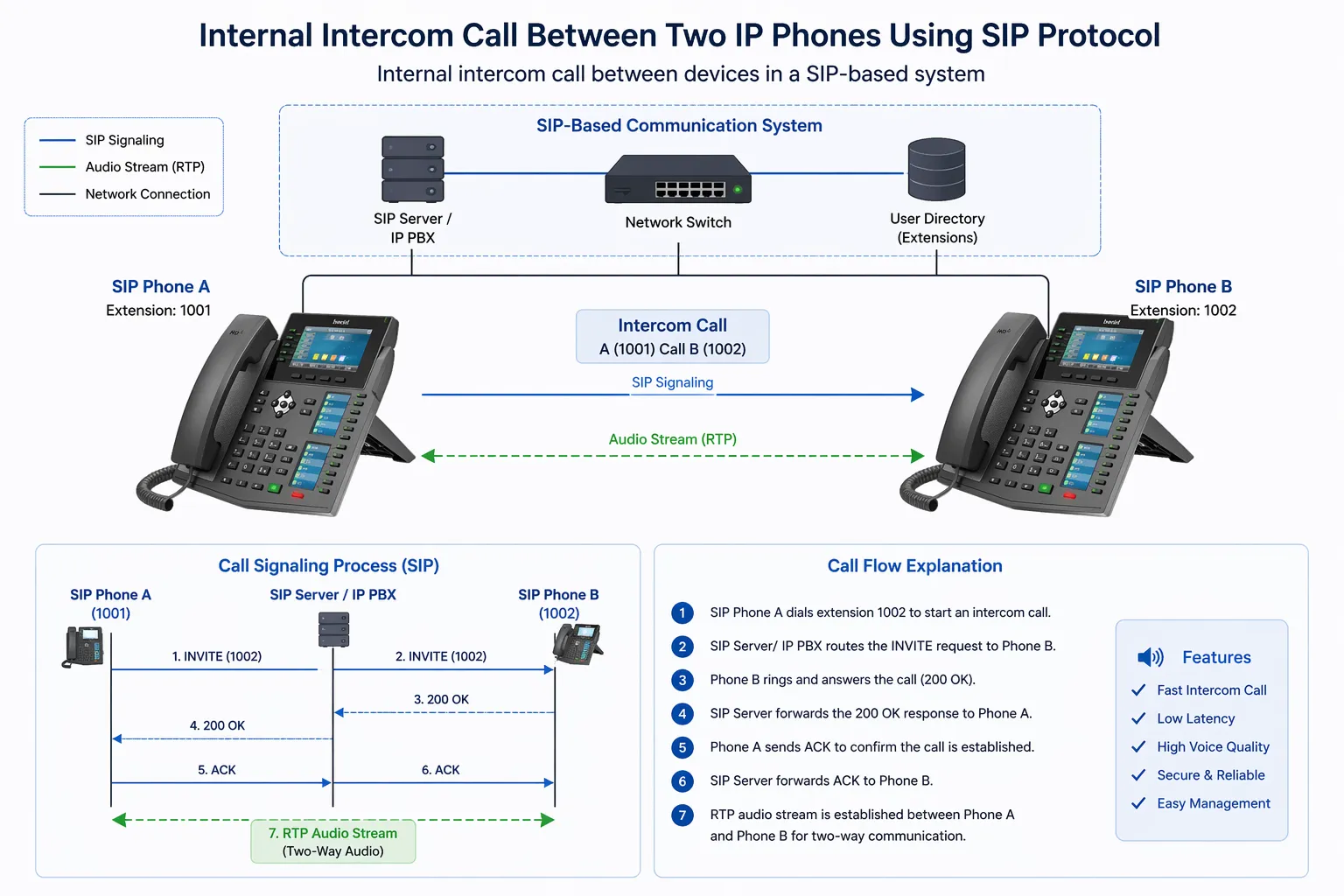
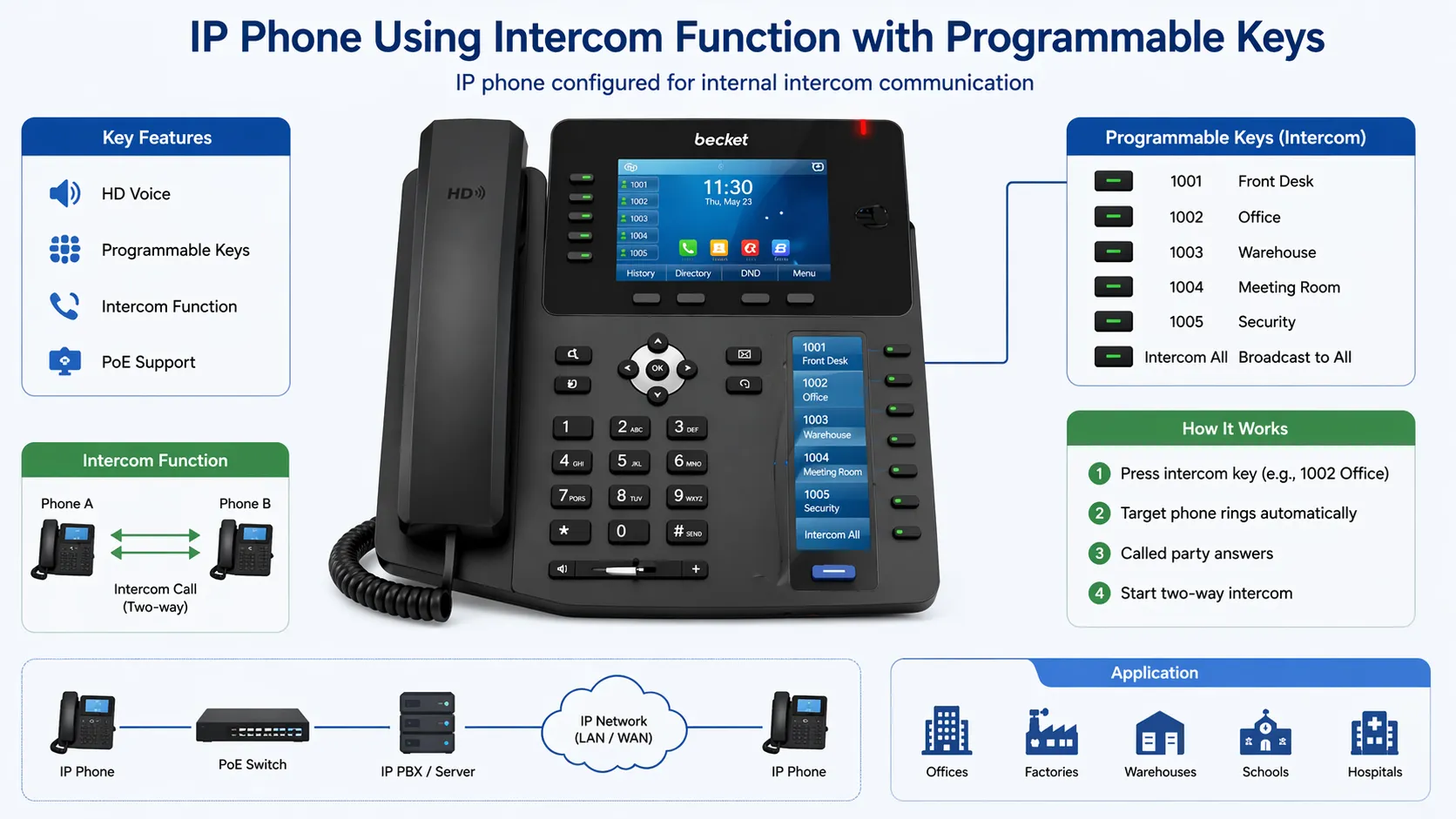
使用者可以透過撥打預先分配的簡短分機號碼(通常為2到4位數字)或按下通訊裝置(如IP電話、對講終端或無線對講話機)上專用的可程式化按鍵來輕鬆發起內部對講通話。這種簡化的呼叫過程無需記憶或撥打完整的電話號碼,使通訊變得更加快捷直觀。
這種使用者友好的方式省去了複雜的撥號程序(例如輸入區號或存取碼),並降低了撥號錯誤的風險。無論是在小型辦公室還是大型工業園區,直接分機呼叫都能確保使用者在幾秒鐘內與其目標聯絡人接通,沒有多餘步驟。
自動接聽功能
許多現代對講系統都配備了自動接聽功能,它允許接收裝置在無需使用者任何手動干預的情況下自動接聽來電對講。這項功能可以根據使用者偏好或組織需求進行自訂,例如僅針對特定分機或在某些工作時間段設定自動接聽。
這種自動接聽能力在免持通訊場景中特別有用,例如當使用者雙手正忙於處理任務時(在工廠操作機器、在醫院照顧病人或在辦公室打字)。它確保即使在使用者無法手動接聽電話時也不會遺漏重要訊息。
SIP和基於IP的通訊
現代內部對講通話透過IP(網際網路協定)網路運作,利用會話發起協定(SIP)來促進裝置之間的通訊。這種基於IP的方法實現了與其他通訊系統的無縫整合,包括IP PBX(專用交換機)系統、統一通訊平台,甚至基於雲端的電信解決方案。
這種整合允許將對講功能擴展到不同的物理位置(如多個辦公分支機構、廠房或醫院側翼),並跨越各種裝置類型(包括IP電話、智慧型手機、平板電腦和對講終端)。它確保使用者無論在組織網路內的什麼位置都可以發起和接收對講呼叫,從而增強了靈活性和連通性。
內部對講通話的主要功能
即時通訊
內部對講通話最顯著的特點之一是它能夠提供使用者之間直接的、即時的連接,而沒有任何明顯的延遲。與可能需要網路路由或呼叫建立時間的傳統電話不同,對講通話幾乎可以瞬間在裝置之間建立直接連結,確保訊息被即時傳輸和接收。
這種即時連接使對講通話成為時間敏感型通訊的理想選擇,例如緊急通知、緊急任務分配或即時問題解決。無論是提醒團隊注意工廠的安全問題,還是協調會議的最後一刻變更,對講呼叫都能確保關鍵資訊毫無延遲地送達。
免持操作
憑藉對自動接聽的內建支援和高品質的免持擴音功能,內部對講系統使使用者能夠在無需拿起聽筒或手持裝置的情況下進行有效溝通。這種免持操作得益於先進的音訊技術,包括降噪麥克風和強大的揚聲器,確保即使在嘈雜的環境中也能進行清晰的語音傳輸。
這種免持功能顯著提高了便利性和工作效率,允許使用者在進行對話的同時繼續執行任務。例如,工廠工人可以在討論生產問題的同時操作設備,護士可以在接受醫生指示的同時照顧病人,辦公人員可以在進行對講通話的同時打字或歸檔文件。
一鍵撥號
大多數現代對講裝置都可以配置可程式化功能鍵,這些按鍵可以設定為透過單次按壓直接向特定分機、部門或使用者群組發起對講呼叫。這些可程式化按鍵可根據使用者的日常通訊需求進行自訂,例如為前台、團隊負責人或特定部門(如IT或HR)設定快捷鍵。
這種一鍵撥號功能簡化了內部通訊工作流程,減少了聯繫同事所需的時間和精力。它消除了記憶分機號碼或瀏覽複雜選單的需要,使通訊更加高效和人性化,特別是對於全天需要頻繁撥打對講電話的使用者而言。
與通訊系統的整合
現代內部對講功能的一個關鍵優勢是它能夠與各種通訊系統無縫整合,包括IP PBX系統、SIP伺服器、尋呼系統和統一通訊平台。這種整合使組織能夠創建一個有凝聚力的通訊生態系統,在此系統中,對講呼叫可以與來電轉接、語音信箱和視訊會議等其他功能相結合。
來自Becke Telcom等供應商的領先解決方案將內部對講、尋呼和統一通訊功能結合到一個單一的整合平台中,使組織能夠簡化其通訊流程並減少對多個獨立系統的需求。這種整合不僅提高了效率,還確保了所有通訊管道的一致性和相容性。
內部對講通話的應用
辦公環境
內部對講通話被廣泛應用於從小型新創公司到大型企業等各種規模的辦公環境中,以促進部門、團隊和個人員工之間快速高效的溝通。它們對於日常互動特別有用,例如詢問一個簡單的問題、確認會議時間或向辦公室另一端的同事尋求協助。
透過實現即時通訊,對講呼叫減少了對耗時的電子郵件、簡訊或親自穿過辦公室與某人交談的需要。這不僅節省了時間,還最大限度地減少了干擾,使員工能夠專注於工作,同時保持與團隊的有效溝通。
醫療設施
醫院、診所和其他醫療設施嚴重依賴內部對講系統,以便在護士、醫生、行政人員和其他醫療專業人員之間進行快速可靠的通訊。在這些高風險環境中,快速溝通可能意味著生與死的區別,使對講電話成為日常營運的必備工具。
醫療設施中的對講系統用於各種目的,包括呼叫護士到病房、協調緊急應變、在手術室和恢復區之間進行通訊以及在部門之間共享關鍵的病患資訊。這不僅縮短了危急情況下的回應時間,確保了及時的病患護理,還提高了醫療營運的整體效率。
工業和工廠用途
工廠、製造廠和工業設施依靠內部對講通話實現控制室、生產線、維護團隊和倉庫人員之間的無縫協調。這些環境通常規模宏大、嘈雜且分散,因此即時通訊對於確保平穩營運和維護安全至關重要。
在嘈雜的工業環境中,透過對講系統進行免持通訊尤為寶貴,因為工人可能佩戴著聽力保護裝置或正在操作嘈雜的機器。對講通話允許員工在無需摘下聽力保護裝置或停止工作的情況下清晰地溝通,從而降低了事故風險並提高了生產力。
教育機構
學校、學院和大學使用內部對講系統來促進教室、行政辦公室、教職員工休息室和校園保全之間的通訊。這些系統是管理日常營運、確保學生安全和協調整個校園活動的重要工具。
教育機構中的對講通話有多種用途,包括向所有教室發布通知、在教師和行政人員之間進行協調、在發生緊急情況時召集員工以及促進校園不同區域之間的通訊。它們支援整個校園的高效協調,確保日常營運順利進行,並使學生和教職員工了解最新資訊。
常見問題解答
對講機通話與普通電話有什麼區別?
內部對講通話和常規電話之間的關鍵區別在於其範圍、呼叫過程和路由。對講通話嚴格侷限於特定組織的內部通訊系統,通常可瞬間連接,且通常不需要撥打完整的電話號碼——而是使用簡短的分機或一鍵式按鍵。相比之下,常規電話可以是內部或外部的,可能需要撥打完整的電話號碼(對於外部呼叫還包括區號),並且經常需要透過公共或私人電話網路進行路由,這會引入延遲。此外,對講呼叫旨在進行快速、非正式的溝通,而常規電話可能更加正式,並且可能包含基礎對講系統中不常見的功能,如通話保留或語音信箱。
對講機通話需要SIP嗎?
現代內部對講系統,尤其是那些與基於IP的通訊網路整合的系統,通常使用會話發起協定(SIP)來促進裝置之間的通訊。SIP支援與IP PBX系統、統一通訊平台和其他現代電信工具的無縫整合,使其成為大多數現代對講設定的標準。然而,傳統的類比對講系統仍然存在,並且它們不需要SIP或IP網路——而是依靠實體線路和類比訊號來傳輸語音通訊。SIP的使用取決於對講系統的類型和組織的整體通訊基礎設施。
對講機通話可以是免持的嗎?
是的,許多現代內部對講系統透過結合自動接聽功能和內建免持擴音技術來支援免持通訊。大多數對講裝置,包括IP電話、對講終端和無線話機,都配備了高品質揚聲器和降噪麥克風,允許使用者在不拿起聽筒或手持裝置的情況下通話和接聽。這種免持功能在使用者需要騰出雙手執行工作任務的環境中(如工廠、醫院或繁忙的辦公室)特別有用,並且可以根據使用者偏好或組織需求進行自訂。