

農村廣播系統介紹
什么是農村廣播?
農村廣播透過公共廣播(PA)系統或基於 IP 的音频基礎設施,在村莊、农业區域和通訊条件薄弱的偏远社區發布通知、安全警報和重要資訊。作为非城市和偏远區域的重要通訊解決方案,它弥补了數位通訊工具不足、行動網路覆蓋不穩定以及傳統媒體触达有限的問題,是覆蓋分散居民最直接、最有效的方式之一。
這類系統是公共通知、應急預警、社區協調以及农业和教育宣傳的重要通訊骨干。与面向商业和室内環境的城市音频系統不同,農村廣播更注重戶外、遠距離和大範圍覆蓋,確保關鍵資訊能够清楚、穩定地傳達到居民所在區域,满足農村社區日常管理和應急回應的需要。
農村部署面臨的挑战
農村部署通常面臨電力基礎設施不穩定、覆蓋面积大、戶外環境恶劣等問題。许多偏远地区供電不穩定,停电频繁;廣闊的地理範圍要求系統用尽可能少的設備覆蓋數平方公里;暴雨、沙尘、高温、嚴寒等環境也会對設備耐用性提出更高要求。
因此,廣播設備必须具备坚固可靠、長期耐用和維護简便的特点。設備需要适应离网工作環境,抵抗物理損壞和環境侵蚀,并便于安裝和維修,因为偏远農村往往缺少專業技术團隊的長期驻场支持。
可靠的農村廣播系統能够在偏远且基礎設施受限的地区快速传递紧急甚至救命的資訊。它就像農村居民的通訊生命線,尤其适用於災害多发地区,可及时發布預警和應急指引,保護人員与財產安全。
農村廣播系統配置
核心設備選擇
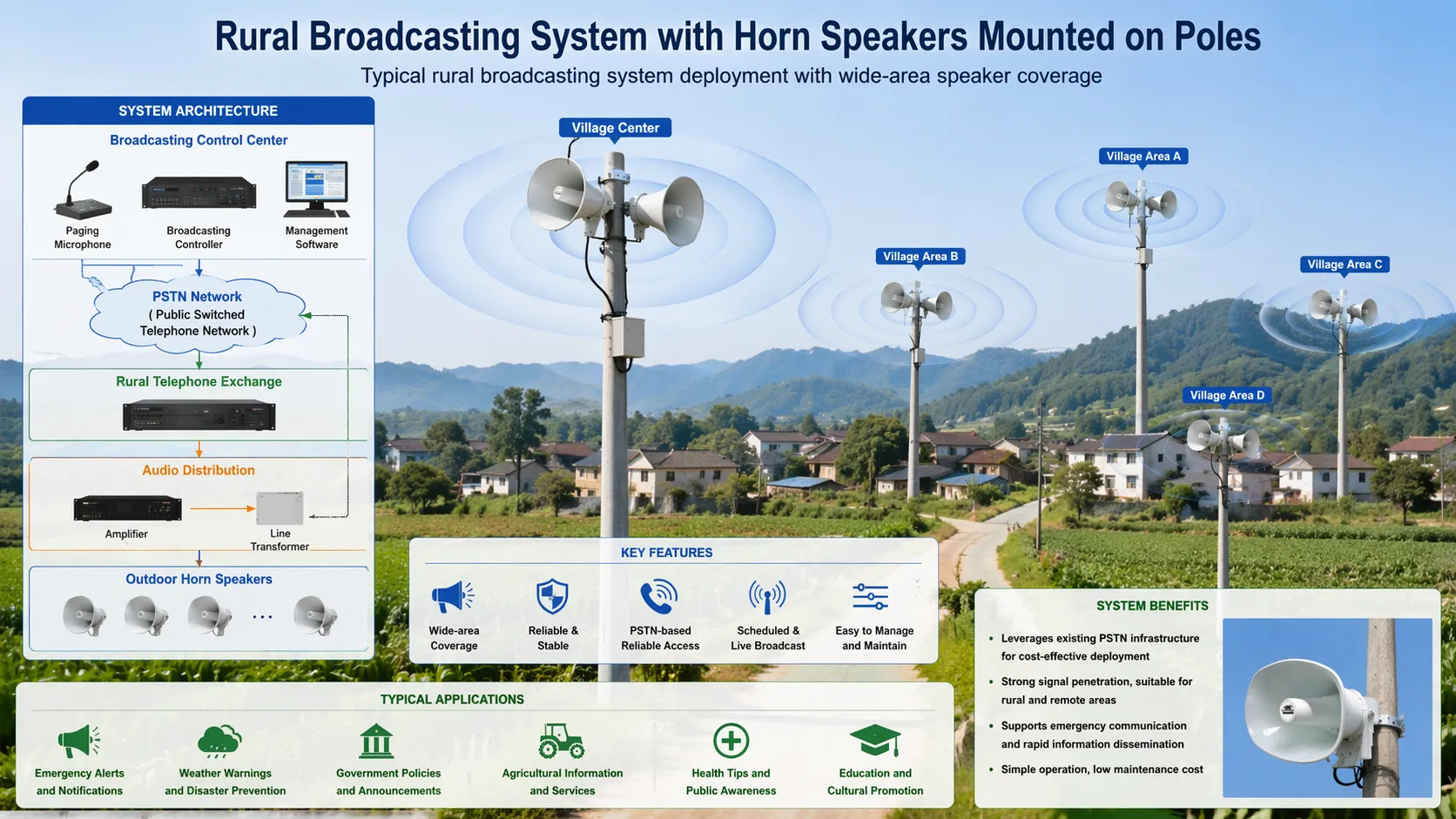
標準農村廣播系統通常包括廣播级麥克風、功率放大器、防水防塵揚聲器(如号角揚聲器)以及集中控制单元或 IP 網路閘道。每个元件都应根据戶外适应性进行選擇:降噪麥克風保证语音輸入清楚,高功率放大器支持遠距離傳輸,專業揚聲器则確保开放區域内的声音清楚度。
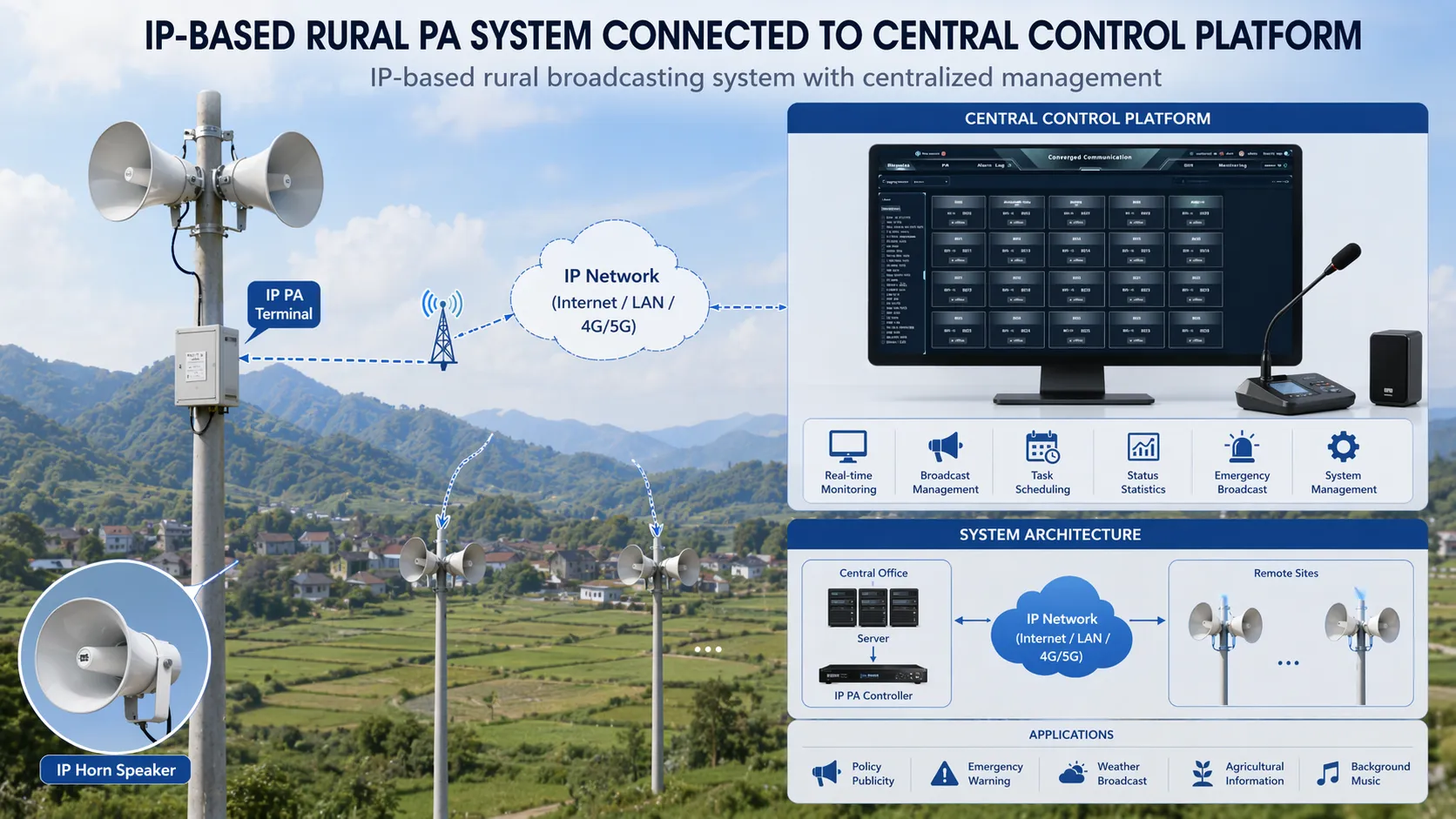
在現代化部署中,支持 SIP 的 IP 揚聲器和工业 VoIP 閘道能够實現集中控制、遠端配置和云端監測。這些智慧設備突破了傳統有線廣播的限制,支持基於網路的统一管理和多站點联动,大幅提升農村廣播系統的灵活性和管理效率。
揚聲器布點与覆蓋
揚聲器需要经过合理布點,才能在目標覆蓋區域内提供均匀、清楚、可理解的声音。專業设计需要考虑地形起伏、建築分布和信号干扰,避免出现声音盲區或过度重疊,確保村莊和农田的各个角落都能接收到清楚的廣播內容。
高杆安裝和防水号角揚聲器是實現遠距離、广範圍覆蓋的常見選擇。号角揚聲器具备指向性強、傳播距離远的特点,而较高安裝位置可以避开遮挡物并擴大覆蓋範圍,非常適合農村戶外廣播應用。
供電方案
穩定、不間斷的供電是農村廣播系統的基礎要求。实际部署中常採用太陽能板、大容量電池或太陽能与電池混合供電方案,以维持 24/7 持續運行。太陽能方案特别適合无穩定市电的農村區域,可以将清潔能源转化为穩定電力,减少对電網的依赖。
建議配置冗余备电系統,以避免電網故障或恶劣天气造成廣播中斷。太陽能 + 電池 + UPS 等双重或多重备份方案,可以保障系統在连续阴雨或停电期间仍能正常工作,持續提供應急通訊服務。
網路与連接方式
網路連接方式应结合當地環境選擇,可採用有線以太网、遠距離無線鏈路或 4G/5G 行動網路。在有線基礎設施完善的區域,以太网可提供穩定傳輸;在偏远地区,無線和蜂窝網路通常更易部署、适应性更強。
原生 IP 系統支持实时遠端監測、集中控制和与统一通訊平台整合。管理员可以透過电脑或移动終端管理整个廣播系統,遠端调整參數、發布資訊并監測設備狀態,从而显著降低日常运维難度。
農村廣播設備的關鍵特性
防水防塵与耐候能力
廣播硬體必须能够長期承受雨水、灰尘、极端溫度和高濕環境。戶外設備通常採用全密封结构,防止水汽和粉尘进入內部,保護電子元件不受恶劣環境損壞。
IP65 及以上防护等級外壳和工业级電子元件是長期可靠運行的基本要求。IP65 表示設備具备完全防塵能力,并能抵抗低压水流噴射;工业级元件则支持更宽的工作溫度範圍,確保設備在嚴寒和酷热中穩定運行。
大範圍覆蓋能力
農村廣播系統专为大範圍地理覆蓋而设计,同时尽量减少复杂配套基礎設施。系統透過高效率傳輸技术减少設備數量、擴大覆蓋區域,并降低整体部署和維護成本。
高效率功放和高輸出号角揚聲器是遠距離声音投射的常用组合。高功率放大与專業号角揚聲器结合,可以将清楚音频傳輸至数百米範圍,满足大面积農村區域的覆蓋需求。
遠端管理
现代 IP 農村廣播系統支持透過標準 IP 網路进行遠端配置、实时狀態監測和韌體升级。这种智慧管理能力使运维人員无需频繁到现场即可完成设置和巡检,非常適合点位分散的農村應用。
遠端管理可减少不必要的现场維護,降低运营成本并缩短停机时间。遠端排障和軟體升级能快速解决故障,確保系統長期保持最佳工作狀態,避免關鍵資訊發布中斷。
与通訊系統整合
農村廣播系統可与 SIP、VoIP 和關鍵應急通訊平台整合。跨系統整合能够把日常廣播与應急通訊统一起来,形成更完整的農村通訊保障体系。
Becke Telcom 等專業通訊方案提供商能够提供统一的跨系統通訊和集中控制方案,帮助用户實現更順暢的操作。專業整合方案可提升兼容性与穩定性,为農村場景带来一站式、高效率的通訊體驗。
農村廣播系統維護建議
定期設備檢查
定期巡检对于確認揚聲器、線纜、電源和網路連接是否正常非常重要。月度檢查可重点关注設備外观、連接牢固性和音频播放效果;季度檢查则应深入測試核心效能參數。
主動发现故障可以避免計畫外停机和高额維修成本。及早发现線路松动、揚聲器損壞、電源異常等問題,有助于避免大範圍系統故障,保障廣播系統長期穩定運行。
清潔与環境防护
积累的灰尘、湿气和環境污染物会降低音频效果并缩短硬體寿命。農村地区灰尘多、湿度变化大,因此需要定期清潔設備表面和出声部位,以保持良好音频輸出。
設備应定期清潔,并檢查防水密封件是否完好,以维持防护等級。損壞的密封件应立即更换,避免湿气和粉尘进入設備內部導致电路故障。
具备 IP 防护密封的坚固外壳对于延长設備寿命非常關鍵。在環境特别恶劣的區域,还可加装額外保護罩,實現双重環境防护。
電源系統維護
電池组和太陽能板需要定期檢查維護,以確保供電穩定可靠。太陽能板应清除灰尘和杂物以保持光電轉換效率,電池则应定期檢查电压和老化狀態。
UPS 和備用電池等备电系統应定期測試,確保停电时能够正常工作。每月进行充放电測試可以確認备电容量,保障主電源故障时系統能立即接管運行。
軟體与網路更新
对于原生 IP 農村廣播系統,定期韌體升级和網路健康檢查对系統完整性非常重要。官方韌體升级可优化功能、修复潜在漏洞,并提升智慧設備的穩定性和安全性。
這些更新能够修复安全漏洞和軟體問題,使系統保持良好效能。網路穩定性測試可提前发现干扰和連接故障,確保基於 IP 的廣播系統数据傳輸順暢。
結構化、持續性的維護計畫是保障農村廣播系統長期可靠和高效能運行的基礎。標準化維護不仅能降低故障率,还能延长設備寿命,最大化系統應用價值。
農村廣播系統應用場景
公共通知
系統可向覆蓋範圍内居民發布日常公告、社區活動更新和本地資訊,广泛用於村务通知、政策宣傳、文化活動廣播和便民資訊發布,建立基层管理与居民之间的順暢沟通通道。
應急預警
系統可作为關鍵預警平台,提醒居民注意自然災害、安全隐患和其他紧急事件。在洪水、滑坡、野火和公共衛生事件发生时,可快速發布全覆蓋警報,引导居民采取避險措施。
农业通訊
系統可發布实时天气预报、农业技术要点和市场資訊,支持农业生产。它能为农户提供种植指导、病虫害防治建議、农产品市场價格和氣象預警,帮助提高农业生产效率和经济收益。
教育与宣傳
系統支持公共教育、健康安全宣傳和社區推广活動,可用於普法宣傳、医疗衛生指导、消防安全教育和乡村振兴政策宣傳,提升農村居民綜合素质和安全意识。
FAQ
農村廣播需要哪些設備?
完整農村廣播系統通常包括廣播级麥克風、功率放大器、防水揚聲器以及集中控制或 IP 管理系統。根据实际環境和覆蓋需求,还可以增加太陽能套件、備用電池和信号放大設備。
農村廣播系統没有穩定電力也能工作吗?
可以。系統可使用离网供電方案,例如太陽能阵列配合大容量電池,以便在没有穩定電網的情况下持續運行。這類混合供電方案专为缺电區域设计,可保障廣播系統 24 小时不間斷運行。
IP 廣播系統適合農村地区吗?
非常適合。原生 IP 系統适用於農村部署,尤其是结合遠距離無線鏈路或 4G/5G 行動網路时,可實現可靠数据傳輸。它支持遠端管理和多站點联动,適配農村点位分散、低維護的應用特点。