
Encyclopedia
A GSM Gateway is a business communication device that connects the GSM mobile network with enterprise telephony systems such as IP PBX platforms, VoIP servers, contact center environments, and legacy PBX infrastructure. In practical use, it allows organizations to route calls between mobile networks and internal voice systems more efficiently, which makes it valuable for branch offices, distributed operations, mobile-heavy calling environments, backup communication planning, and business telephony deployments that need more flexible access options.
A GSM Gateway is best viewed as a bridge between the mobile network and the business phone system. It allows a company to use GSM connectivity as part of its communication architecture instead of treating mobile access as a separate and unmanaged channel. When integrated correctly, the gateway turns mobile network resources into part of the organization’s wider voice environment.
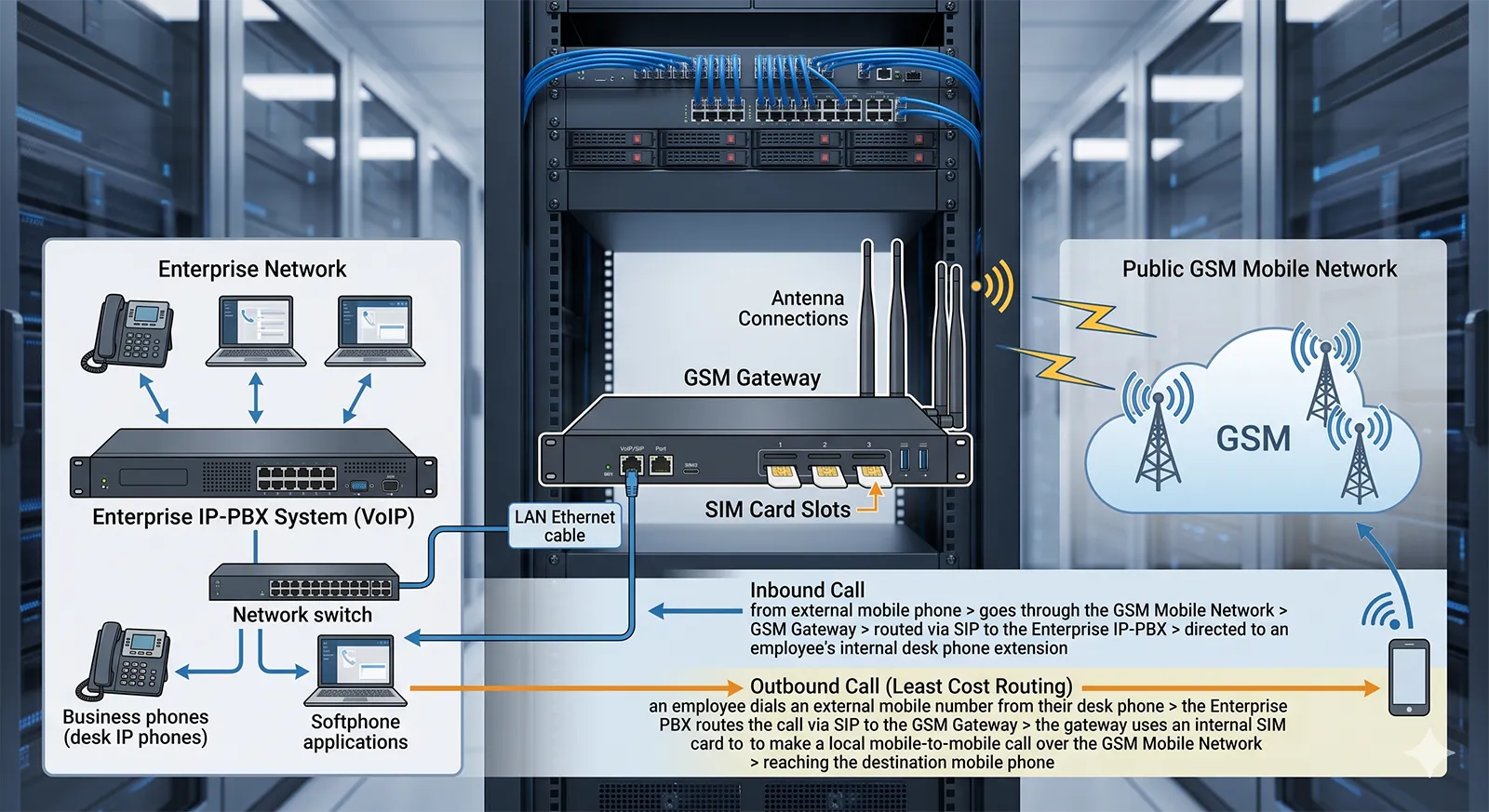
In enterprise deployments, the gateway is usually installed between the business communication platform and the GSM network. It may connect to an IP PBX, SIP server, analog PBX, or another call control platform on one side, while using SIM-based mobile channels on the other side. This allows office users, operator positions, service teams, and applications to place or receive calls through the mobile network in a more structured way.
That is why GSM Gateways are still relevant in B2B communications. They help companies create stronger links between internal telephony systems and the mobile network, especially in scenarios where mobile calling, distributed sites, or flexible route design matter to daily operations.
The working principle is straightforward. The GSM Gateway receives calls or signaling from the enterprise communication system and routes them to the GSM mobile network through its radio modules and installed SIM cards. In the opposite direction, calls coming from the GSM side can be delivered into internal extensions, departments, operator consoles, or service workflows within the business phone system.
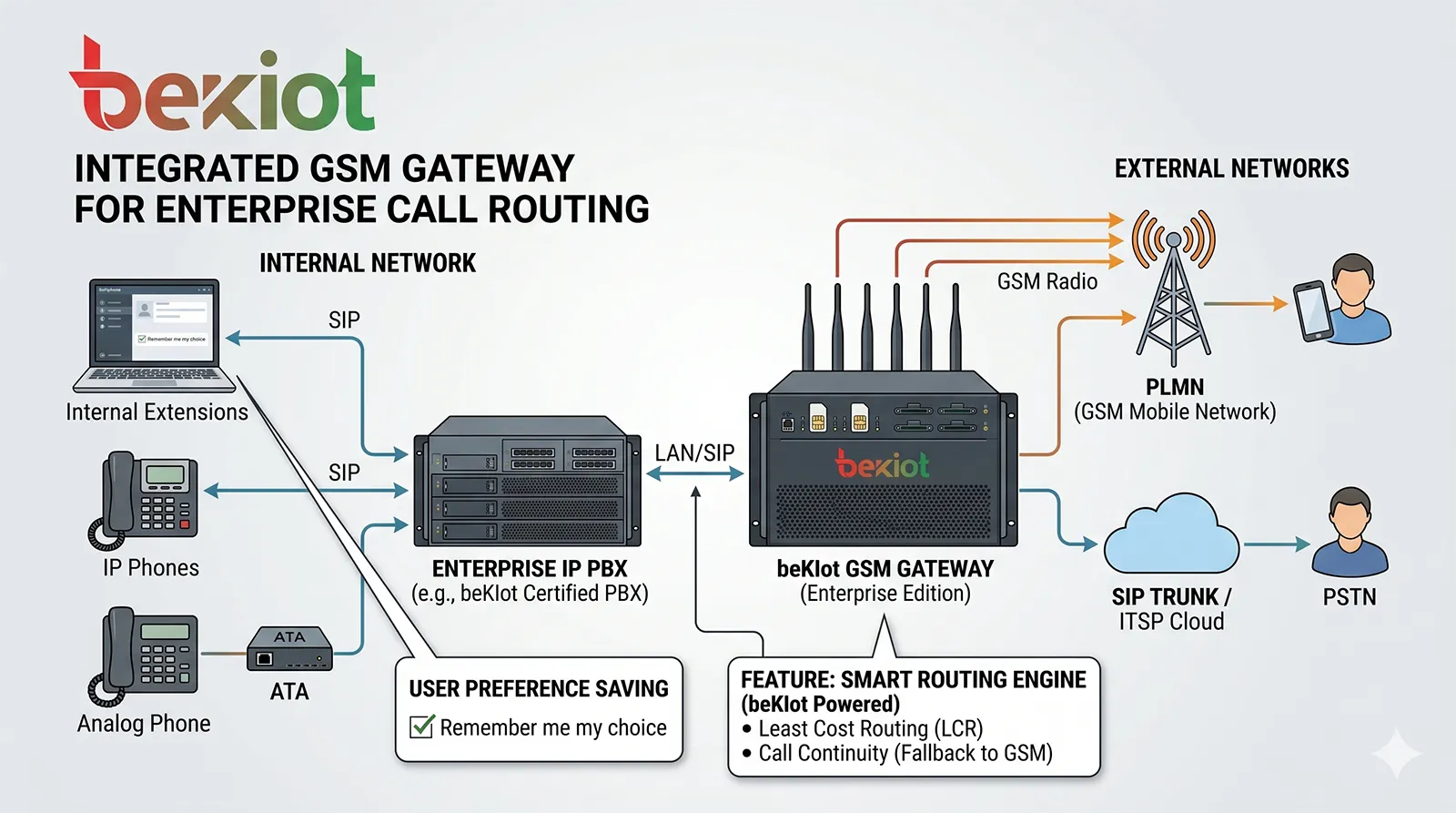
In a SIP-based environment, the IP PBX or VoIP platform can direct selected traffic to the GSM Gateway according to routing rules. These rules may be based on dial patterns, destination types, mobile operator preferences, time schedules, or cost strategies. As a result, the gateway becomes part of the company’s call handling logic rather than an isolated telecom device.
Some GSM Gateways also support SMS functions. In those cases, the device can assist with notification workflows, operational alerts, appointment reminders, escalation messages, or other messaging tasks that need to pass through the mobile network. This expands the gateway’s role beyond voice and makes it useful in broader communication workflows.
For business users, a GSM Gateway is not just mobile access hardware. It is a practical connection point between enterprise call control and the mobile network.
The primary feature of a GSM Gateway is that it gives the business phone system direct access to the GSM mobile network. This matters in organizations where a large percentage of external communication happens with mobile users, field teams, customers, suppliers, or branch personnel who rely on mobile numbers rather than fixed lines.
By making mobile connectivity part of the communication platform, the gateway helps the business manage external communication more consistently and with better operational control.
Business communication often requires more than a single connection path. GSM Gateways are therefore available in multi-channel configurations so they can handle concurrent calls across several SIM-based routes. This is important for offices, branches, support teams, and customer-facing environments where traffic may rise during peak periods.
Multi-channel capability also gives businesses room to scale. A company can deploy a gateway that fits current traffic needs while keeping a path open for future expansion.
Modern business telephony depends heavily on interoperability. A GSM Gateway that supports SIP can integrate with IP PBX systems, VoIP servers, and other enterprise voice platforms. This makes it easier to add mobile network access without disrupting the existing communications framework.
From a B2B perspective, this is one of the gateway’s most important strengths. It allows businesses to extend current systems instead of building separate communication silos around mobile traffic.
GSM Gateways can support routing logic based on business needs. Calls can be directed through GSM channels according to number type, traffic policy, destination, service priority, or network preference. This flexibility allows organizations to design communication paths that suit operational requirements instead of relying on one fixed route for every call.
That routing flexibility is especially useful where the business needs to balance cost, availability, and performance across different communication paths.
Many business deployments focus mainly on voice, but SMS support can also be valuable. Some GSM Gateways allow enterprises to send or receive messages for operational notices, application alerts, status updates, reminders, or event-driven communication tasks.
Where messaging is part of the workflow, this feature can increase the gateway’s practical value and expand its role inside the broader communication environment.
After installation, the gateway must remain manageable. Business-grade GSM Gateways often include web-based administration tools for configuration, channel monitoring, route setup, status review, and maintenance operations. This is useful for organizations that need remote visibility across one site or many.
Good management tools reduce support effort and help communication teams keep the service stable as business needs change.
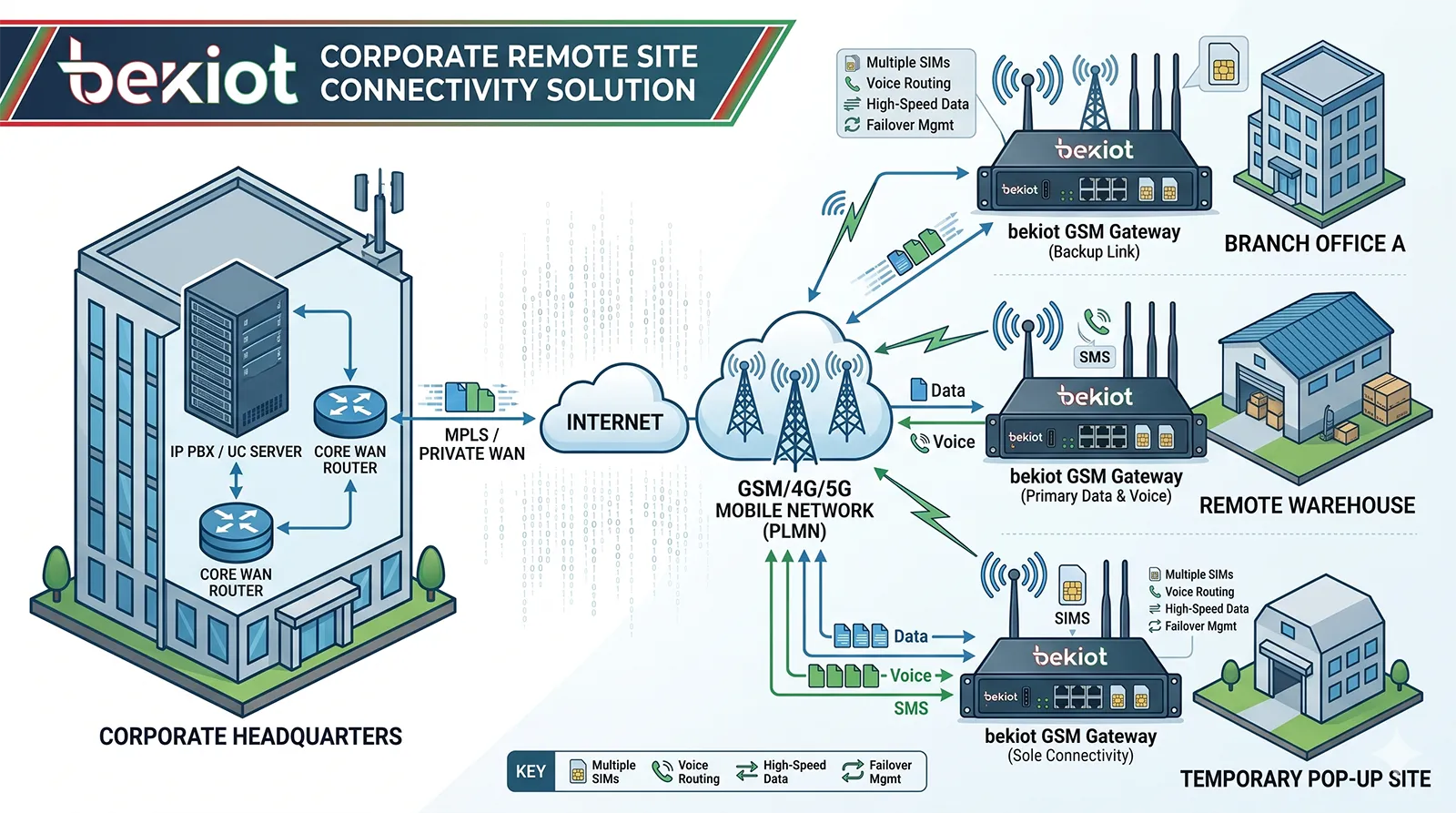
A GSM Gateway can also add route diversity to the communication design. If a business depends heavily on fixed routes or SIP trunks, the mobile network can serve as an additional path for selected calls. This is particularly useful for branches, temporary facilities, remote teams, and customer-facing operations that cannot depend on only one type of connectivity.
Although it is not the only part of a resilience strategy, it can be a useful component in business continuity planning.
One of the most common reasons businesses deploy GSM Gateways is to manage mobile-related communication costs more effectively. In some operating environments, selected outbound traffic can be routed through GSM channels in a way that supports more favorable calling economics than sending everything through the same voice path.
This benefit is especially relevant for companies that regularly call mobile users, coordinate with field teams, or manage service operations across multiple locations.
Not every business site has the same communications environment. Some branches may have good IP connectivity but limited fixed telephony resources. Others may need voice service quickly without waiting for full telecom rollout. A GSM Gateway gives these sites a practical way to connect into the wider business voice system while using available mobile network access.
This makes the gateway a strong fit for regional offices, retail locations, temporary workplaces, project sites, and distributed operations.
Organizations that depend on a single communication path create unnecessary exposure. A GSM Gateway can add another route into the telephony design, which helps the business maintain selected calling capabilities if another path becomes unavailable. For some companies, this additional option supports stronger operational resilience.
That can be particularly important where communication availability affects customer response, field coordination, or essential internal workflows.
Many businesses already have an IP PBX, SIP server, or another telephony platform in place. A GSM Gateway allows that investment to support more connectivity options without replacing the core system. Instead of redesigning the whole voice environment, the organization can extend it toward the mobile network in a controlled way.
This makes the gateway attractive in B2B deployments where companies want practical improvement rather than unnecessary replacement.
Some business sites need communication access quickly. Temporary offices, project sites, field operations, and newly opened branches may not have time to wait for ideal fixed-line deployment. A GSM Gateway can often be introduced faster because it uses the mobile network as part of the voice access strategy.
That speed gives businesses more flexibility when communications need to support real operations under real timelines.
In office environments, GSM Gateways can be used with IP PBX systems to support communication with customers, suppliers, partners, and staff who primarily use mobile numbers. This allows the organization to manage those calls within the same general call framework as the rest of its telephony system.
For B2B users, this improves consistency in call handling and supports more centralized control over external voice traffic.
Multi-site businesses often need a practical way to support smaller branches without building identical fixed communication environments at every location. A GSM Gateway helps branches connect to enterprise telephony policies while still using local mobile access as part of their daily operations.
This is useful in retail chains, regional offices, service centers, clinics, depots, and other distributed business models where communication flexibility matters.
Project offices, field teams, event sites, utility worksites, and construction support locations often need organized communication without long infrastructure lead times. GSM Gateway deployment can help those sites obtain business-grade voice access while remaining connected to the wider enterprise communication structure.
This allows the company to maintain more professional and manageable communication outside conventional office conditions.
Some organizations use GSM Gateways in customer-facing environments where frequent mobile contact is part of normal operations. The gateway may support service callbacks, outbound communications, branch-level service calls, or other workflows where mobile reach is important.
Its value in these cases comes from how well it integrates with the company’s communication process, routing policy, and service model.
Where SMS is supported, the GSM Gateway can assist with reminder messages, system notices, status alerts, equipment notifications, or event-driven communications from business applications. This gives enterprises another practical way to connect mobile messaging with internal systems.
For some businesses, that makes the gateway useful not only as a voice bridge but also as a supporting tool for operational communication workflows.
The first consideration is traffic demand. A smaller office may only need a few GSM channels, while a branch network or customer-facing team may need higher concurrent capacity. The correct choice should reflect real call volume and expected growth.
Right-sizing the platform helps avoid both congestion and unnecessary overinvestment.
The gateway should integrate well with the existing PBX, SIP server, or voice platform. Strong compatibility helps the organization maintain a clear communication structure and reduces the risk of operational complexity after deployment.
In enterprise communications, smooth integration is often more important than having a long specification sheet.
Businesses need equipment that remains easy to configure and monitor over time. Web administration, remote access, clear status visibility, and practical route management all make a difference in day-to-day operations.
This becomes even more important when the gateway is deployed across multiple sites or maintained by a limited technical team.
Some projects only need voice bridging, while others also need messaging support. Defining whether the project is voice-only or voice-plus-SMS helps narrow the right product choice and prevents unnecessary feature mismatch.
The decision should follow business workflow requirements rather than assumptions about what might be useful someday.
Office, technical room, branch, remote-site, and industrial environments do not place the same demands on communication hardware. Power conditions, maintenance access, installation style, and operational expectations should all be considered when selecting a GSM Gateway.
Choosing equipment that fits the real deployment environment supports a more stable and more practical business rollout.
The right GSM Gateway is the one that matches the business call model, integrates with existing systems, and supports future growth without creating unnecessary operational burden.
A GSM Gateway is more than a device that links SIM cards to a phone system. In business communications, it serves as a practical bridge between the mobile network and the enterprise voice environment. It helps organizations improve routing flexibility, support branch and remote sites, strengthen communication continuity, and make better use of existing PBX or IP telephony infrastructure.
For companies planning mobile-integrated business telephony, branch voice access, or additional communication paths for operational resilience, a GSM Gateway can be a worthwhile part of the solution. Becke Telcom supports enterprise communication projects with GSM Gateway solutions, product matching, and deployment guidance for practical business scenarios.
Yes. Many GSM Gateways support SIP and can integrate with IP PBX platforms, VoIP servers, and other modern business communication systems.
In many cases, yes. Businesses that make frequent calls to mobile users may use GSM routing as part of a broader cost-control strategy, depending on local telecom pricing and traffic patterns.
They are commonly used by multi-site companies, branch operations, service organizations, project-based teams, customer-facing businesses, and enterprises that need stronger integration between mobile access and internal telephony.
No. A GSM Gateway does not replace an IP PBX. It works alongside the PBX by adding GSM mobile network access as part of the wider enterprise communication architecture.