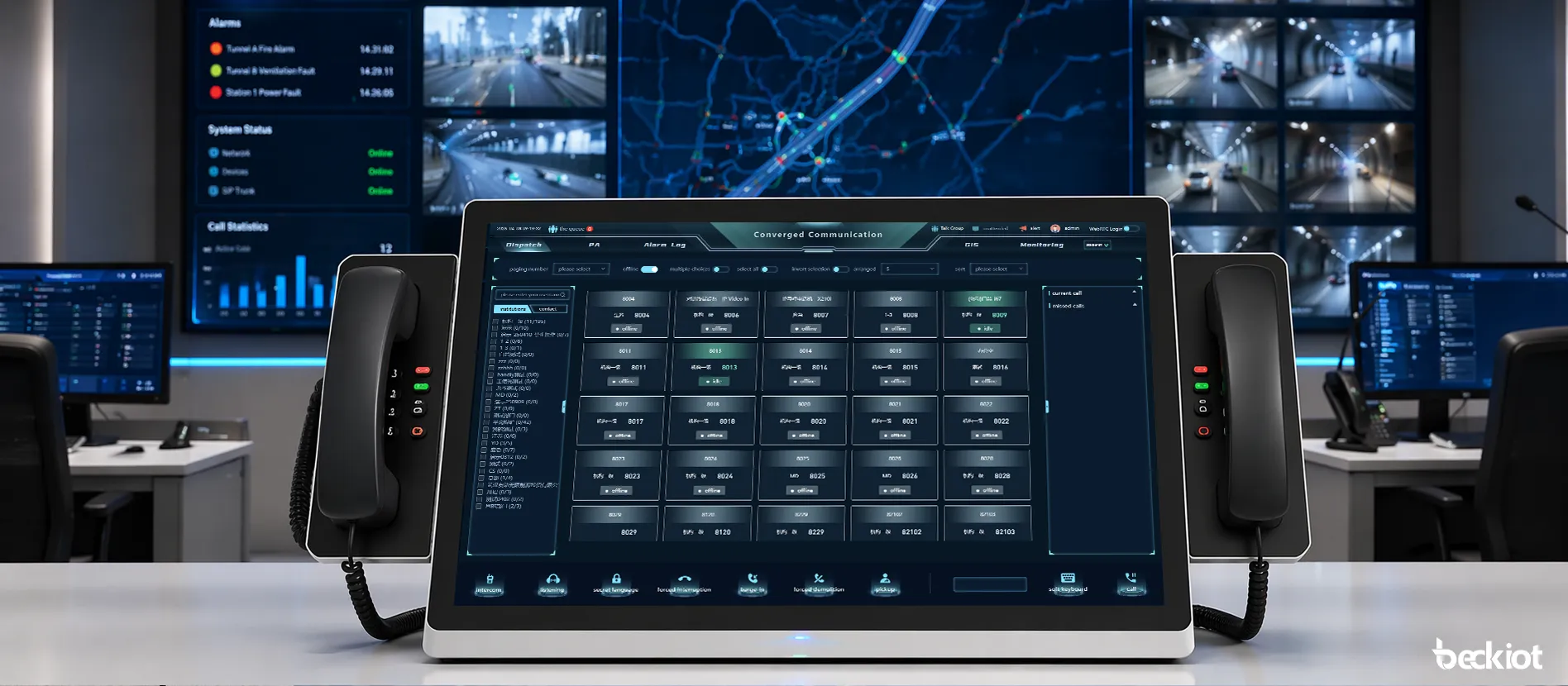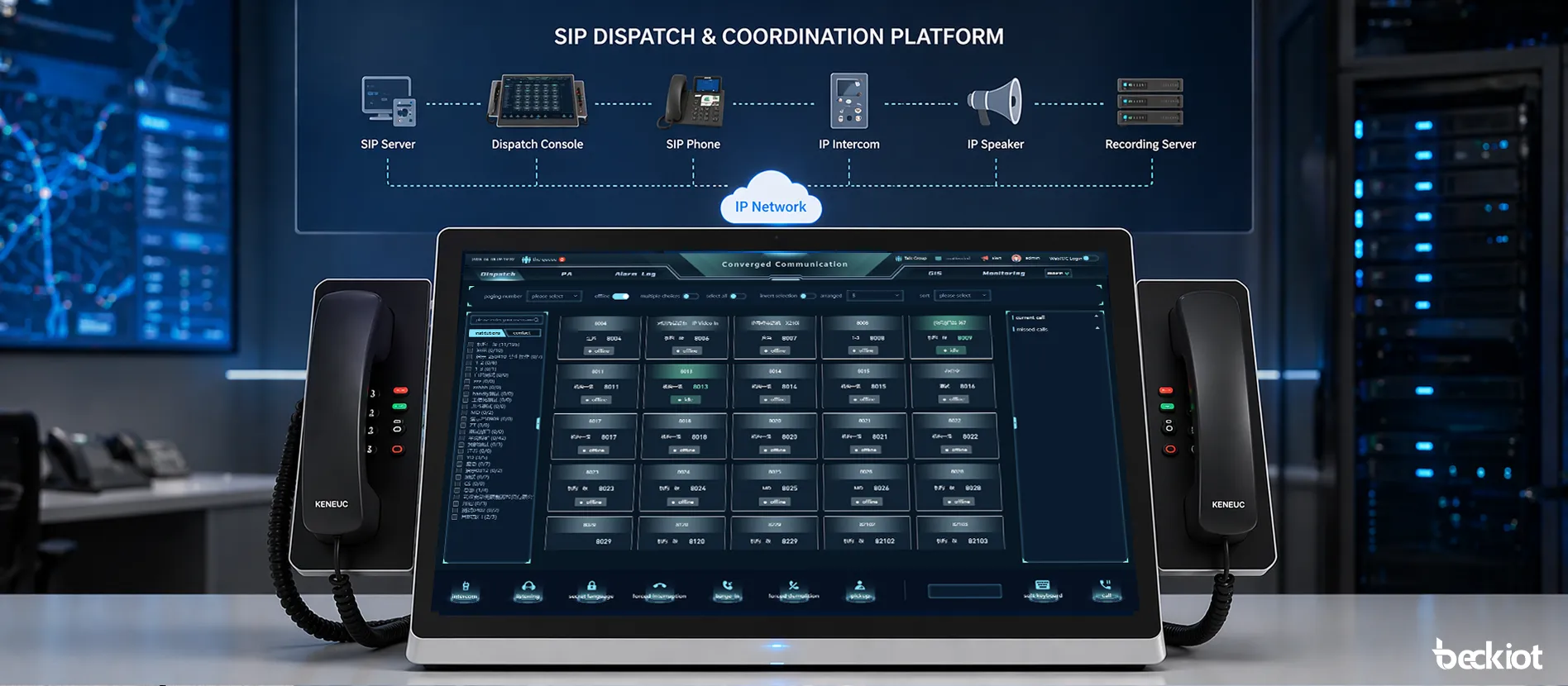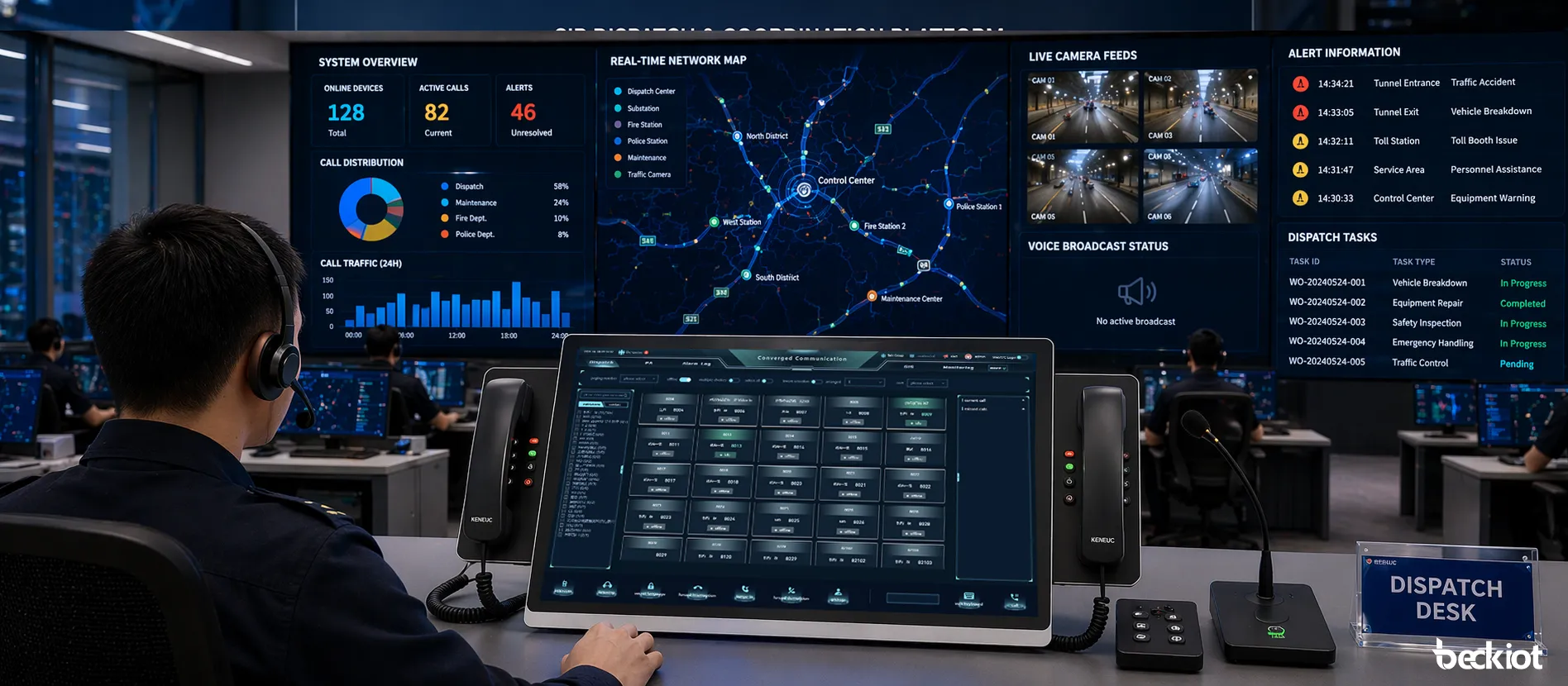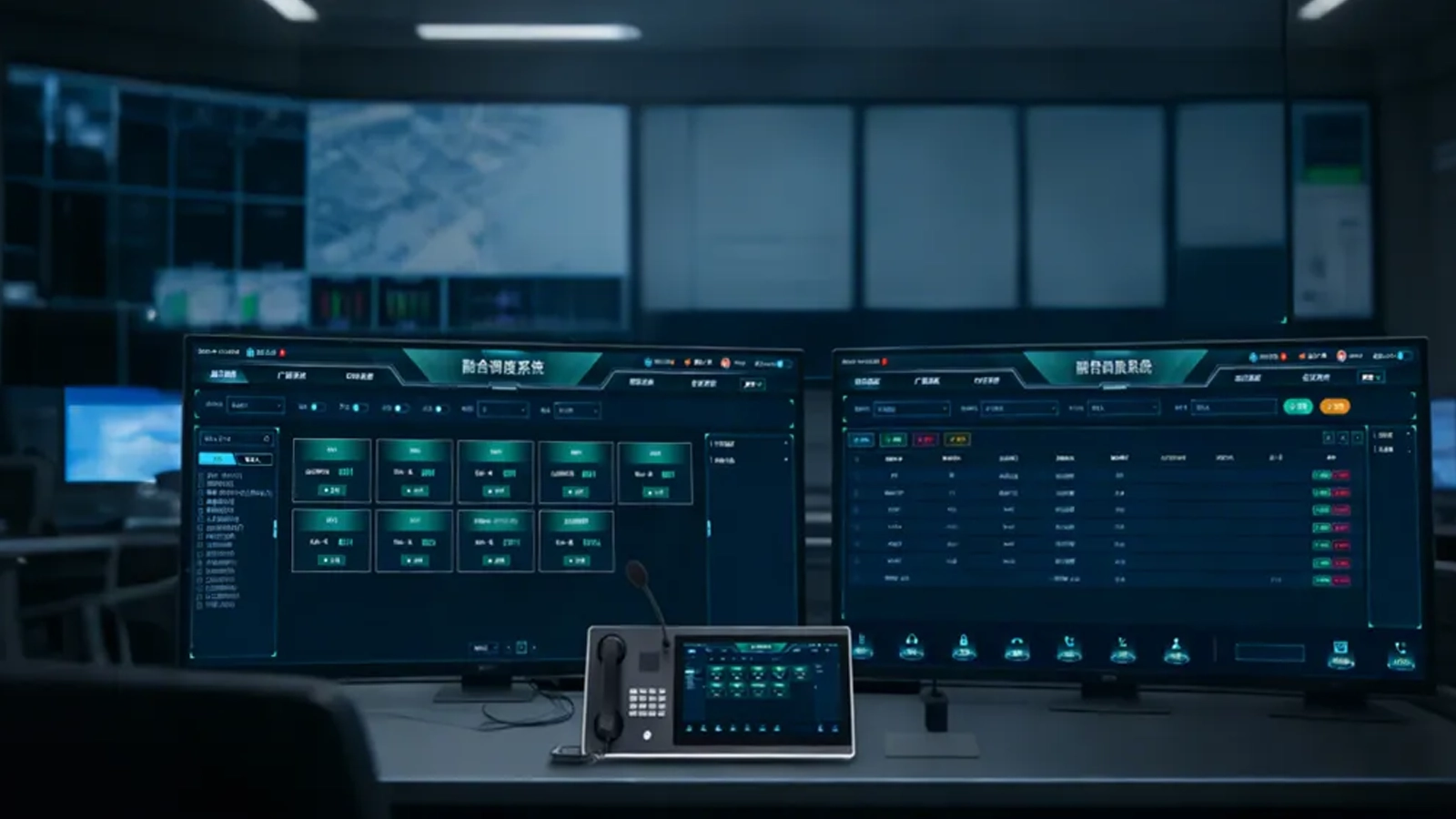
The Becke BK-DSC-236 IP Dispatch Console is designed for environments where operators need faster call handling, clearer command workflows, and a more organized dispatch interface on the desktop. Built around a 23.6-inch multimedia touch display, this console combines visual interaction, SIP voice access, and practical operator controls in one integrated platform. Rather than functioning like a basic office endpoint, it is positioned as a professional dispatch terminal for communication rooms, emergency coordination centers, industrial control environments, and multi-point command applications.
What makes the BK-DSC-236 especially useful is the way it brings together touch operation, dual-handset flexibility, quick-response calling, and dispatch-oriented ergonomics. It is meant for operators who may need to monitor information continuously, answer and place calls quickly, switch communication paths efficiently, and keep command tasks organized during both routine operations and high-pressure response periods.

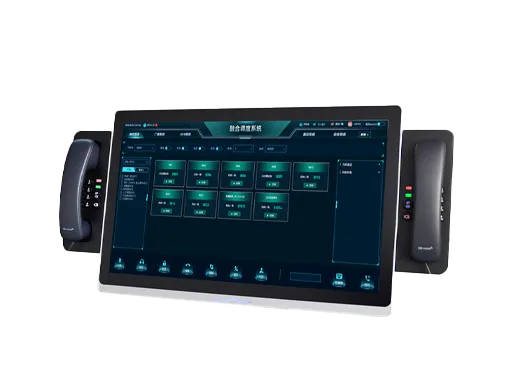
One of the most immediate strengths of the BK-DSC-236 is its 23.6-inch full HD display with 10-point capacitive touch capability. This gives operators a larger and more practical workspace for dispatch tasks, especially in control environments where multiple communication actions need to be handled quickly and clearly. Compared with smaller desktop endpoints, the console provides more visual room for call handling, monitoring panels, dispatch software, and command-related information.
That larger interface is not just about appearance. In real dispatch work, screen space affects response speed. A wider and clearer display helps operators reduce visual clutter, improve task switching, and maintain better awareness during busy communication periods.
A major selling point of the BK-DSC-236 is its dual SIP handset layout. The console is designed with handset modules on both sides, giving operators more flexibility in how they handle calls and organize communication behavior. This arrangement supports a more professional dispatch workflow than a single conventional handset setup, especially in environments where different call types or operational roles must be managed efficiently.
The modular handset concept also adds flexibility to deployment. It supports a dispatch-oriented desktop style that feels more specialized and more capable than a standard business phone approach, which is important in command centers where communication speed and operator comfort both matter.
The BK-DSC-236 includes a built-in 5-port mini switch, which is one of its most practical hardware advantages. This allows the unit to connect through a single network cable while simplifying desktop integration and reducing external network clutter. For dispatch room deployment, this is a useful detail because it supports cleaner installation and more efficient workstation organization.
In larger projects, these kinds of details matter. Cleaner cabling, easier integration, and fewer external boxes help make the dispatch position more reliable and more manageable over time.
The BK-DSC-236 is built to make dispatch work more direct, more visual, and more efficient from the operator’s desk.
The BK-DSC-236 is designed around quick dispatch actions. It supports one-touch dialing and one-touch hands-free operation, which helps reduce delay during routine communication and urgent coordination. In dispatch environments, these are not small convenience features. They directly affect how quickly an operator can respond when every second counts.
This kind of simplified interaction is especially valuable when the console is used in multi-tasking conditions. Operators may need to answer incoming calls, reach field personnel, trigger voice contact, or switch communication modes without breaking workflow. The BK-DSC-236 is clearly shaped for that style of use.
Another notable capability is automatic IP broadcast support. This expands the console’s role beyond point-to-point voice communication and makes it more useful in dispatch and notification environments where operators may need to initiate voice announcements quickly. Instead of relying only on separate audio equipment, the dispatch console can participate more directly in organized voice distribution workflows.
This makes the product especially relevant for sites where paging, operational notification, and command communication are closely connected rather than treated as separate systems.
The console includes an integrated camera, which adds practical value in environments that may combine voice coordination with visual communication or operator verification needs. This helps position the BK-DSC-236 as more than a traditional voice-only terminal. It supports a more modern dispatch desk concept, where multimedia interaction is increasingly part of daily operations.
For users building command positions that need to look beyond legacy dispatch hardware, this is an important advantage. It aligns the unit with broader unified communication and control room trends.

The BK-DSC-236 uses a VESA desktop stand with an adjustable angle range, allowing the display to be positioned more comfortably for long operator sessions. This is a meaningful ergonomic feature in dispatch rooms where consoles may be used for extended periods every day. Better viewing angle adjustment helps reduce fatigue and supports a more natural working posture.
Dispatch consoles are not short-use devices. They are workstations. That is why ergonomic fit matters just as much as interface capability, especially in environments where operators remain seated for hours while handling communications continuously.
The product uses an aluminum alloy frame and a slim, chassis-light design language that gives it a more modern and professional desktop presence. In command rooms, visual organization matters. A dispatch console should feel like a dedicated professional tool rather than an improvised combination of generic hardware. The BK-DSC-236 fits that expectation well.
Its structure makes it suitable for installation in fixed control positions where appearance, reliability, and efficient desk use all matter at the same time.
The console is offered with configurable CPU, memory, and storage options, which makes it easier to align the hardware platform with different project requirements. That flexibility is useful because dispatch applications vary widely. Some environments need a straightforward voice desk, while others need a more capable multimedia control endpoint supporting additional software or integrated command interfaces.
This allows the BK-DSC-236 to fit both lighter dispatch roles and more involved command center use cases without forcing every deployment into the same hardware profile.
A strong dispatch console is not defined only by call capability, but by how naturally it supports continuous operator work under real operational pressure.
The BK-DSC-236 is well suited to emergency response environments where operators need to receive calls, coordinate departments, issue notices, and maintain a clear desktop workflow. Its large touch interface, quick-action call controls, and dispatch-friendly structure make it a practical fit for command centers that cannot rely on ordinary office communication endpoints.
In these environments, communication equipment must support clarity, speed, and operational discipline. The BK-DSC-236 is built with that role in mind.
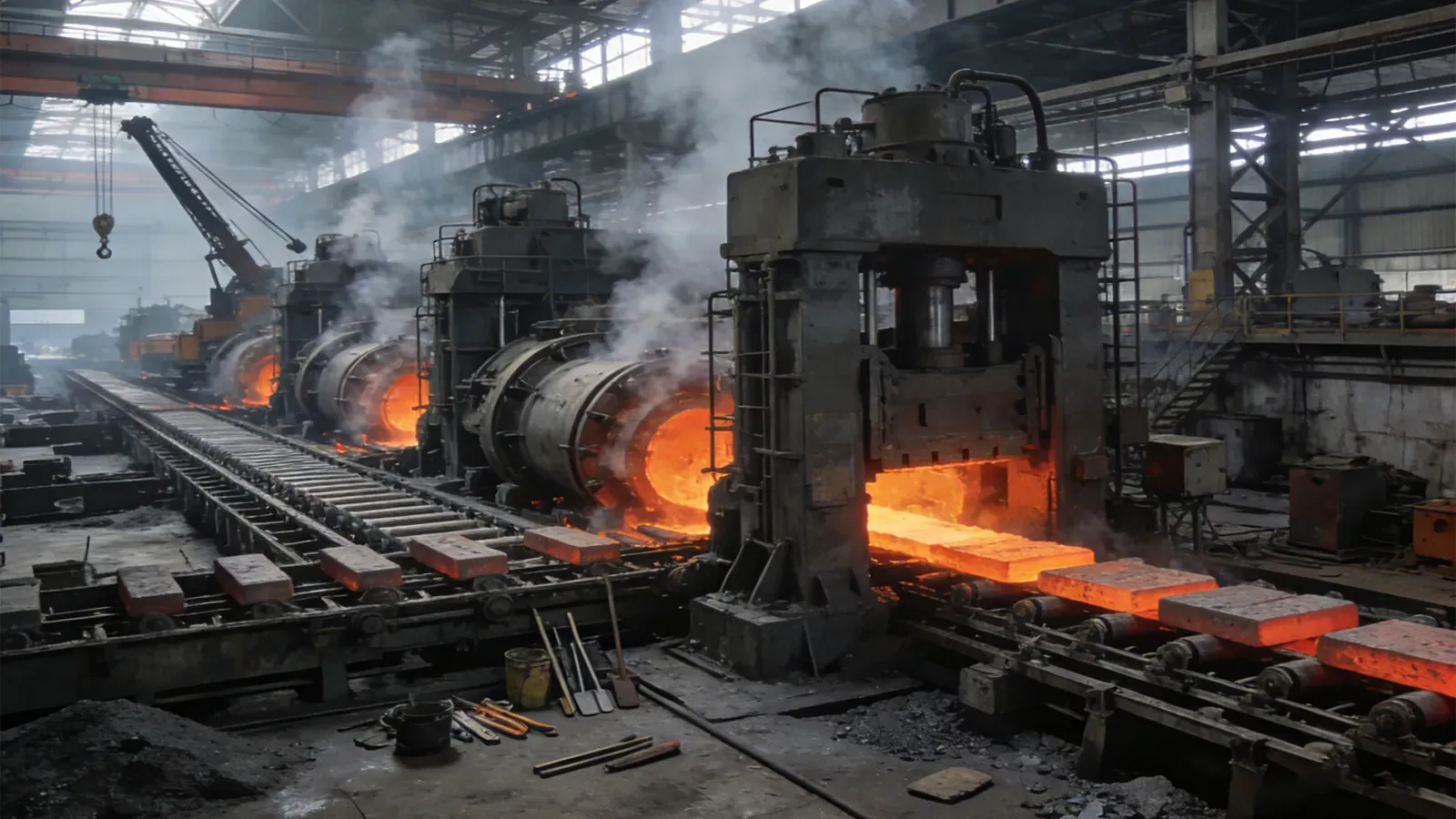
The product is also a strong match for rail transit dispatch, utility coordination centers, industrial production communication desks, and process-related control rooms. These settings often require voice coordination across multiple positions and field points, along with a stable desktop setup that can be used throughout long duty periods.
Its integrated structure and multimedia form make it suitable for these kinds of serious operational environments, where the dispatch terminal is part of the workflow infrastructure rather than just a peripheral device.
The BK-DSC-236 is positioned for professional communication fields such as power, coal, and oil, where voice command and fast coordination remain critical. In these sectors, a dispatch console needs to support structured communication rather than casual calling. The BK-DSC-236 aligns with that requirement by combining a professional operator interface with practical voice-handling features.
It is a particularly good fit where centralized communication control is expected to support both normal operations and abnormal-event response.
For government duty rooms, public service coordination desks, and specialized dispatch offices, the BK-DSC-236 offers a more capable alternative to standard business desktop phones or ordinary PCs used as communication substitutes. It brings together voice interaction, dispatch efficiency, and a purpose-built operator form in a way that better reflects the needs of formal command positions.
That makes it useful in projects where professionalism, usability, and coordination speed all need to be considered together.

The BK-DSC-236 IP Dispatch Console is a practical choice for organizations that need a dispatch terminal with stronger operator usability, clearer desktop integration, and more professional communication handling than standard office endpoints can provide. Its strengths come from the way it combines a large touch display, dual SIP handsets, one-touch calling features, built-in switching, adjustable desktop ergonomics, and multimedia-ready design in a single console platform.
For projects involving command centers, emergency coordination, industrial dispatch, rail transit communication, or public-service response environments, the BK-DSC-236 offers a more structured and more capable dispatch experience. It is designed for real operator work, not just for basic calling.
Its main advantage is the combination of a large 23.6-inch touch interface and a dispatch-oriented hardware layout with dual SIP handsets. This gives operators a more efficient and professional workstation for call handling, coordination, and multimedia dispatch tasks.
Yes. It is designed for dispatch and command applications where operators need faster interaction, clearer communication handling, and a more structured desktop workflow than a standard office phone can provide.
Yes. It supports one-touch dialing, one-touch hands-free operation, and automatic IP broadcast functions, all of which help improve communication speed and reduce operator delay during routine or urgent tasks.
It is well suited to emergency command centers, rail transit dispatch rooms, industrial control rooms, energy and mining communication desks, and government or public-service coordination environments that require professional voice dispatch capability.