
行業洞察
2026-09-03 16:16:29
PAGA系統架構:集中式與分散式設計
Compare centralized, distributed and hybrid PAGA systems architecture, including amplifier placement, cabling, network design, redundancy, fault isolation and expansion for industrial projects.

貝克電信

PAGA系統架構:集中式與分散式設計

兩套PAGA系統可以提供幾乎相同的尋呼和通用警報功能,但可能採用截然不同的實體架構。

在一個專案中,控制器、放大器和介面設備可能全部安裝在一個中央通訊機房內。而在另一個專案中,控制仍保持集中,但放大功能則分佈在多個製程區域、建築物或遠端站點中。

這種選擇影響的不只是設備擺放位置,還會影響揚聲器電纜長度、網路依賴性、故障隔離能力、設備機房需求、維護便利性以及未來擴展能力。

對於緊湊型設施,集中式放大可能是最簡單的方案。隨著場地規模增大或地理分佈更加分散,分散式或混合式架構往往變得更加實用。

PAGA Systems相關解決方案:

1. PAGA系統架構定義了什麼?

PAGA系統架構定義了控制、音訊路由、放大以及現場揚聲器電路在整個設施內的佈置方式。

簡化的音訊路徑可表示為:

尋呼或警報來源 → PAGA控制器 → 音訊路由 → 放大器 → 揚聲器迴路 → 揚聲器

主要的架構問題是這些功能應位於何處。

集中式設計將大多數主動設備集中在一個位置,並將放大後的音訊分配到現場。分散式設計則將選定的功能(尤其是放大)移到更靠近其所服務區域的位置。混合式設計則結合了這兩種方式。
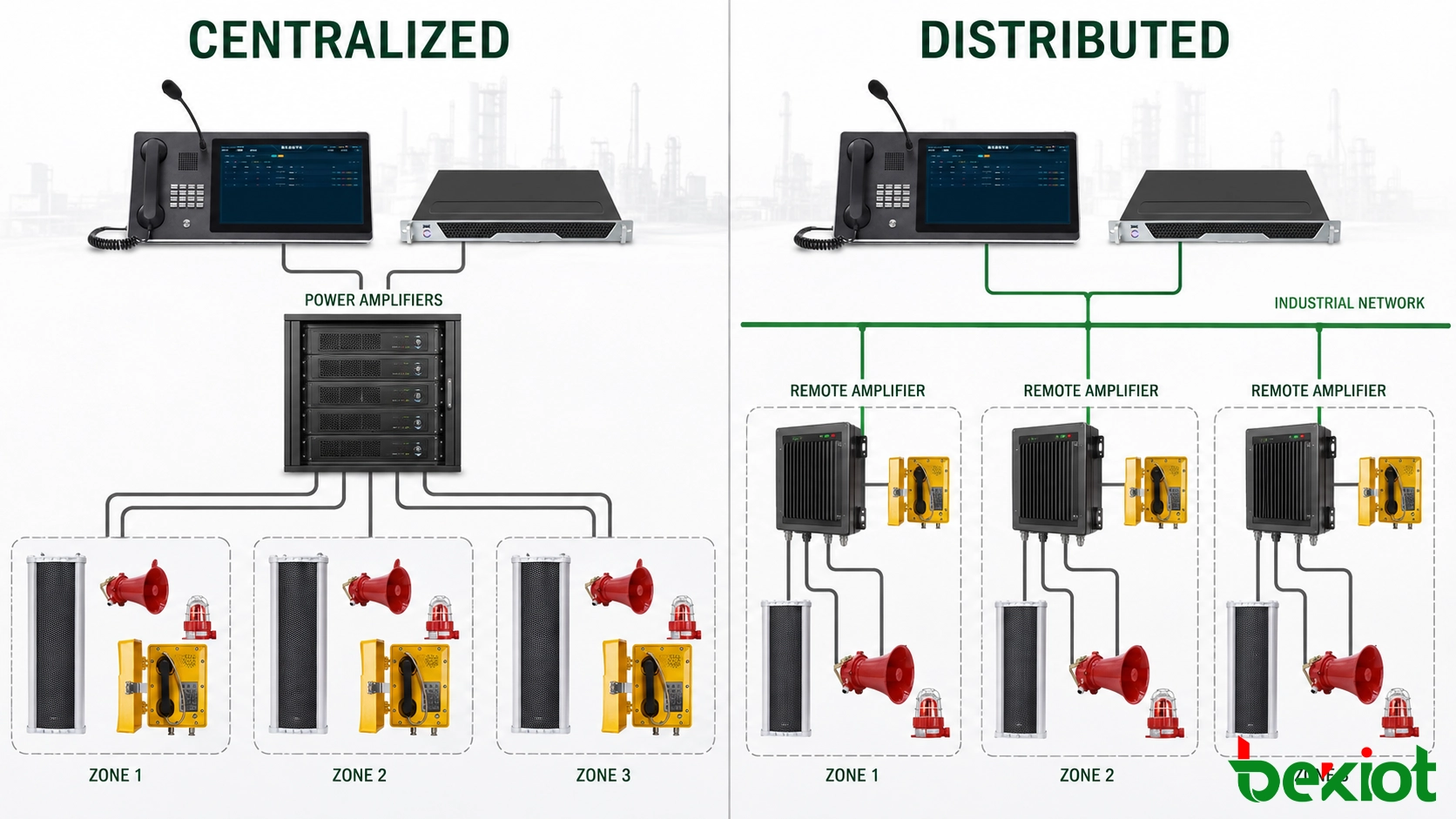
集中式與分散式PAGA系統架構對比

正確的選擇通常取決於場地的實體佈局,而不是所需PAGA功能的數量。

單個生產建築可能電纜路徑較短,尋呼區域也較少。而煉油廠、礦山、交通設施或大型能源專案可能擁有相距數百米甚至數千米的通訊區域。

對兩種類型的設施採用相同的實體佈置,可能導致不必要的電纜敷設、擴展困難或對單一設備位置的過度依賴。

2. 集中式PAGA架構如何工作?

在集中式PAGA系統中,主控制器、音訊處理設備、介面和功率放大器通常一起安裝在中央設備機房內。

然後揚聲器迴路從中央放大器機架延伸到整個設施的揚聲器。

基本結構為:

中央控制設備 → 中央放大器機架 → 現場揚聲器迴路 → 揚聲器

集中式設備簡化維護

主要優勢之一是將大多數主動設備集中在一個受保護的位置。

技術人員無需在多個遠端機櫃間奔波,即可檢查控制器、放大器、電源和介面模組。設備更換和日常維護也更容易,因為主要硬體都安裝在同一個房間內。

對於相對緊湊的場地,這種佈置既實用又經濟。

集中式架構通常適用於以下情況:

  • 設施佔地面積相對緊湊

  • 揚聲器電纜距離仍可管理

  • 遠端區域數量有限

  • 有安全的通訊機房可用

  • 可通過實用的電纜路徑到達大多數區域

長電纜路徑是主要限制

隨著設施擴大,缺點會變得更加明顯。

如果某個遠端區域需要多條揚聲器迴路,則每條迴路都可能需要從該區域拉回中央放大器機房。這會增加敷設在電纜溝、電纜橋架和配線路徑中的電纜總量。

擴展也可能變得不那麼方便。在設施邊緣增加新的尋呼區域,即使附近已有通訊基礎設施,可能仍需要再拉一條長電纜。

集中化還意味著相當多的設備可能依賴於同一個機房、機架或配套基礎設施。

這並不自動意味著集中式PAGA系統不可靠,而是需要仔細評估中央設備、電源和共享電纜路徑的故障影響。

3. 分散式PAGA架構如何工作?

分散式PAGA架構將整體系統控制與現場級放大分離開來。

主PAGA控制器可保留在中央控制室,而遠端放大器機架或音訊節點則安裝在更靠近其所服務區域的位置。

基本結構變為:

中央PAGA控制器 → 現場通訊網路 → 遠端節點 → 本地放大器 → 本地揚聲器迴路

不再將每路放大後的揚聲器信號長距離傳輸,而是通過現場通訊網路傳送音訊和控制資訊,然後在目標區域附近進行放大。

遠端放大可縮短揚聲器電纜長度

考慮一個遠離主控制樓的罐區或裝卸區。

採用集中式放大時,可能需要多條揚聲器迴路一直拉回主設備機房。

採用分散式設計時,可在靠近該區域的位置安裝一個放大器節點。長距離連接通過通訊網路處理,而較短的本地揚聲器迴路將遠端放大器連接到附近的揚聲器。

這可以減少長揚聲器電纜的集中度,使系統的實體分佈更易於管理。

實體區域可跟隨實際場地佈局

當設施包含明顯獨立的操作區域時,分散式架構尤其有用。

例如:

  • 主生產區

  • 罐區

  • 公用工程區

  • 倉庫區

  • 行政樓

  • 遠端裝卸終端

不必將每路揚聲器迴路都引回一個中心位置,選定的區域可擁有自己的放大資源,同時仍受同一PAGA控制系統管理。

這也有助於改善故障隔離。影響一個遠端放大器節點的故障,不一定需要中斷現場其他無關的尋呼區域。

通訊網路成為PAGA設計的一部分

分散式設備仍必須作為一個協調的系統運行。

尋呼權限、警報優先級、區域選擇、錄製訊息和系統狀態應在所有節點上保持一致。

因此,連接中央和遠端PAGA設備的網路成為整體可用性設計的一部分。

網路拓撲、交換機位置、通訊路徑和電源可用性應與PAGA設備本身一起考慮。

分散式架構可以減少現場長電纜,但不應該只是將所有系統依賴性從揚聲器電纜轉移到一條無保護的網路路徑上。

4. 何時混合式PAGA架構更有意義?

許多工業設施並不完全適合純集中式或純分散式模型。

混合式架構允許系統在電纜距離短的地方使用集中式設備,同時為偏遠區域安裝遠端放大器節點。

例如,主控制室可容納PAGA控制器、操作員控制台、系統介面以及服務於附近建築物的放大器。

遠處的製程裝置、隧道、變電站或裝卸區域可使用網路連接的放大器節點。

架構變為:

中央PAGA控制 → 為附近區域提供中央放大 + 為偏遠區域提供遠端放大
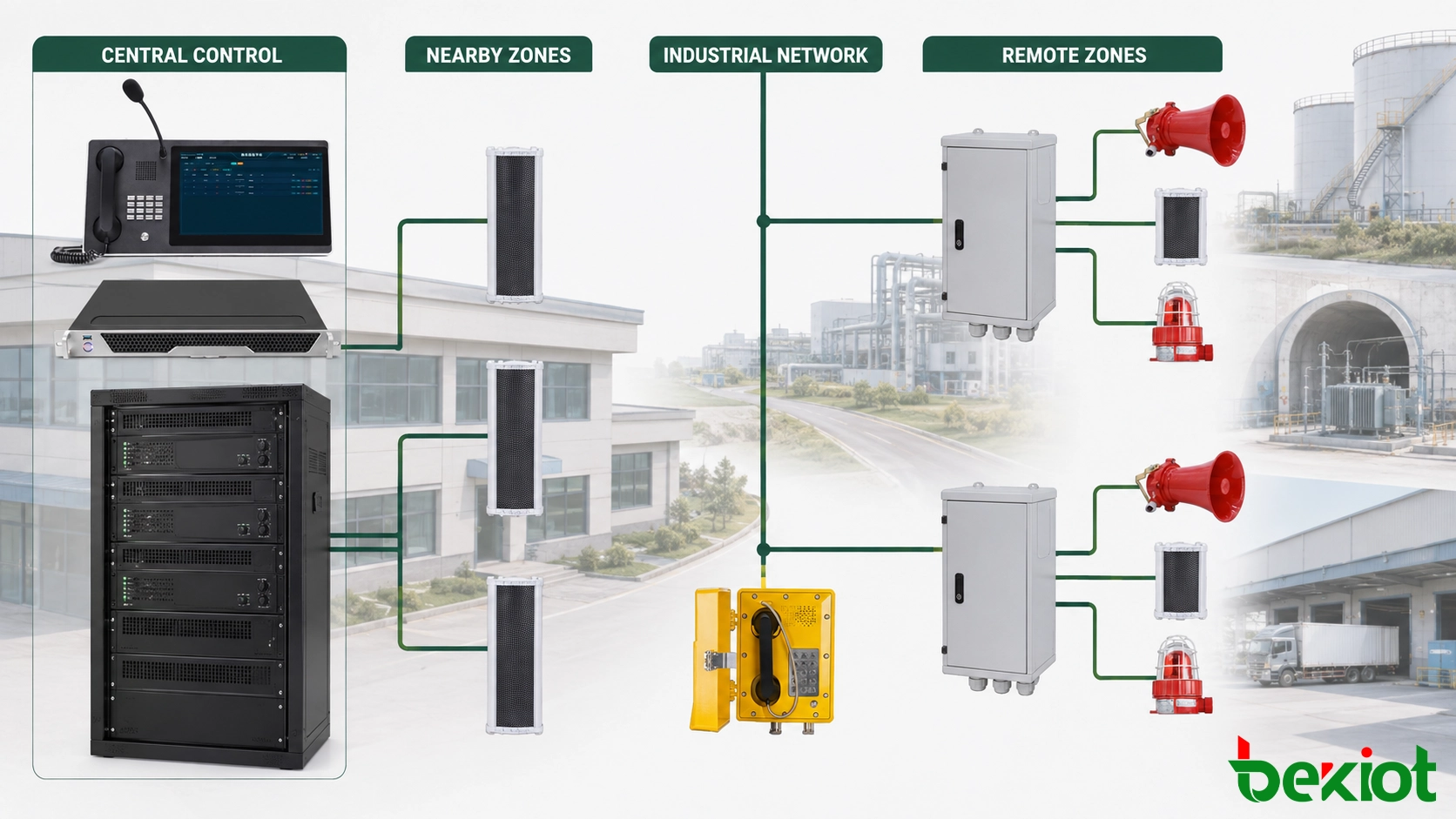
混合式PAGA系統架構,包含中央和遠端放大器節點

這種佈置使設備位置能夠遵循設施的實際地理分佈。

架構典型優勢主要設計考量
集中式設備集中,本地維護更簡單揚聲器迴路長,依賴中央設備
分散式本地揚聲器電纜更短,地理分隔更好網路可用性,遠端供電,遠端設備存取
混合式平衡中央控制與現場本地分佈中央與遠端資源之間的清晰劃分

緊湊型工業設施

當建築物和室外區域靠近主設備機房時,集中式放大可能仍是最直接的方法。

長隧道和線性場地

對於隧道、鐵路和其他長條形線性環境,在選定位置分佈放大可以避免將大量揚聲器迴路拉回一個中心點。

大型製程設施

煉油廠或大型工業廠房可為主控制樓和附近製程區域使用中央放大,同時為罐區、公用設施或其他偏遠區域安裝遠端節點。

在這些專案中,物理距離往往比僅僅計算尋呼區域數量更成為有用的設計因素。

5. 架構如何影響PAGA冗餘和故障隔離

不應將PAGA冗餘與系統架構分開考慮。

在決定何處需要冗餘設備之前,專案應首先確定什麼可能發生故障,以及會影響設施的多少部分。
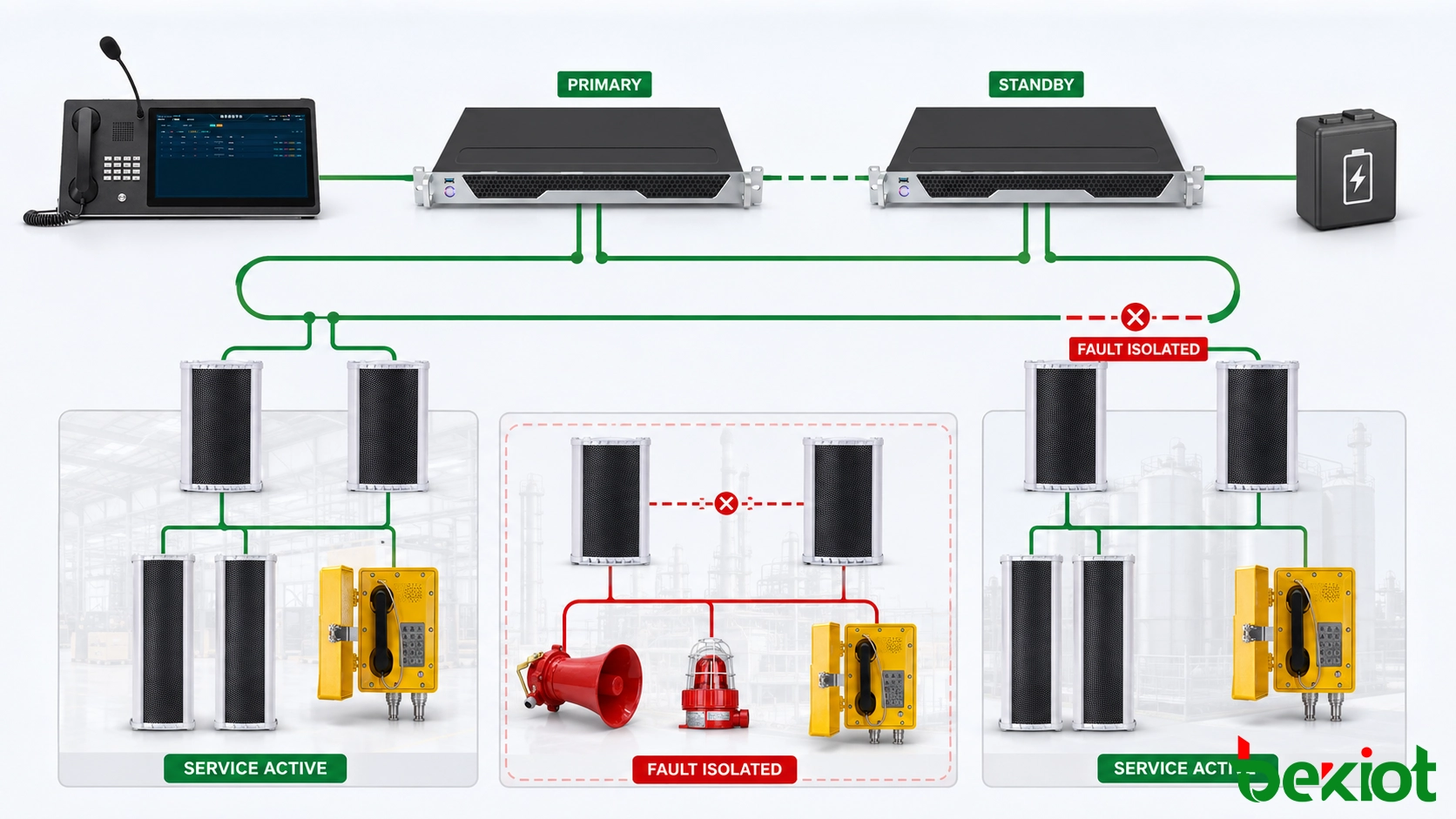
面向工業尋呼區域的PAGA系統冗餘和故障隔離設計

控制器故障

如果控制器不可用,設計應定義哪些尋呼和警報功能必須繼續,以及是否有其他控制路徑接管。

放大器故障

應根據放大器所服務的通訊區域來評估其故障影響。如果專案要求,可提供備用放大或替代音訊路徑以減少服務中斷。

網路故障

當遠端PAGA節點依賴IP或乙太網路通訊時,網路彈性尤為重要。

如果多個遠端區域共享一條通訊路徑,單次網路故障可能影響多個區域。因此,根據專案可用性目標,可能需要替代路徑或適當的網路冗餘。

遠端節點故障

分散式架構有助於減少某些故障的物理影響,因為不同區域使用不同的設備。

然而,這種好處取決於遠端節點的佈置方式。一個遠端節點不應不必要地成為多個無關區域的公共依賴點。

電源故障

遠端放大器位置也需要適當的電源策略。

如果在最需要尋呼的事件中遠端機櫃斷電,那麼將放大移到現場就沒什麼好處。因此,應為中央和遠端設備都考慮備用電源要求。

揚聲器迴路故障

揚聲器線路監控也應跟隨物理架構。

如果發生開路、短路或其他現場故障,維護人員應能識別受影響的物理區域或揚聲器迴路,而無需在系統過大範圍內搜索。

因此,更有用的冗餘問題不僅僅是:

“PAGA系統有冗餘設備嗎?”

更好的工程問題是:

“如果這個控制器、放大器、網路鏈路、電源或揚聲器迴路發生故障,哪些尋呼區域仍然可用?”

這將冗餘直接與故障的真實操作影響聯繫起來。

有關涵蓋容量、介面、環境要求和系統規格的更廣泛專案規劃,請參閱 如何選擇PAGA系統

6. 關於PAGA系統架構的常見問題

集中式還是分散式PAGA架構更好?

沒有哪一種架構普遍更好。集中式系統通常適用於電纜距離可控的緊湊型設施。當建築物、製程區域或通訊區域相距較遠時,分散式系統更具吸引力。大型專案通常採用兩者的組合。

何時應考慮使用遠端PAGA放大器?

當大量揚聲器遠離主設備機房時,值得考慮遠端放大。將放大器安裝在離這些區域更近的位置可以減少長揚聲器電纜的敷設,並簡化現場本地分佈。

一個PAGA系統可以同時使用中央和遠端放大器嗎?

可以。這是一種常見的混合式做法。附近的尋呼區域可使用主設備機房內的放大器,而偏遠區域使用網路連接的遠端放大器。兩者都受同一系統控制和警報優先級邏輯管理。

分散式PAGA系統是否需要IP網路?

許多現代分散式PAGA系統在中央和遠端設備之間使用IP或乙太網路通訊。確切的傳輸方式取決於平台,但應將網路視為系統可用性設計的一部分,而不是無關的基礎設施層。

分散式架構會自動提供冗餘嗎?

不會。分佈和冗餘解決不同設計問題。分散式設備可以減少物理集中度並有助於隔離某些故障,但控制器、網路、放大器、電源和現場迴路仍然需要適當的冗餘策略。

最合適的PAGA架構是跟隨物理場地、而不是將所有尋呼區域都強制拉回一個設備機房的架構。

對於緊湊型設施,集中式放大可提供最簡單的安裝。對於地理上分散的場地,遠端節點可減少電纜集中度並形成更清晰的物理故障邊界。當同一個專案中兩種條件並存時,混合式架構通常是更實用的解決方案。

在最終確定架構之前,設計應明確三點:主要通訊資源位於何處,每個關鍵部分發生故障時會發生什麼,以及將來添加新尋呼區域的難易程度。

推薦產品
目錄
客服 電話
We use cookie to improve your online experience. By continuing to browse this website, you agree to our use of cookie.

Cookies

This Cookie Policy explains how we use cookies and similar technologies when you access or use our website and related services. Please read this Policy together with our Terms and Conditions and Privacy Policy so that you understand how we collect, use, and protect information.

By continuing to access or use our Services, you acknowledge that cookies and similar technologies may be used as described in this Policy, subject to applicable law and your available choices.

Updates to This Cookie Policy

We may revise this Cookie Policy from time to time to reflect changes in legal requirements, technology, or our business practices. When we make updates, the revised version will be posted on this page and will become effective from the date of publication unless otherwise required by law.

Where required, we will provide additional notice or request your consent before applying material changes that affect your rights or choices.

What Are Cookies?

Cookies are small text files placed on your device when you visit a website or interact with certain online content. They help websites recognize your browser or device, remember your preferences, support essential functionality, and improve the overall user experience.

In this Cookie Policy, the term “cookies” also includes similar technologies such as pixels, tags, web beacons, and other tracking tools that perform comparable functions.

Why We Use Cookies

We use cookies to help our website function properly, remember user preferences, enhance website performance, understand how visitors interact with our pages, and support security, analytics, and marketing activities where permitted by law.

We use cookies to keep our website functional, secure, efficient, and more relevant to your browsing experience.

Categories of Cookies We Use

Strictly Necessary Cookies

These cookies are essential for the operation of the website and cannot be disabled in our systems where they are required to provide the service you request. They are typically set in response to actions such as setting privacy preferences, signing in, or submitting forms.

Without these cookies, certain parts of the website may not function correctly.

Functional Cookies

Functional cookies enable enhanced features and personalization, such as remembering your preferences, language settings, or previously selected options. These cookies may be set by us or by third-party providers whose services are integrated into our website.

If you disable these cookies, some services or features may not work as intended.

Performance and Analytics Cookies

These cookies help us understand how visitors use our website by collecting information such as traffic sources, page visits, navigation behavior, and general interaction patterns. In many cases, this information is aggregated and does not directly identify individual users.

We use this information to improve website performance, usability, and content relevance.

Targeting and Advertising Cookies

These cookies may be placed by our advertising or marketing partners to help deliver more relevant ads and measure the effectiveness of campaigns. They may use information about your browsing activity across different websites and services to build a profile of your interests.

These cookies generally do not store directly identifying personal information, but they may identify your browser or device.

First-Party and Third-Party Cookies

Some cookies are set directly by our website and are referred to as first-party cookies. Other cookies are set by third-party services, such as analytics providers, embedded content providers, or advertising partners, and are referred to as third-party cookies.

Third-party providers may use their own cookies in accordance with their own privacy and cookie policies.

Information Collected Through Cookies

Depending on the type of cookie used, the information collected may include browser type, device type, IP address, referring website, pages viewed, time spent on pages, clickstream behavior, and general usage patterns.

This information helps us maintain the website, improve performance, enhance security, and provide a better user experience.

Your Cookie Choices

You can control or disable cookies through your browser settings and, where available, through our cookie consent or preference management tools. Depending on your location, you may also have the right to accept or reject certain categories of cookies, especially those used for analytics, personalization, or advertising purposes.

Please note that blocking or deleting certain cookies may affect the availability, functionality, or performance of some parts of the website.

Restricting cookies may limit certain features and reduce the quality of your experience on the website.

Cookies in Mobile Applications

Where our mobile applications use cookie-like technologies, they are generally limited to those required for core functionality, security, and service delivery. Disabling these essential technologies may affect the normal operation of the application.

We do not use essential mobile application cookies to store unnecessary personal information.

How to Manage Cookies

Most web browsers allow you to manage cookies through browser settings. You can usually choose to block, delete, or receive alerts before cookies are stored. Because browser controls vary, please refer to your browser provider’s support documentation for details on how to manage cookie settings.

Contact Us

If you have any questions about this Cookie Policy or our use of cookies and similar technologies, please contact us at support@becke.cc .