
IndustryInsights
When people search for the best communication device for emergencies, they are often looking for one perfect product that can solve every crisis. In real-world environments, the answer is more practical. The best device is the one that can deliver fast, clear, and dependable communication under the exact conditions where an incident happens, whether that is a factory floor, a tunnel, a campus, a rail platform, a roadside location, or an offshore site.
That is why emergency communication should never be judged by appearance alone. A device may look modern, but if it fails in high noise, harsh weather, power instability, or network disruption, it will not help when it is needed most. In many cases, the strongest emergency setup is not a single endpoint, but a coordinated system that combines field devices, paging, call routing, and dispatch management into one response chain.
In an emergency, the first requirement is speed. A communication device should allow a person to report an incident without navigating a complicated interface or waiting through unnecessary steps. Dedicated emergency phones, one-touch intercom stations, and fixed help points are often more effective than general-purpose devices because they reduce hesitation and connect users directly to a control room, guard post, dispatch center, or response team.
Usability also matters under stress. An emergency device should be easy to find, easy to activate, and easy to understand even for someone who is injured, panicked, unfamiliar with the site, or wearing gloves and protective gear. Large buttons, hands-free calling, clear status indication, and direct hotline logic are not small design details. They are part of the emergency function itself.
The best communication device for emergencies must match the environment where it will be deployed. A clean office lobby, a chemical processing area, a mining tunnel, and a coastal terminal do not place the same demands on hardware. In harsh environments, communication devices may need weather resistance, corrosion protection, high-visibility housings, anti-vandal construction, or explosion-proof design.
Reliability also depends on power and network continuity. Emergency devices work best when they are integrated into resilient communication architecture with PoE support, SIP networking, backup routing, and compatibility with dispatch systems, PBX platforms, or paging infrastructure. In other words, a reliable device is not isolated hardware. It is part of a dependable communication path.
Emergency communication is not only about placing a call. It is about making sure the message is understood and acted upon. Devices used in loud or complex environments should support strong audio performance, echo control, intelligible voice transmission, and where needed, integration with visual alarms, paging speakers, or video systems. Clear communication shortens the time between detection and response.
Just as important, the best device should fit into an organized workflow. If a field phone, help point, or intercom can trigger alarms, notify multiple parties, escalate to a dispatcher, or activate a zone-based broadcast, the result is far more powerful than a standalone voice endpoint. Emergency communication succeeds when the device and the response process work together.
The best emergency communication device is not always the most advanced-looking one. It is the one that stays reachable, understandable, and actionable when the environment becomes difficult.
Emergency telephones remain one of the most dependable options for fixed-site incident reporting. They are especially useful in highways, tunnels, industrial plants, stations, campuses, parking areas, perimeter zones, and remote work locations where immediate voice contact with a control room is essential. Because they are purpose-built, they often offer faster access to help than ordinary office phones or personal mobile devices.
In public-facing or exposed locations, visible emergency call points help people understand exactly where to seek assistance. In industrial or high-risk settings, ruggedized telephones can continue operating in dust, humidity, vibration, and wide temperature ranges. This makes them a strong answer when people ask what the best communication device for emergencies is in a fixed and demanding environment.
SIP intercoms are valuable where hands-free communication is preferred or where users may need help quickly without lifting a handset. They are commonly used at gates, entrances, corridors, platforms, clean zones, secured areas, equipment rooms, and unmanned sites. A well-designed intercom terminal can provide direct two-way communication, rapid identification of the incident location, and integration with access control, alarms, or video monitoring.
These devices are particularly effective when an emergency event must be linked to broader site awareness. A triggered call can be shown on a dispatch screen, associated with a camera feed, or routed to multiple responsible teams. That makes intercom-based help points especially useful in modern emergency systems where communication, monitoring, and control need to work as one.
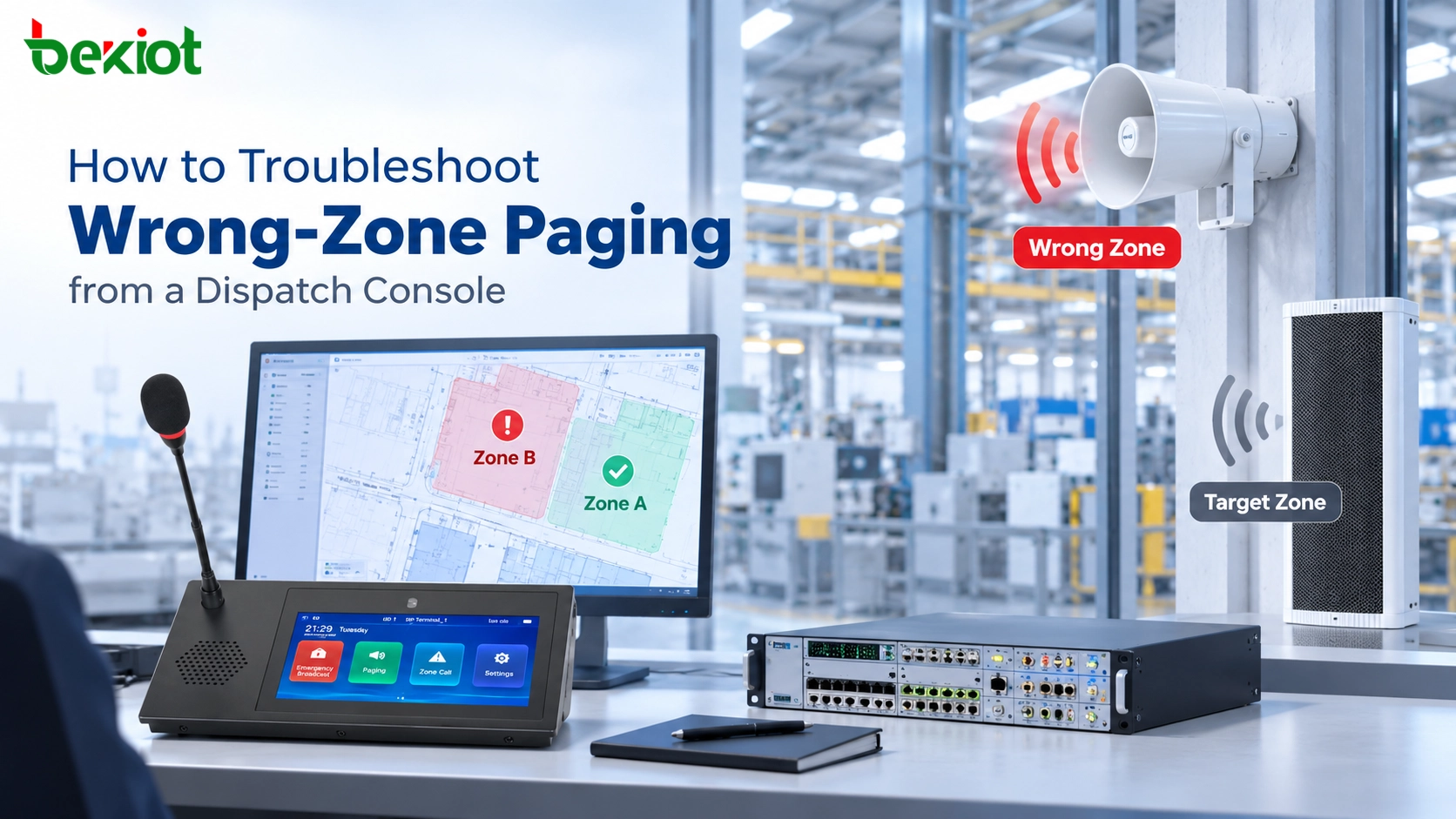
Some emergencies require one-to-one communication. Others require one-to-many communication. When a site must warn a large number of people, guide evacuation, isolate zones, or issue repeated instructions, paging and broadcast systems become essential. In these cases, the best communication device is not only the one used by the reporting person, but also the one that spreads clear instructions to everyone at risk.
IP paging speakers, broadcast gateways, PA systems, and emergency announcement devices are especially important in factories, warehouses, transit hubs, campuses, utilities, and large outdoor areas. They help turn a reported incident into a coordinated response message. Without this layer, even a successful emergency call may not reach the wider group that needs to act.
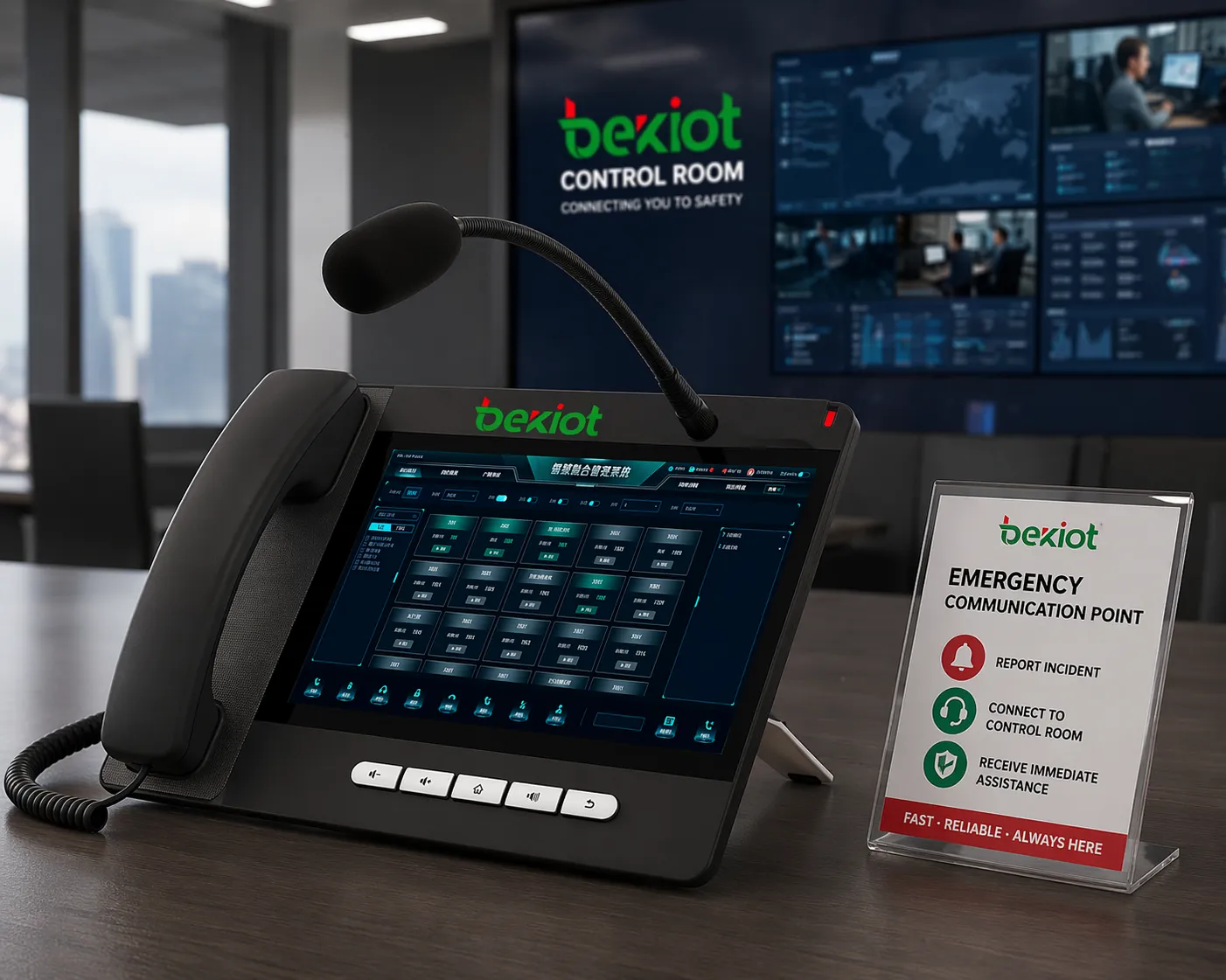
In many organizations, emergency communication continues after the first alert. Operators, supervisors, maintenance teams, security personnel, and external responders all need structured coordination. This is where IP phones, dispatch consoles, and unified communication platforms play a central role. They help the control side of the emergency stay organized, traceable, and scalable.
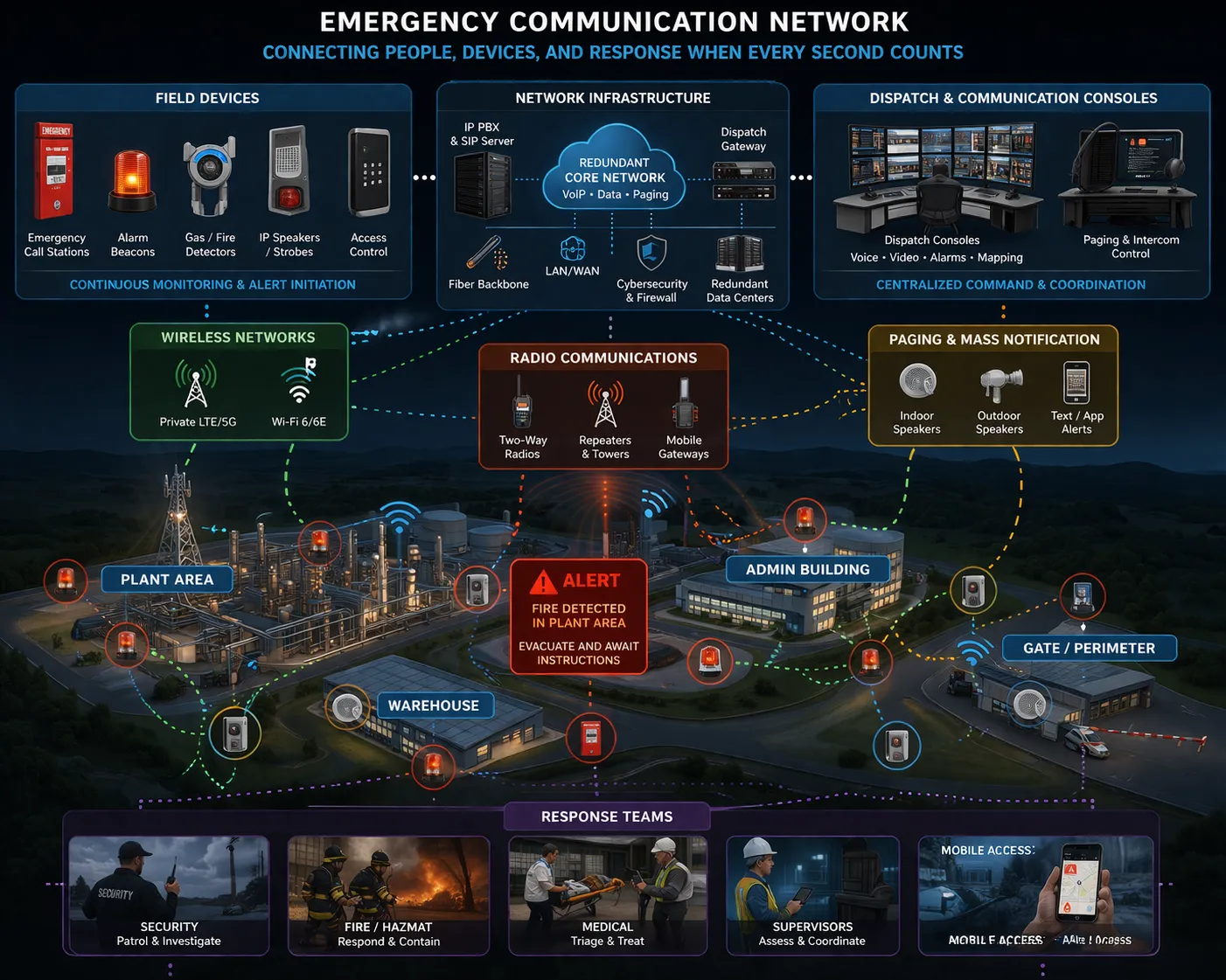
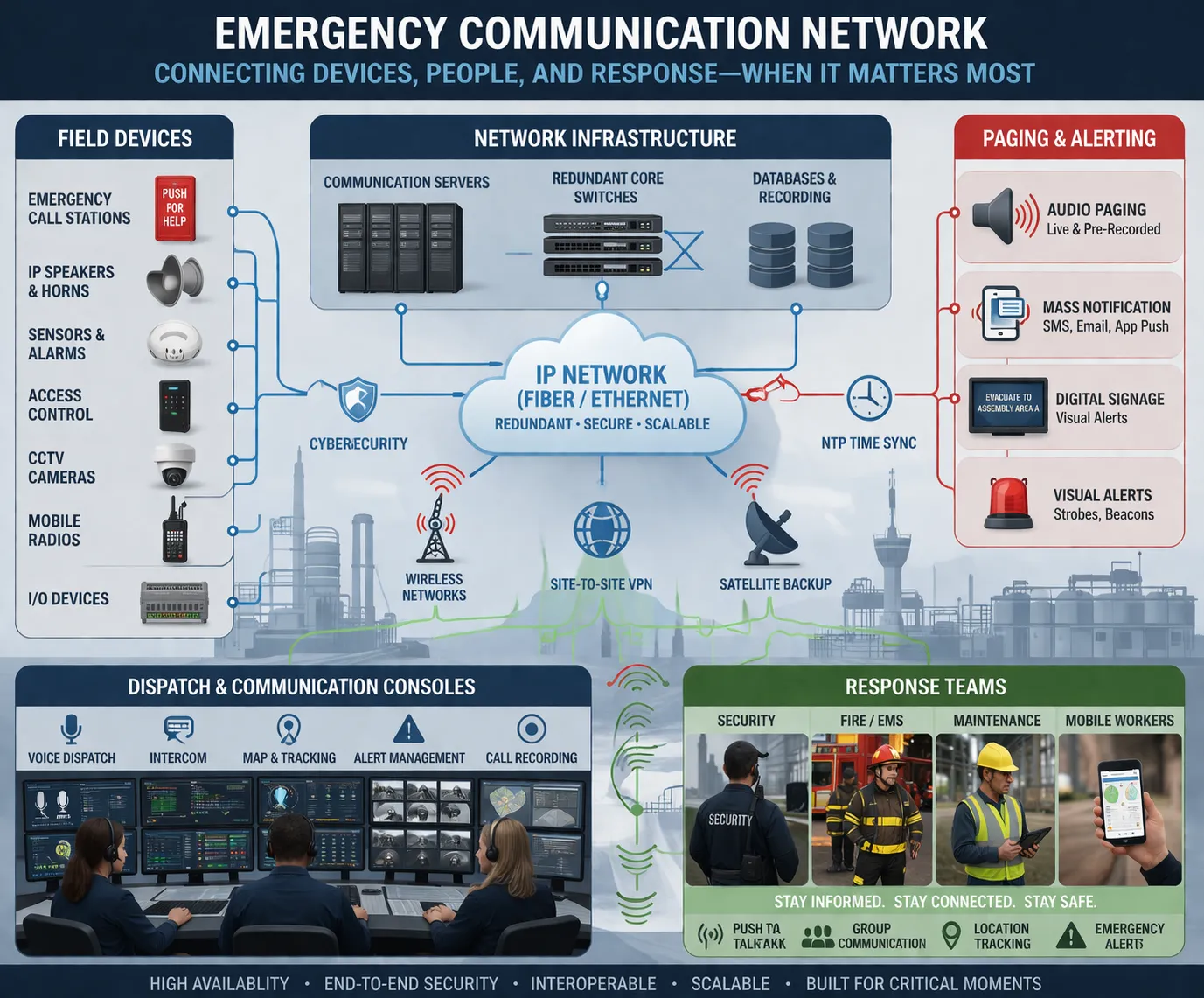
A dispatch-capable environment can connect field devices, paging zones, radios, extensions, and gateways into one operational view. That means the best communication device for emergencies may differ by role. A field worker may need a rugged emergency phone. A gate area may need an intercom. A control room may need a dispatch console. The strongest solution is the one that links all three.
Emergency communication is rarely solved by a single endpoint alone. It is solved by giving the right device to the right location and tying every device back to a clear command process.
Becke Telcom can be introduced naturally into this discussion because its portfolio is built around the practical layers that emergency communication requires. Instead of focusing on only one device category, Becke Telcom provides industrial communication products and solution components that can be combined into a full response architecture. This approach is useful for customers who need more than a standalone phone on the wall.
Its offering can include industrial emergency telephones, SIP intercom terminals, IP phones, paging and broadcast equipment, IP PBX platforms, voice gateways, and dispatch-oriented integration. For sites that need both instant reporting and centralized coordination, that kind of product mix is often more valuable than choosing a single endpoint in isolation.
For harsh industrial areas, Becke Telcom industrial telephones can serve as durable emergency reporting devices where weather resistance, visibility, and stable operation are priorities. In controlled buildings, stations, campuses, and access areas, SIP intercom terminals can provide direct hands-free assistance and fast connection to a response point. In larger communication systems, IP phones and gateways help link departments, legacy interfaces, and remote locations into the same communication framework.
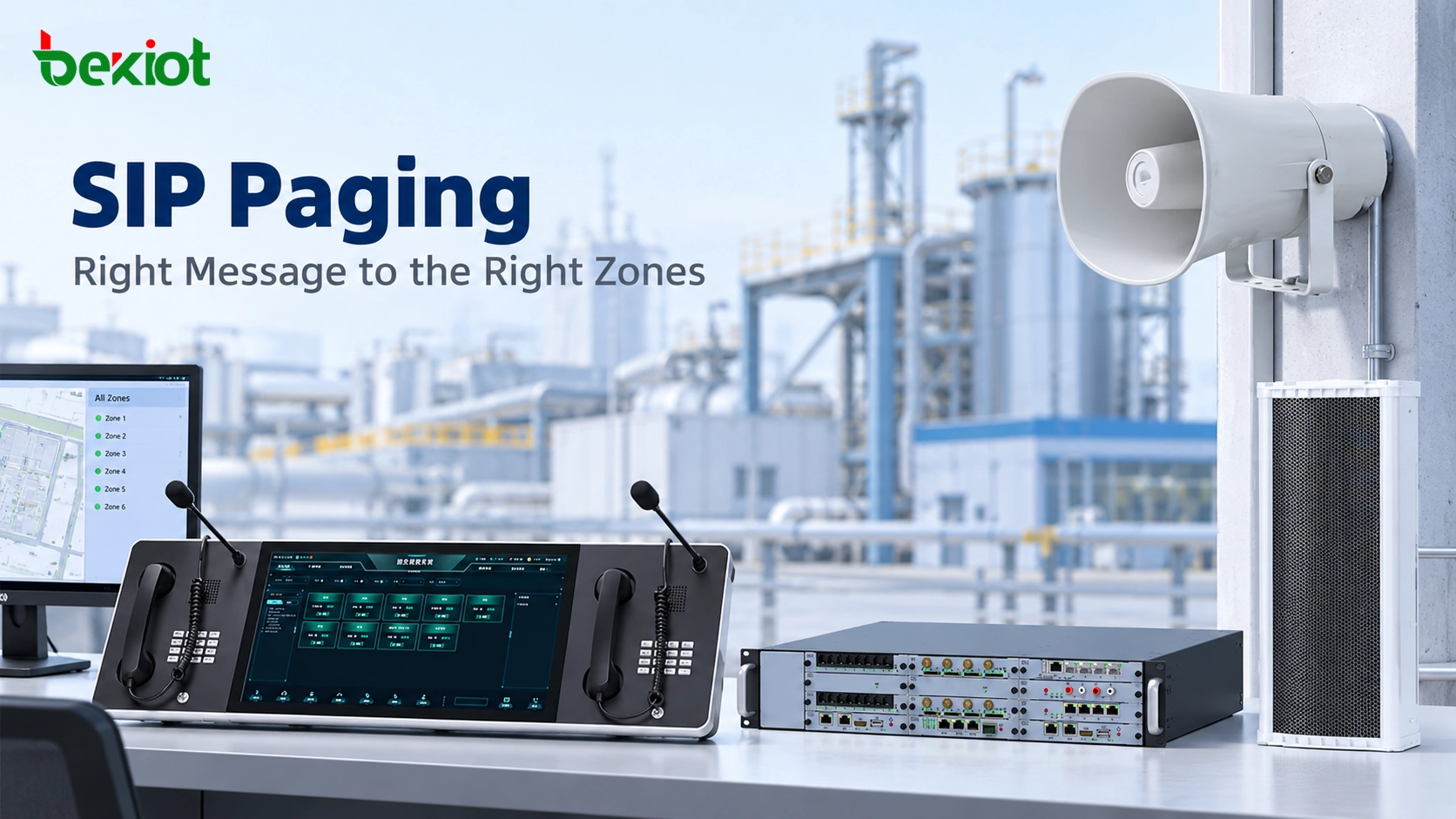
Where mass notification is part of the emergency plan, Becke Telcom paging and broadcast components can support wider voice distribution across zones. When these devices are paired with IP PBX and dispatch capabilities, the result is a more complete emergency communication chain: incident reporting, call routing, escalation, announcement, and operator coordination. That system-level value is often what customers are really looking for when they ask for the best communication device for emergencies.
In emergency planning, device selection should support response logic, not just endpoint procurement. A Becke Telcom solution can be positioned around this idea. A field device handles the first contact. The SIP or IP network carries the session. The PBX or control layer routes it correctly. The paging layer informs a broader audience if needed. The dispatch layer helps operators coordinate actions across teams and locations.
This is especially relevant in transport infrastructure, industrial facilities, utilities, ports, campuses, hospitals, and other sites where communication must continue across multiple spaces and multiple roles. In those environments, the best emergency device is often the entry point into a larger system, and Becke Telcom is best introduced as the provider that helps connect those layers into a practical and reliable whole.
The right choice begins with the emergency scenario itself. Who will use the device, and under what conditions? Will the user be trained staff, a visitor, a passenger, a worker in PPE, or someone under panic? Is the environment loud, outdoor, corrosive, or vulnerable to vandalism? Will the event require a direct private conversation, or immediate mass notification to a wider group? These questions shape the device requirement far more accurately than product labels alone.
For example, a campus help point, a petrochemical emergency phone, a roadside call box, and a control room dispatch terminal should not be evaluated with the same checklist. Each role has its own demands. Good emergency planning matches device type to incident pattern, physical environment, and operational workflow.
Emergency communication rarely stays static. Sites expand, risk profiles change, and response procedures become more connected over time. That is why interoperability matters. SIP-based and IP-based communication devices are often easier to integrate with PBX systems, paging networks, dispatch consoles, monitoring platforms, and remote management tools. A device that works today but cannot be linked into a broader response system tomorrow may become a limitation.
Scalability is equally important. A small deployment may begin with a few emergency phones or intercoms, but later require broadcast linkage, remote monitoring, call recording, geographic distribution, or multi-site dispatch coordination. Choosing a product family or solution provider that supports this progression is usually a smarter long-term decision.
Many buyers begin by asking which phone, intercom, or terminal is best. That is understandable, but the stronger question is this: what communication path will still function clearly and quickly during a real emergency? The answer includes device hardware, network resilience, routing logic, operator workflow, and notification capability.
Seen this way, the best communication device for emergencies is the device that fits into a complete response chain and performs reliably inside it. That is exactly why integrated portfolios such as Becke Telcom’s matter. They allow organizations to select the right endpoint without losing sight of the system that must support it.
There is no single emergency device that is best for every environment. The right answer depends on the site, the hazard, the user, and the response model. Emergency telephones, SIP intercoms, paging systems, IP phones, and dispatch platforms all serve different but connected purposes. The most effective emergency communication strategy is the one that combines the right field device with the right network and the right control logic.
For organizations that need a practical path from incident reporting to coordinated response, Becke Telcom is best introduced not simply as a hardware brand, but as a provider of connected emergency communication building blocks. From rugged field devices to paging, PBX, gateways, and dispatch integration, its product and solution direction aligns well with sites that need dependable communication when seconds matter most.
If you are evaluating the best communication device for emergencies for your facility, project, or public-facing site, Becke Telcom can help you compare device types and build a communication architecture that fits the real risks of your environment.
In industrial environments, the best option is often a rugged emergency telephone or SIP intercom designed for harsh conditions, combined with a reliable IP or SIP communication system behind it. The ideal choice depends on noise level, exposure, hazard classification, and how the site handles dispatch and notification.
Mobile phones are useful, but they are not always enough. Coverage gaps, battery dependence, accidental damage, and difficulty identifying location can limit their value. Fixed emergency devices are often faster to access, easier to identify, and better integrated with site response workflows.
Because many incidents affect more than one person. Paging and broadcast systems help deliver instructions to groups, guide evacuation, isolate zones, and support command decisions after the first emergency report is made. They turn one incident alert into a coordinated site-wide response.
Becke Telcom can be introduced as a provider of industrial emergency phones, SIP intercoms, IP phones, paging and broadcast equipment, IP PBX systems, gateways, and dispatch-oriented communication solutions. This makes it suitable for projects that need both field-level devices and centralized coordination.