Before commissioning or maintaining an indoor station, users often need to confirm the current IP address or change the network mode to a static IP. This guide explains the practical methods for checking the IP address and configuring a static IPv4 address on Becke indoor stations. The procedures below are based on the interface logic shown in the original HTML content and are written in a clearer English support style for installers, technicians, and project teams.
This guide applies to the following indoor station models: i51W, i52W, i53W, and i56A.
This document is intended for users, installers, and support personnel who need to identify the device IP address or switch the terminal from DHCP to a static IP deployment.
Method 1: Check the IP address on the device screen
Press and hold the key shown below for about 3 seconds to enter the device menu on the i51W or i52W. After entering the menu, go to System Information → Network → IPv4. The current device IP address will then be displayed on the screen.


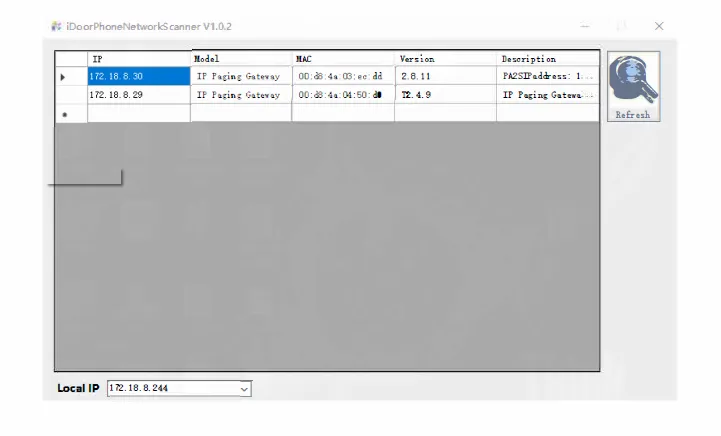
Method 2: Use the IP scanning tool


Method 1: Check on the device screen
Tap Menu, then go to Status → Network. The current IP address of the i53W will be displayed on the screen.

Method 2: Use the IP scanning tool


Method 1: Pull down the quick panel
On the i56A, swipe down from the top of the screen to open the quick settings area. The current IP address can be viewed directly from this panel.

Method 2: Check from the device status page
Open Settings → General on the screen and view the current network information to confirm the IP address.

Press and hold the corresponding key for about 3 seconds to enter the menu screen on the i51W or i52W. Then go to Network Settings → Wired Network Settings → IPv4 → Static IP.


Important note: On the i51W and i52W, the device-side menu can switch the network mode to static IP, but it does not allow full editing of the static IPv4 address on the local screen. After the mode is changed, the default static IP becomes 192.168.1.178. If you need to modify the address itself, use the web interface instead.
Web configuration method

Method 1: Configure from the device screen

Method 2: Configure from the web page

Method 1: Configure from the device screen

Method 2: Configure from the web interface

When checking or changing the IP address, make sure the device and the PC are on the same reachable network segment. If the device has been switched from DHCP to static IP, confirm the new address before attempting to log in through the browser. During commissioning, it is also recommended to document the final IP address, subnet mask, gateway, and VLAN information for each endpoint to simplify later maintenance.
For large deployments, using a consistent IP addressing plan and verifying each terminal after configuration can help reduce troubleshooting time and improve installation efficiency.
Yes. All models covered in this guide provide a local method to view the IP address from the screen or quick settings interface.
You can switch the network mode to static IP on the device itself, but full editing of the static address is completed through the web interface.
In most cases, the PC is not in the same subnet, the device is not powered correctly, or the network connection between the PC and the endpoint is not available.