
Encyclopedia
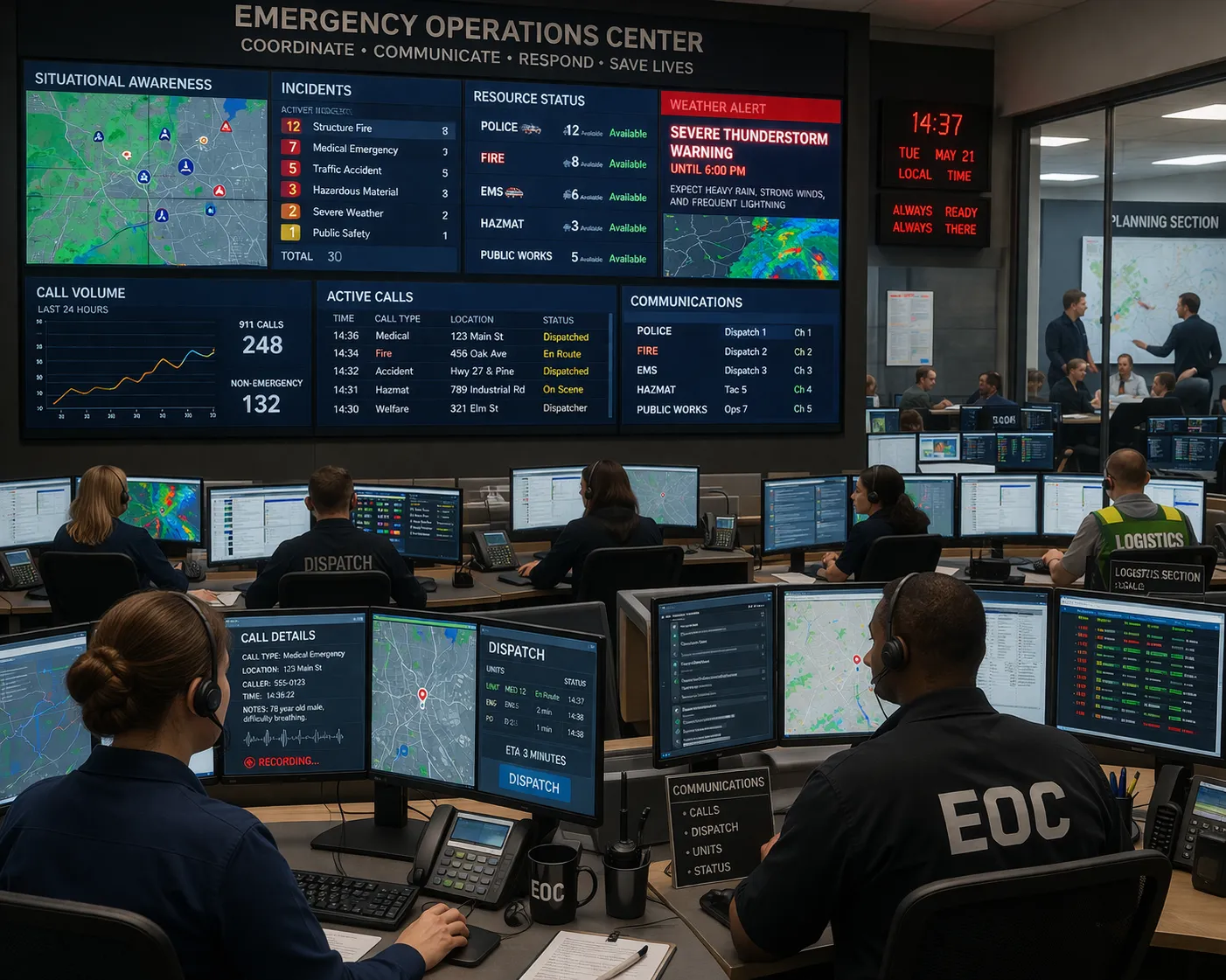
An office of emergency management and communications is the coordination layer that helps an organization prepare for incidents, receive emergency information, manage communication flows, and support response actions when an event occurs. Depending on the setting, it may serve a city, a transportation system, a campus, an industrial site, a port, a hospital network, or another large operation where emergencies cannot be handled through isolated calls alone.
In practical terms, this type of office connects people, procedures, and communication infrastructure. It helps turn a report from the field into a structured response. That may involve receiving distress calls, verifying information, routing messages, notifying the right teams, supporting command decisions, and maintaining communication continuity as the situation develops. The stronger the communication backbone is, the more effective the office can be under pressure.
Most emergencies do not begin with a perfect stream of organized data. They begin with scattered signals. A worker may press an emergency phone. A passenger may use a help point. A security team may report a problem by radio. An alarm may trigger in a control system. Video surveillance may show unusual activity before a formal report is made. Without a central function to collect and coordinate those inputs, response can become slow, duplicated, or inconsistent.
An office of emergency management and communications helps reduce that confusion. It provides a framework for receiving information, assigning priority, distributing instructions, and keeping communication aligned across multiple responders. That coordination is often the difference between a simple incident and a cascading operational problem.
Communication is only valuable when it leads to action. This office exists not just to hear what happened, but to help ensure that the right people are informed and the right response steps begin quickly. In some cases, that means escalating a single call to on-site security or maintenance. In others, it means launching a broader response that involves dispatchers, operations staff, medical teams, public warning systems, and external agencies.
Because of this, emergency management and communications should never be understood as only a call-handling function. It is a decision-support and coordination function. The office helps connect field events with command responsibilities, which is why communication devices, routing systems, and notification tools all matter so much.
One of the core responsibilities of this office is managing how urgent communications enter the response system. That may include emergency calls, intercom requests, hotline traffic, radio coordination, operator-to-team communication, and alerts from connected systems. The office must make sure that these inputs are not only received, but routed correctly and documented in a way that supports accountability and continuity.
In modern environments, this often depends on integrated communication infrastructure. SIP-based endpoints, IP PBX platforms, dispatch consoles, voice gateways, and recording or event management tools help operators maintain visibility and control. The goal is not just to answer a call. The goal is to preserve clarity as more people and more communication channels become involved.
Emergencies rarely stay inside one department. A single event may involve operations, safety, security, engineering, transport staff, supervisors, and external responders. The office of emergency management and communications helps organize those interactions so that multiple teams can work from the same incident picture and communicate without unnecessary delay.
This is especially important in large sites and public-facing environments where different teams respond from different locations. A unified communication process helps prevent overlap, missed handoffs, and fragmented decision-making. It also improves the ability of leadership to track what is happening and what support may be needed next.
Not every emergency should remain a private exchange between one caller and one operator. Some situations require immediate communication to larger groups. An evacuation order, area restriction, shelter instruction, or urgent safety announcement may need to reach many people across one building, one zone, or an entire site. That is why public address, IP paging, emergency broadcast, and mass notification often fall within the communication mission.
When warning tools are integrated with the emergency management function, an incident can move more quickly from detection to organized response. Instead of waiting for information to spread informally, the office can activate structured messaging that supports safety and operational control at the same time.
An office of emergency management and communications does not only pass along messages. It turns incoming information into coordinated action.
Fixed emergency communication devices remain important because they give people a direct and highly visible way to ask for help. Emergency telephones, tunnel phones, roadside call boxes, station help points, and industrial emergency phones are often easier to find and faster to use than general office devices when someone is under stress. They also provide stable location-based access to assistance, which can be critical when rapid identification matters.
These devices are especially useful in transport corridors, campuses, industrial plants, parking areas, perimeter zones, utility sites, and other environments where incidents may happen outside a conventional office setting. When connected properly, they give the communications office a dependable field entry point into the response system.
SIP intercoms are valuable in places where users need quick assistance but may not be able to handle a traditional handset. Entrances, gates, platforms, corridors, equipment areas, restricted zones, and unmanned points often benefit from hands-free emergency communication. These devices can support direct voice contact, location awareness, and integration with access control, cameras, alarms, and operator systems.
For an office of emergency management and communications, this matters because an intercom event can carry more than a voice request. It can also provide context. The office may see exactly where the call originated, link it to a video feed, or escalate it through dispatch workflows without losing time. That improves situational awareness from the beginning of the incident.
On the control side, the office depends on operator tools that help manage communication pressure as incidents develop. Dispatch consoles, IP phones, PBX systems, radio gateways, voice recording tools, and notification platforms all support the flow from incoming report to outgoing action. They allow operators to transfer, conference, prioritize, monitor, and escalate communications while maintaining coordination across teams.
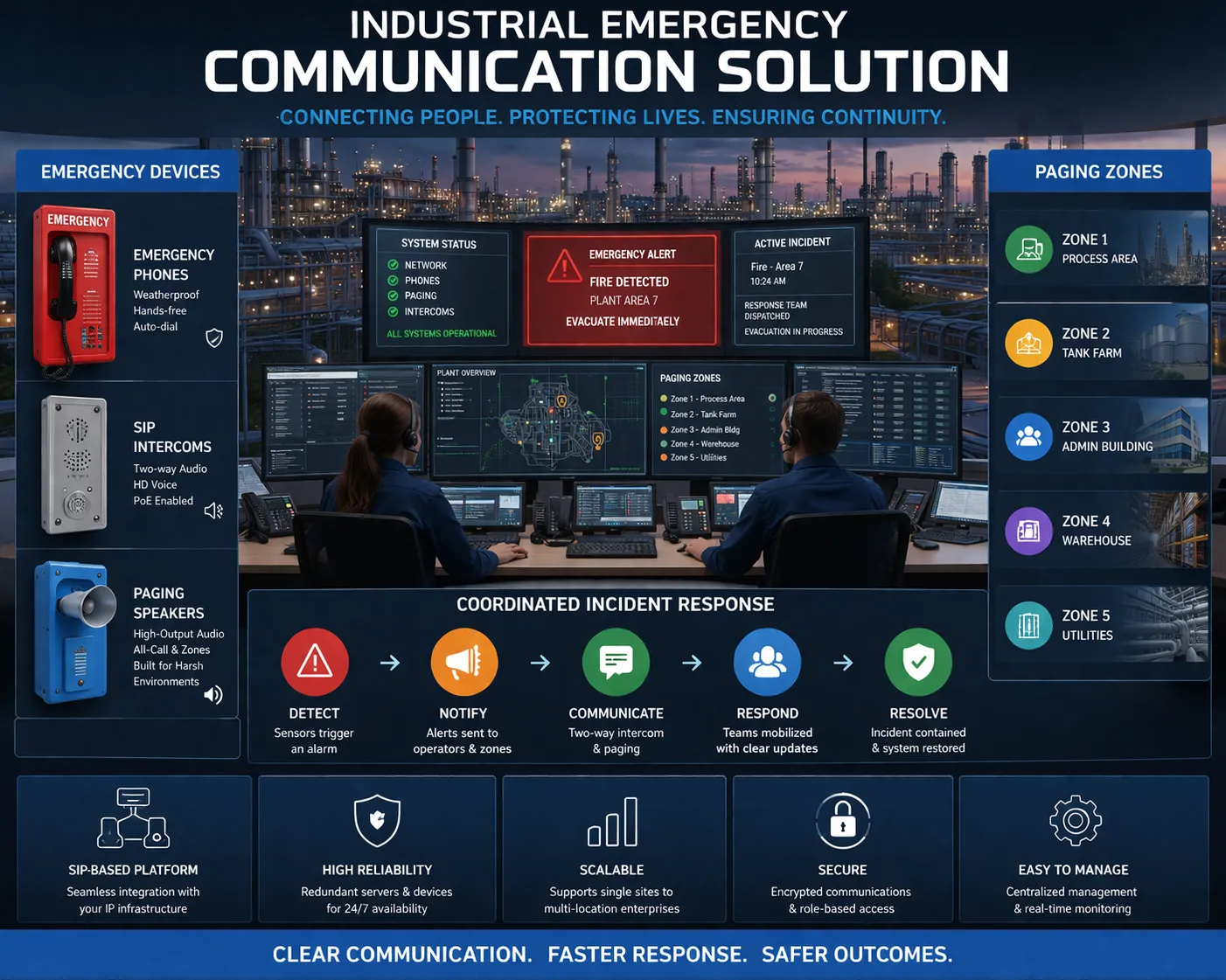
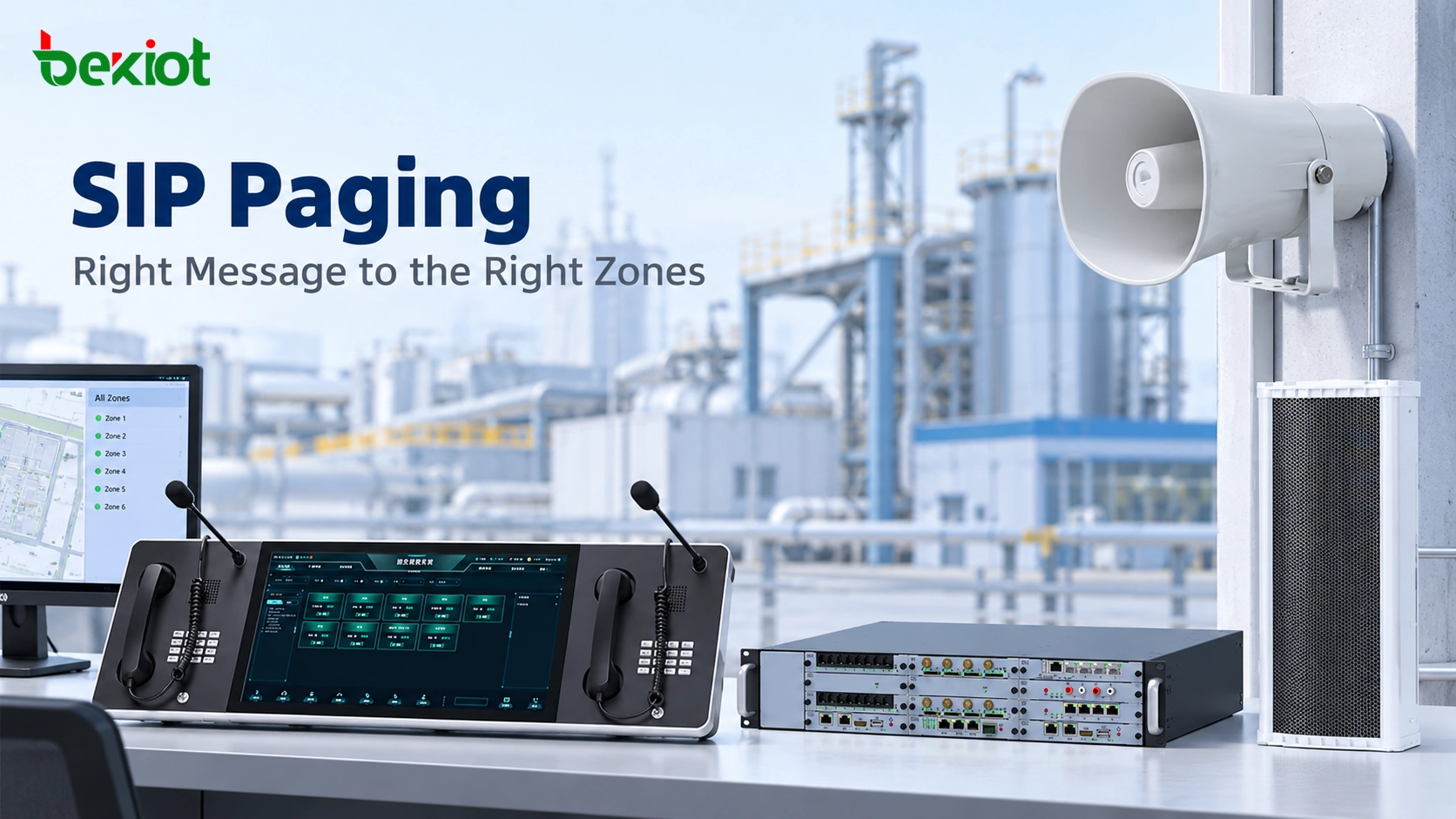
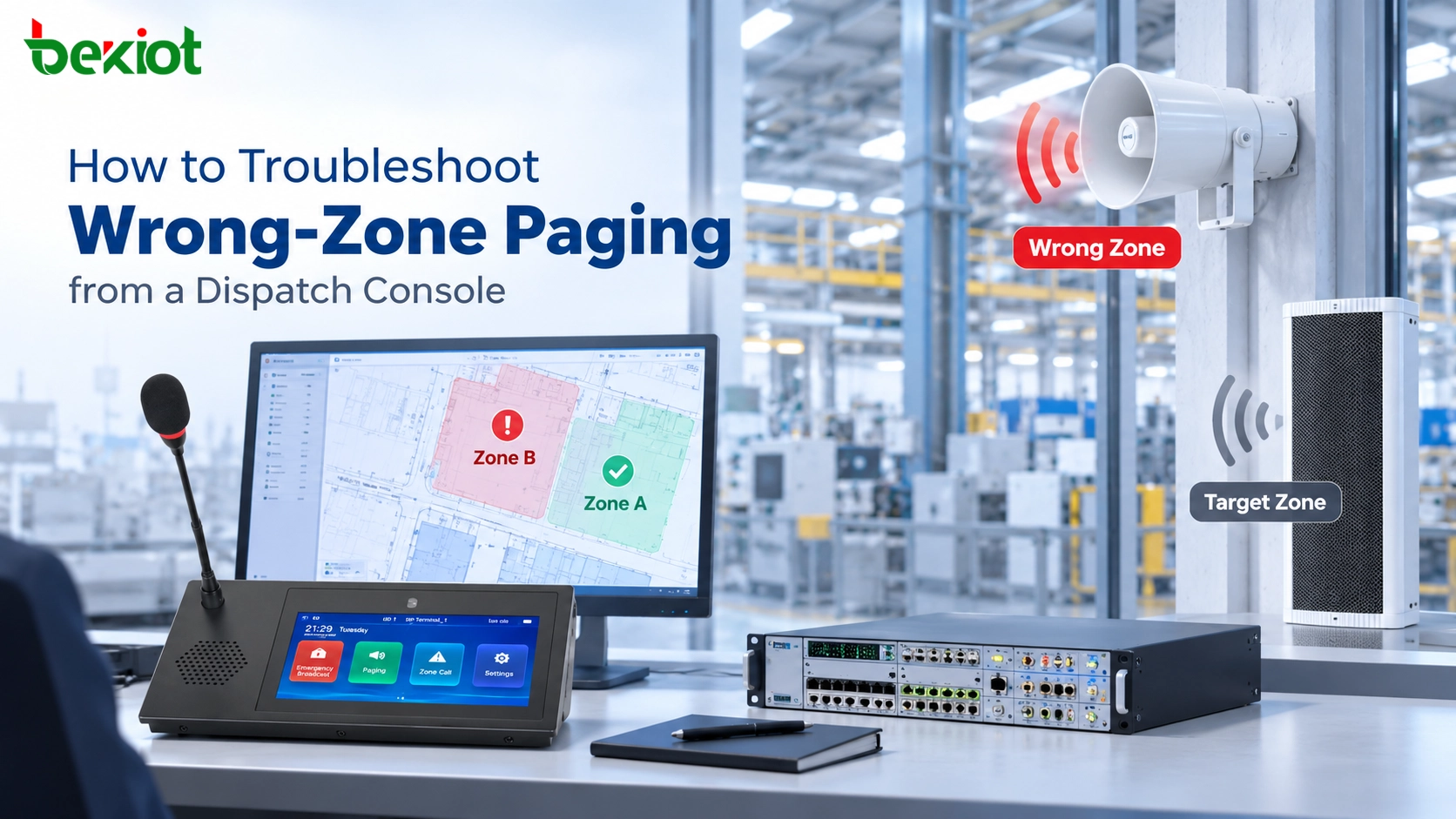
Paging and public address systems extend that coordination further. Once an incident requires site-wide or zone-based instructions, the communication office must be able to move from one-to-one communication to one-to-many communication without delay. A well-designed emergency communication environment supports both.
Becke Telcom fits naturally into this subject because the performance of an office of emergency management and communications depends heavily on the quality of its communication devices and system architecture. Policies and procedures matter, but response speed also depends on whether field endpoints are accessible, voice paths are stable, notifications are clear, and operators can coordinate across different communication layers.
That is where Becke Telcom can be introduced as a practical solution provider. Its portfolio can support the communication path from incident reporting to operator coordination and broader notification. Rather than focusing on a single device category, Becke Telcom offers building blocks that can be combined into a more connected emergency communication environment.
For field reporting, Becke Telcom industrial emergency telephones and rugged communication terminals can provide dependable access points in demanding environments. In entrances, public areas, corridors, stations, and controlled spaces, SIP intercom terminals can support direct hands-free assistance and faster incident initiation. In control centers and communication rooms, IP phones, IP PBX systems, and voice gateways can help connect teams, route calls, and unify communications across distributed sites or mixed networks.
Where public warning and wider voice distribution are required, Becke Telcom paging and broadcast solutions can extend the reach of emergency communication beyond the original caller. This is particularly valuable in facilities where response depends on both incident reporting and coordinated area notification, such as industrial plants, campuses, transport hubs, ports, and large public venues.
When organizations evaluate emergency communications, they sometimes focus too narrowly on choosing one device. In reality, an office of emergency management and communications needs a working chain. A person in distress must be able to reach help. The call or alert must reach the right operator. The system must support escalation. Teams must coordinate clearly. If needed, wider instructions must reach the affected area. Every layer matters.
That is why Becke Telcom is best positioned not only as a supplier of emergency phones or intercoms, but as a partner for building a more complete emergency communication framework. Its value becomes stronger when emergency endpoints, paging, voice gateways, IP telephony, and dispatch-oriented communication capabilities are planned together instead of separately.
Transit systems, stations, tunnels, airports, roadsides, and other transport environments often require a structured emergency communication office because incidents may occur across wide areas with high public exposure. In these settings, communication must move quickly from scattered reporting points to a control center that can coordinate field teams, security, maintenance, and public announcements.
Devices such as help points, emergency phones, intercoms, paging zones, and operator consoles all contribute to that mission. Becke Telcom products fit well in these environments because they support both the field-level contact point and the control-side communication layer.
Large industrial plants, energy facilities, ports, logistics sites, hospitals, and campuses also benefit from this model because they combine safety risk with distributed operations. A communication office in these environments often has to coordinate across workshops, buildings, outdoor areas, security posts, maintenance teams, and management staff, sometimes under difficult environmental conditions.
In these cases, the office depends on a communication system that is both robust and scalable. Emergency phones, SIP intercoms, PBX connectivity, paging, and dispatch support become essential rather than optional. The architecture must be able to grow with the site while keeping emergency communication direct and easy to use.
The stronger the link between field devices, operator systems, and notification tools, the more effective an emergency management and communications office becomes.
This keyword works best when the article begins by explaining what the office is and why it exists. Readers searching for this topic are often trying to understand responsibilities, structure, and practical value. Once that foundation is clear, the article can naturally move into the communication systems that help the office function effectively.
This structure also creates the right place to introduce Becke Telcom. Instead of inserting the brand too early, the article can first establish the communication challenges this office faces and then show how emergency telephones, SIP intercoms, paging, and dispatch-ready systems help solve them.
The strongest version of this article should sound authoritative, clear, and operational rather than overly promotional. It should focus on real workflows, communication logic, and response coordination. That tone makes the content more useful for infrastructure planners, public safety teams, operations managers, and buyers evaluating emergency communication architecture.
Once the practical foundation is established, a light Becke Telcom CTA can close the article naturally by inviting readers to assess whether their current emergency communication path truly supports fast reporting, clear coordination, and broader notification when an incident occurs.
An office of emergency management and communications plays a central role in modern emergency operations because it connects incident reporting, communication control, team coordination, and public warning into one operational structure. Its success depends not only on people and procedures, but also on the reliability of the communication devices and systems that support response under pressure.
That is why emergency phones, SIP intercoms, paging platforms, IP PBX systems, voice gateways, and dispatch-oriented tools all matter in this discussion. Becke Telcom can be included naturally as a provider of these communication building blocks, helping organizations create a stronger link from the first field report to coordinated command and wider emergency notification.
For sites that need a more dependable path from incident detection to response coordination, Becke Telcom can help shape an emergency communication architecture that fits the risks, scale, and operating needs of the real environment.
It usually coordinates emergency communications, incident response support, preparedness planning, interdepartmental communication, and warning or notification functions for a city, campus, transport network, industrial site, or large facility.
Its purpose is to help turn incoming emergency information into structured action. That includes receiving reports, routing communication, supporting operators, and helping response teams stay coordinated during rapidly changing situations.
No. It often supports a broader mission that includes response coordination, communication system management, paging or notification, preparedness planning, and communication continuity during major incidents.
In many environments, the office acts as a bridge between what happens in the field and how command decisions are organized across multiple teams and communication channels.
Because they provide reliable field entry points into the emergency response system. They allow people to report incidents quickly from fixed locations and often make it easier for operators to identify where help is needed.
When connected to dispatch, PBX, paging, and monitoring systems, these devices support faster coordination and better situational awareness from the first moment of the incident.