
Encyclopedia
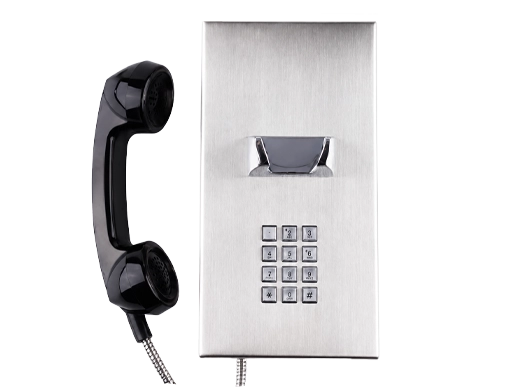
A call box is a fixed communication device installed at a specific location so a person can quickly contact another person, a control room, a security desk, a resident, or an emergency response team. Depending on the site, a call box may be used for visitor entry, emergency help, roadside assistance, parking support, campus safety, industrial communication, or secure access control.
Traditional call boxes were often simple audio units connected by analog lines. Today, many systems support IP and SIP networking, hands-free communication, video calling, remote door or gate release, event logging, and integration with CCTV, paging, dispatch, and access control platforms. That evolution has made the modern call box far more than a basic help point.
A call box is a wall-mounted, pole-mounted, pedestal-mounted, or embedded communication endpoint designed to initiate contact from a fixed location. In the simplest terms, it creates a direct link between the person standing at the device and the person or team responsible for answering the request.
That request may be routine or urgent. In a residential building, the caller may be asking for entry. In a parking facility, the caller may need help at a gate or payment station. On a campus, the caller may need security assistance. In an industrial environment, the device may connect personnel to an operations center for incident reporting or emergency response.
Because of this flexibility, the phrase call box can overlap with related terms such as intercom, entry phone, help point, and emergency phone. The exact name often depends on the application, but the core purpose is consistent: to provide fast, reliable communication from a known location.
A call box is best understood as a fixed-point communication device. What changes from one deployment to another is not the core concept, but the level of integration, ruggedness, and response workflow behind it.
The process starts when a person presses a button, selects a contact, enters a directory number, or triggers a dedicated help function. Some call boxes have a single emergency button for immediate assistance, while others include keypads, speed-dial options, or touchscreen interfaces for visitor or staff communication.
In modern systems, the device may also activate a camera, indicator light, speaker, microphone, or status message as soon as the call begins. This gives the user clear feedback that the request is being processed and helps the receiving party understand the situation more quickly.
Once activated, the call is routed through the underlying communication method. In older deployments, that may be an analog phone line or a hardwired local controller. In newer deployments, the signal typically travels over an IP network, SIP server, IP PBX, cellular network, or cloud-connected platform.
The destination can vary by site design. A residential call box may ring a tenant’s phone or mobile app. A parking or campus help point may ring a security desk. An emergency call box may connect to a public safety center, an operator console, or a dispatch platform that can escalate the event.
After the call reaches the intended recipient, that person can answer with two-way audio or, in some systems, with two-way audio and video. If the device is part of an entry management system, the receiving party may verify the visitor and remotely unlock a door, gate, or barrier.
In safety-focused deployments, the response may include more than conversation. The system can trigger event recording, camera pop-up, alarm notification, paging, or dispatch actions so the incident is documented and handled according to site procedures.
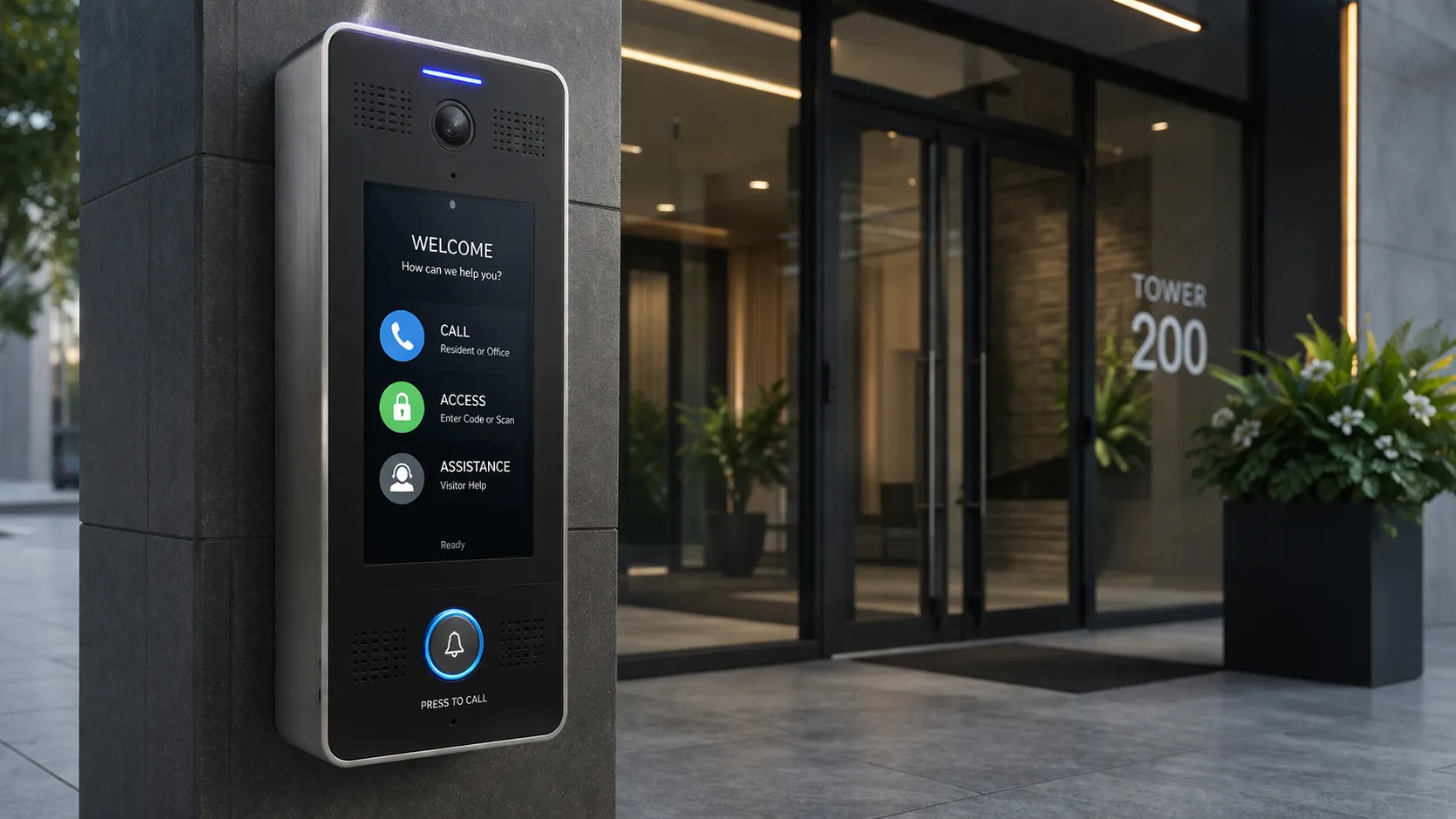
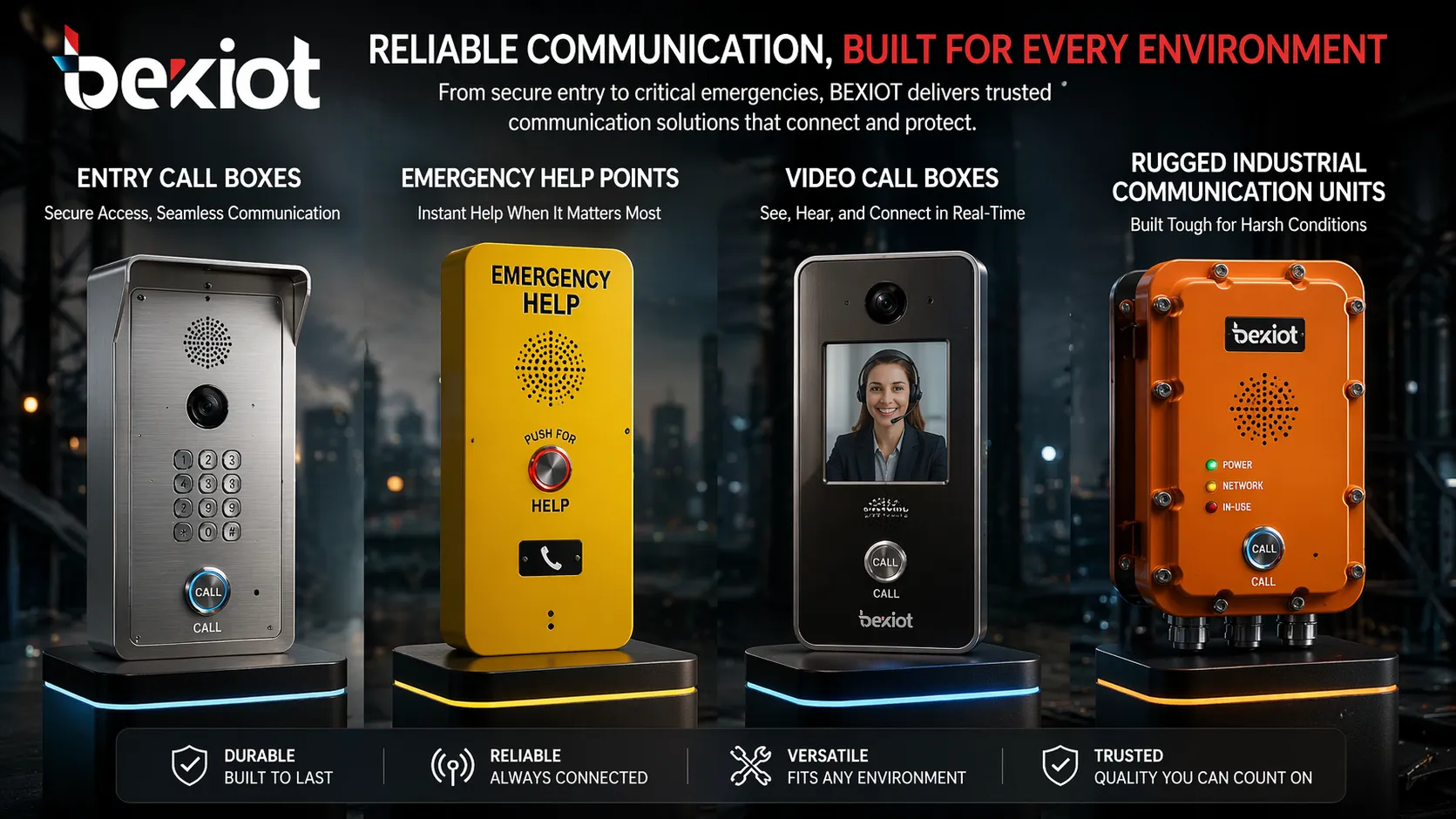
Entry call boxes are commonly installed at apartment buildings, gated communities, offices, and restricted facilities. Their job is to help visitors contact a resident, receptionist, guard, or facility manager before entry is granted.
These systems often include a directory, keypad, card reader, QR workflow, or remote release feature. In newer deployments, they may support mobile answering and video verification, which improves convenience and security at the same time.
Emergency call boxes are designed for rapid assistance in locations where a person may need help but not have immediate access to a staffed desk. Typical locations include highways, parking lots, campuses, transport platforms, public spaces, and remote outdoor areas.
They usually emphasize visibility, speed, and reliability. Many are designed around one-touch activation, high-visibility enclosures, hands-free audio, and integration with security or emergency response workflows.
Video call boxes combine voice communication with a camera so the receiving party can visually verify the person, location, or event. This is useful at entrances, loading zones, perimeter gates, and other controlled points where identity confirmation matters.
Video can improve both security and service quality. It helps reduce uncertainty, supports more accurate decision-making, and creates a better record of what happened during the interaction.
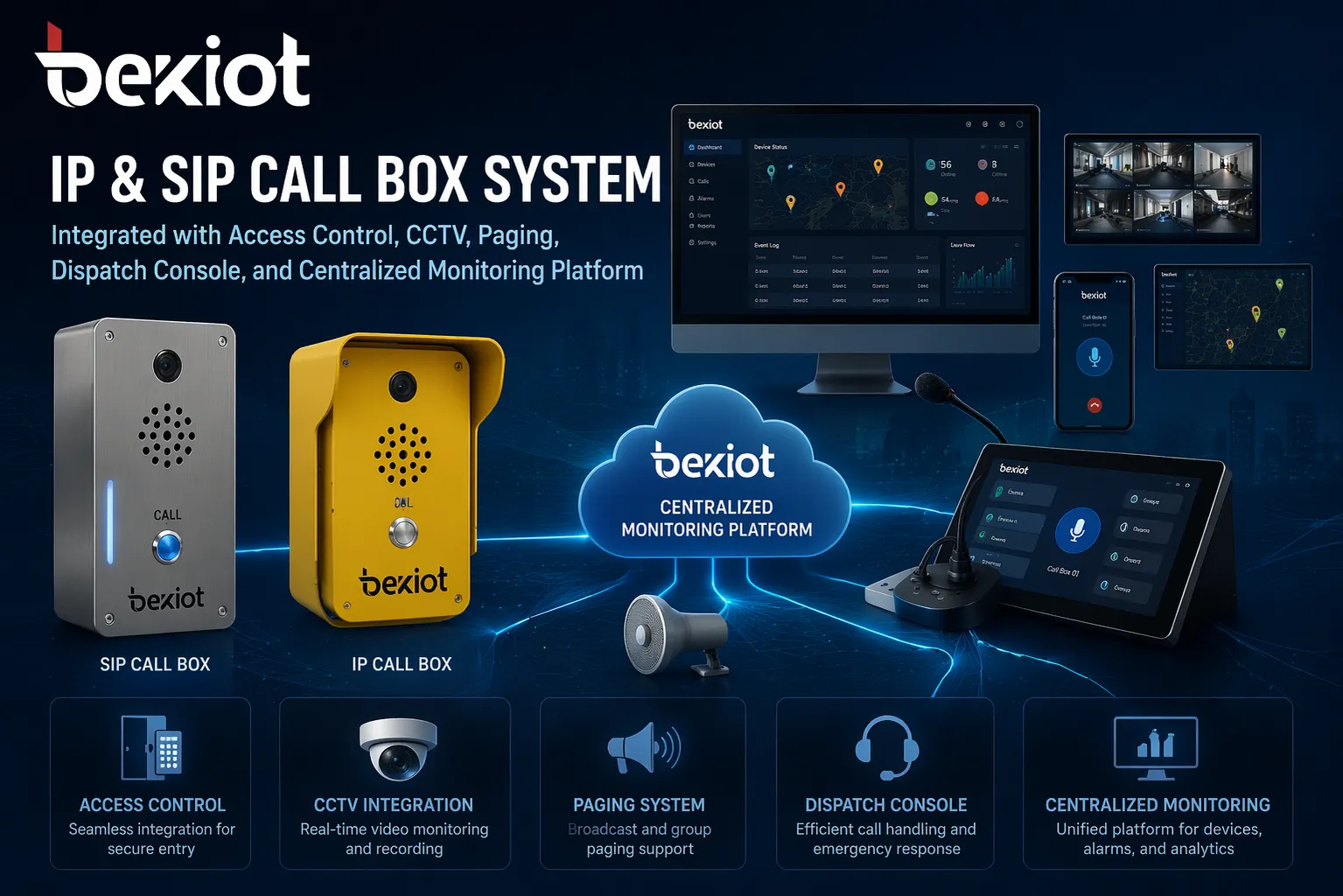
IP and SIP call boxes operate across Ethernet or managed IP networks rather than relying only on isolated legacy wiring. They can register to SIP platforms, IP PBX systems, or unified communication environments, making them easier to scale and integrate across multiple sites.
For organizations that already use IP telephony, this approach is especially attractive. It allows the call box to become part of a broader communications architecture that may include desk phones, mobile clients, paging endpoints, gateways, and dispatch consoles.
Industrial call boxes are built for harsher conditions such as outdoor exposure, dust, humidity, vibration, corrosive areas, high-noise production zones, tunnels, terminals, utilities, and large process sites. Their design may include weather resistance, vandal resistance, amplified audio, and glove-friendly or emergency-style controls.
In these environments, the call box is often part of a wider operational safety system rather than a stand-alone device. It may need to work with paging, alarm systems, radio dispatch, CCTV, or emergency communications infrastructure.
In residential settings, call boxes are used to manage visitor communication at building entrances, community gates, and lobby access points. They allow guests, delivery personnel, and contractors to request access without requiring the entrance to remain open or unmonitored.
When combined with remote answering, video, and access control, the system improves convenience while helping property managers maintain better control over who enters the site.
Commercial buildings often use call boxes at main entrances, service entries, parking barriers, and after-hours access points. The device may connect to a receptionist during business hours and to security staff after hours, keeping communications consistent across different operating periods.
This is especially useful for buildings that need controlled entry without maintaining full-time staff at every door or gate.
Parking facilities use call boxes at entry barriers, exit lanes, stairwells, payment stations, elevators, and remote corners of the structure. In these environments, users may need help with access issues, payment problems, equipment faults, or safety concerns.
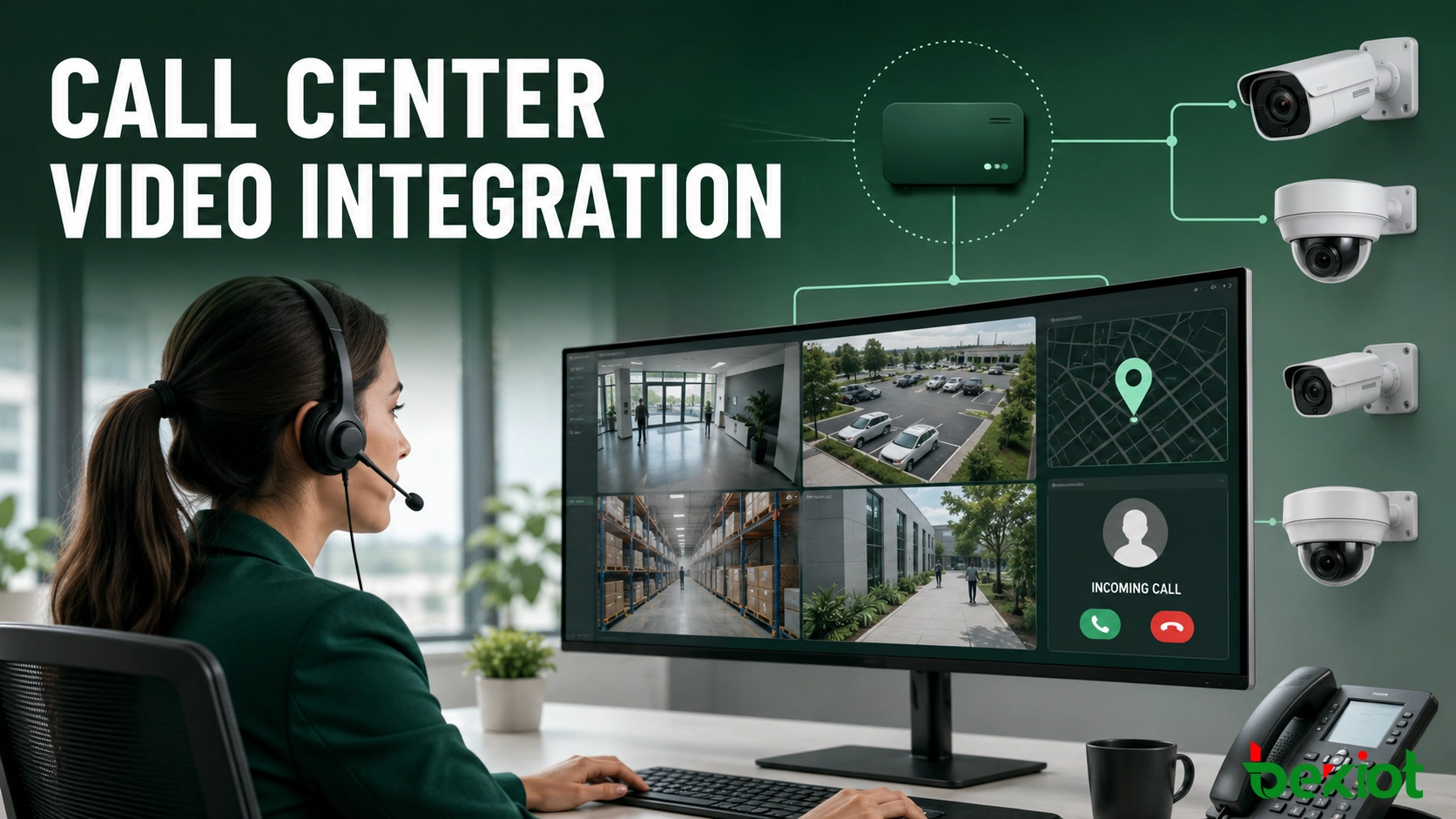
When linked with CCTV and centralized monitoring, the call box becomes an important service and security tool. Operators can answer the call, view the location, and coordinate action without delay.
Educational campuses, hospitals, municipal buildings, and public venues use call boxes to support visitor assistance, staff communication, and emergency response. Their fixed location helps responders identify where help is needed, which can be critical in larger sites with many buildings or open outdoor areas.
These deployments often benefit from clearly marked devices, accessible hands-free operation, and strong audio performance in different environmental conditions.
Roadside emergency call boxes and transport help points are used where mobile service may be inconsistent, where a fixed emergency point is required, or where the operator needs immediate location context. They can be installed along highways, in tunnels, at rail platforms, or at passenger assistance points.
In transportation environments, dependable communication and precise event handling are often more important than feature complexity. The goal is to establish contact quickly and support a coordinated response.
Factories, plants, ports, substations, utilities, warehouses, and process industries may deploy rugged call boxes at gates, production areas, control points, tank farms, loading zones, and perimeter areas. These are locations where personnel may need immediate communication with a control room or emergency team.
In such scenarios, call boxes are often part of a broader operational communication design that includes paging, intercom, dispatch, alarm linkage, and field coordination across a large area.
The wider the site and the harsher the environment, the more valuable a fixed and known communication point becomes. A call box is not only a device; it is also a location-aware response trigger.
Not all call boxes connect in the same way. The underlying communication method affects installation cost, scalability, maintenance planning, and integration possibilities.
Wired systems may use analog telephone lines, low-voltage cabling, or dedicated control wiring. They can be effective in stable environments where the infrastructure already exists, but expansion may become difficult if the site grows or changes.
They are often associated with legacy installations, though some wired systems still remain practical for specific facilities that prioritize simple point-to-point communication.
Wireless and cellular call boxes reduce the need for extensive trenching or cable runs. This makes them attractive for outdoor areas, parking facilities, temporary sites, or remote locations where wired installation would be costly or disruptive.
The tradeoff is that system performance depends more heavily on network coverage, power planning, and ongoing connectivity management.
IP call boxes use the site network to transport voice, video, signaling, and events. In many modern projects, this is the preferred architecture because it supports centralized management, distributed deployment, and easier integration with telephony, monitoring, and security systems.
For multi-building campuses and enterprise environments, IP and SIP approaches often provide the best balance of scalability, flexibility, and long-term system value.
The right feature set depends on the site, but several capabilities are now common in well-designed call box systems.
Hands-free two-way audio remains the foundation, especially for public and emergency use. In addition, many projects now expect video verification, remote unlock control, call forwarding, event recording, and integration with security or operations software.
For larger or more demanding sites, organizations also look for SIP compatibility, IP PBX integration, centralized management, status monitoring, weather resistance, vandal resistance, and support for third-party systems such as access control, CCTV, public address, or dispatch platforms.
These terms are related, but they are not always identical. A call box is the broad category: a fixed device used to place a call from a specific location. An intercom usually emphasizes two-way communication, especially for entry control or internal communication. An emergency phone emphasizes urgent assistance and rapid escalation.
In practice, many products combine these roles. A single device may function as a call box, a SIP intercom, and an emergency help point at the same time. The most accurate label depends on the deployment objective rather than on a strict technical boundary.
Choosing the right system starts with the application. A residential front entrance has very different needs from a campus blue-light help point or a factory-side emergency communication station. The expected workflow should define the product and architecture, not the other way around.
It is also important to consider whether the device is indoor or outdoor, whether audio alone is sufficient, whether video verification is needed, and whether the system must integrate with doors, gates, CCTV, paging, or a central operator platform. Environmental demands such as weather, vandal risk, background noise, and site distance should be part of the decision as well.
For organizations planning long-term system growth, IP and SIP-based options are often the most flexible because they fit more naturally into unified communication and security environments.
Call boxes are no longer limited to simple speaker-and-button devices. Across many industries, they are evolving into network-connected communication endpoints that support voice, video, automation, and centralized event handling.
This shift matters because sites now expect faster response workflows, better visibility, and tighter system integration. Instead of functioning in isolation, the call box increasingly works together with access control, video surveillance, paging, command platforms, and operational communication infrastructure.
For this reason, the question is no longer only What is a call box? It is also What role should the call box play in the site’s overall communication and response strategy?
A call box is a fixed-point communication device that connects people at entrances, roadside locations, parking areas, campuses, and industrial sites with the person or team responsible for helping them. While the concept is straightforward, modern call box systems can vary widely in form, network design, and integration depth.
From basic entry communication to IP-based emergency and security coordination, call boxes continue to play an important role in how organizations manage access, respond to incidents, and maintain communication across distributed environments. For projects that need integrated call boxes, SIP intercoms, emergency communication points, or site-wide communication system design, Becke Telcom can support solution planning for different industries and deployment conditions.
A call box is used to let a person at a fixed location contact a resident, security desk, receptionist, control room, or emergency response team. Common uses include visitor entry, emergency help, parking support, and industrial communication.
A user presses a button, selects a contact, or activates a help function. The system routes the call through analog, cellular, or IP/SIP communication to the appropriate answering point, where the receiving party can respond, verify the situation, and take action.
A call box is a broad term for a fixed communication endpoint. An intercom usually emphasizes two-way conversation, especially for entry or internal communication. Many modern devices do both, so the difference often depends on the application.
Yes. Call boxes are still widely used in apartments, offices, parking facilities, campuses, transport infrastructure, and industrial sites. Modern systems often add video, IP networking, and integration with security and communication platforms.
An IP or SIP call box is a network-based device that communicates over Ethernet or managed IP infrastructure. It can often register with an IP PBX or SIP platform and integrate more easily with phones, paging, dispatch, and centralized monitoring systems.
Emergency call boxes are commonly installed in parking lots, garages, campuses, highways, transport stations, public facilities, and remote outdoor areas where fast access to assistance is important.
Start by defining the use case, environment, communication method, and integration needs. Then compare options based on indoor or outdoor use, audio or video support, wiring method, ruggedness, and compatibility with access control, CCTV, paging, or dispatch systems.