Becke GP600 is a desktop SIP microphone built for projects that need faster broadcast control, clearer user interaction, and more flexible voice operation than a basic paging terminal can provide. With a 4.3-inch capacitive touchscreen, Linux-based architecture, low-latency audio response, and practical browser-based management, it gives operators a more capable endpoint for paging, intercom, and zone-based announcement workflows.
Rather than focusing only on simple voice pickup, GP600 is designed as an interactive SIP microphone terminal for environments where users need to select targets, manage partitions, launch routine paging tasks, and handle two-way voice communication from one desk device. It is especially suitable for control centers, campuses, factories, transportation sites, service halls, and public buildings where broadcast and intercom functions need to stay fast, intuitive, and reliable.
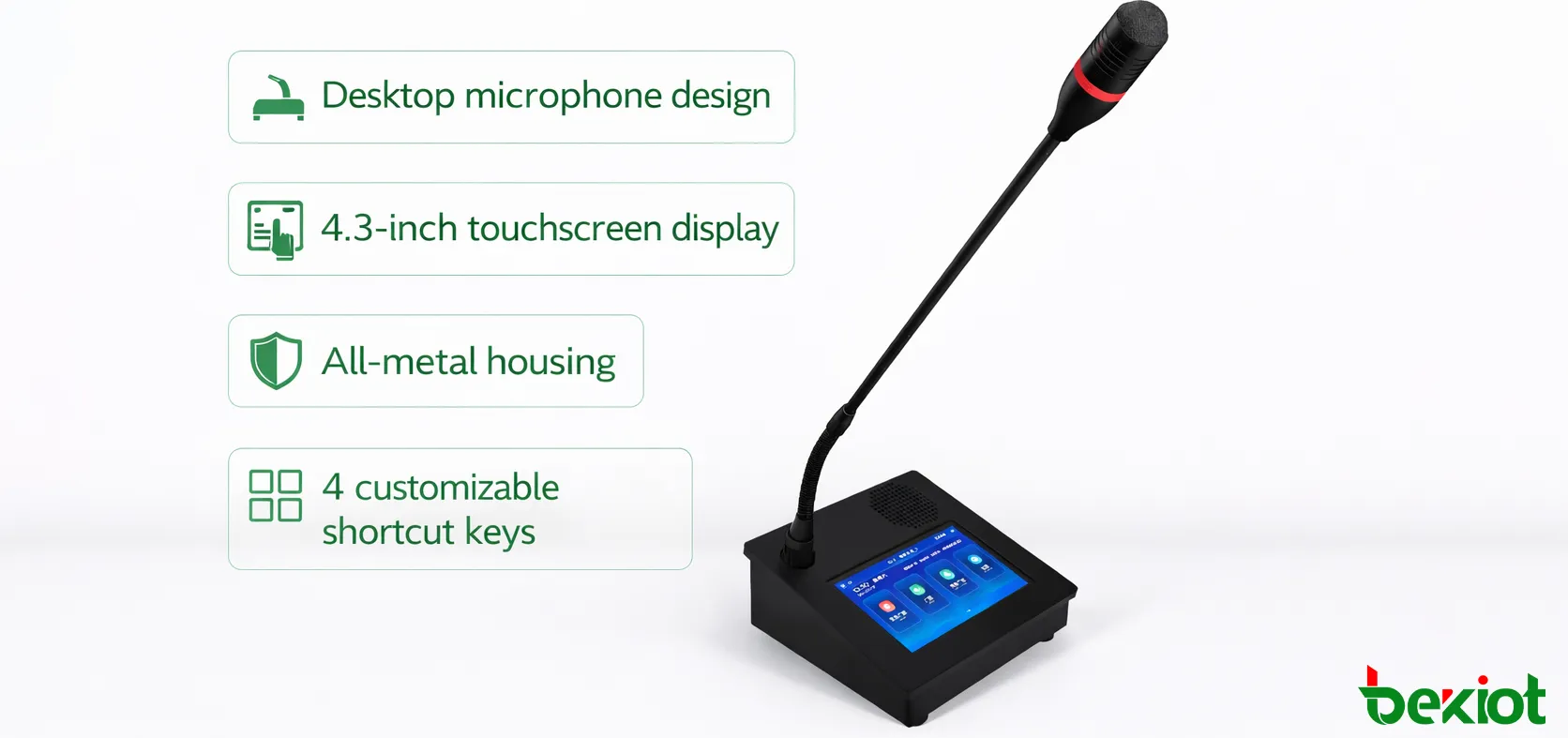
The desktop microphone structure combines a professional operator-oriented form factor with a metal base and oxidized aluminum alloy panel, helping the product feel stable and durable in daily use. The overall design is well suited to fixed working positions where voice announcements, paging control, and intercom response are part of regular operations.

One of the biggest advantages of GP600 is its 4.3-inch true-color capacitive touchscreen. This gives operators a more direct and visual way to manage broadcast tasks, intercom actions, and target selection. Compared with simpler microphone terminals, the touchscreen approach reduces operational friction and makes the device far more suitable for users who need to handle multiple rooms, zones, terminals, or departments from the same position.
In daily operation, this means staff can move more naturally through paging and intercom tasks, switching between single-device calls, multi-device calls, zone paging, multi-zone paging, and all-zone broadcasting without relying on an external workstation for every action. The result is a desktop terminal that feels much more aligned with modern operational workflows.
GP600 is designed for fast paging response, including broadcast call performance with delay kept under 100 milliseconds. That makes it particularly useful in environments where spoken messages need to be delivered with minimal lag, whether for routine operations, time-sensitive coordination, or urgent announcements. This responsiveness improves the practical value of the device in busy sites where communication timing directly affects workflow and safety.
Because it supports calling a single terminal, multiple terminals, a single zone, multiple zones, or the full system, GP600 adapts well to both localized and wide-area broadcasting needs. This flexibility allows one device to cover a wide range of voice scenarios, from targeted operational messaging to wider public announcements.
GP600 is not just a desk microphone. It is a touchscreen SIP broadcast terminal built for faster control, smarter zone selection, and more practical day-to-day voice management.
GP600 does more than issue one-way announcements. It also supports rapid initiation of two-way voice intercom with selected intercom terminals, allowing staff to move from broadcast to conversation without switching devices. With a built-in 3W speaker and support for both automatic answer and manual answer switching, the microphone becomes a more active communication node within the larger SIP environment.
This is particularly valuable in service-oriented and operational environments where announcements and real-time voice coordination often happen together. Instead of separating paging and talkback across multiple devices, GP600 gives operators a more unified communication experience from one desktop position.
GP600 is designed around the way broadcast systems are actually used. Operators may need to address one classroom, one workshop, several offices, a selected zone group, or an entire facility, often within the same shift. The device supports this range of usage directly through its touch interface, allowing broadcast actions to be launched according to the structure of the site rather than forcing a one-size-fits-all workflow.
For projects with many endpoints and partitions, this matters a great deal. It helps reduce operating time, lowers the chance of addressing the wrong destination, and gives the microphone stronger day-to-day utility in larger deployments.
GP600 supports user permission configuration, allowing the microphone to display only the terminals and partitions within the user’s authorized scope. This is an important capability for larger or multi-department systems, because it helps simplify the interface for individual users while also improving operational control. Different departments or operator roles can be limited to their own relevant endpoints and zones instead of seeing the full system structure.
That makes the device better suited to schools, industrial parks, hospitals, and enterprise facilities where the broadcast network may be shared across multiple operational teams. By showing only what the user is allowed to control, GP600 becomes more intuitive and more secure at the same time.
To improve response speed during repeated tasks, GP600 includes four customizable broadcast shortcut keys. By long-pressing a shortcut key, users can quickly launch preset broadcast tasks without navigating through multiple interface layers. In real projects, this is highly useful for shift announcements, standard alerts, routine notices, and recurring area-specific broadcasts.
These shortcut functions help transform the microphone from a reactive device into a more efficient workflow tool. Operators do not have to rebuild the same task every time, which is especially valuable in facilities where repetitive voice communication is part of daily operations.

GP600 is also designed to be practical for installers and maintenance teams. Users can log in through a browser using the microphone’s IP address to modify network parameters, audio parameters, and configuration settings. The same browser-based approach can also be used to update the microphone software version, which simplifies deployment support and ongoing maintenance.
This web-based management model is important for projects that want to reduce on-site maintenance complexity. Instead of relying only on local device operation, administrators can maintain and update the terminal more conveniently across the network, which is especially useful in systems with multiple paging points.
In addition to live microphone use, GP600 supports line-in audio collection and USB drive broadcasting. This gives the device more value in installations where operators may need to play stored audio content or bring in external audio sources for announcements, notices, scheduled messages, or special-purpose broadcasts. The presence of both line input and line output also makes the microphone more adaptable in broader audio workflows.
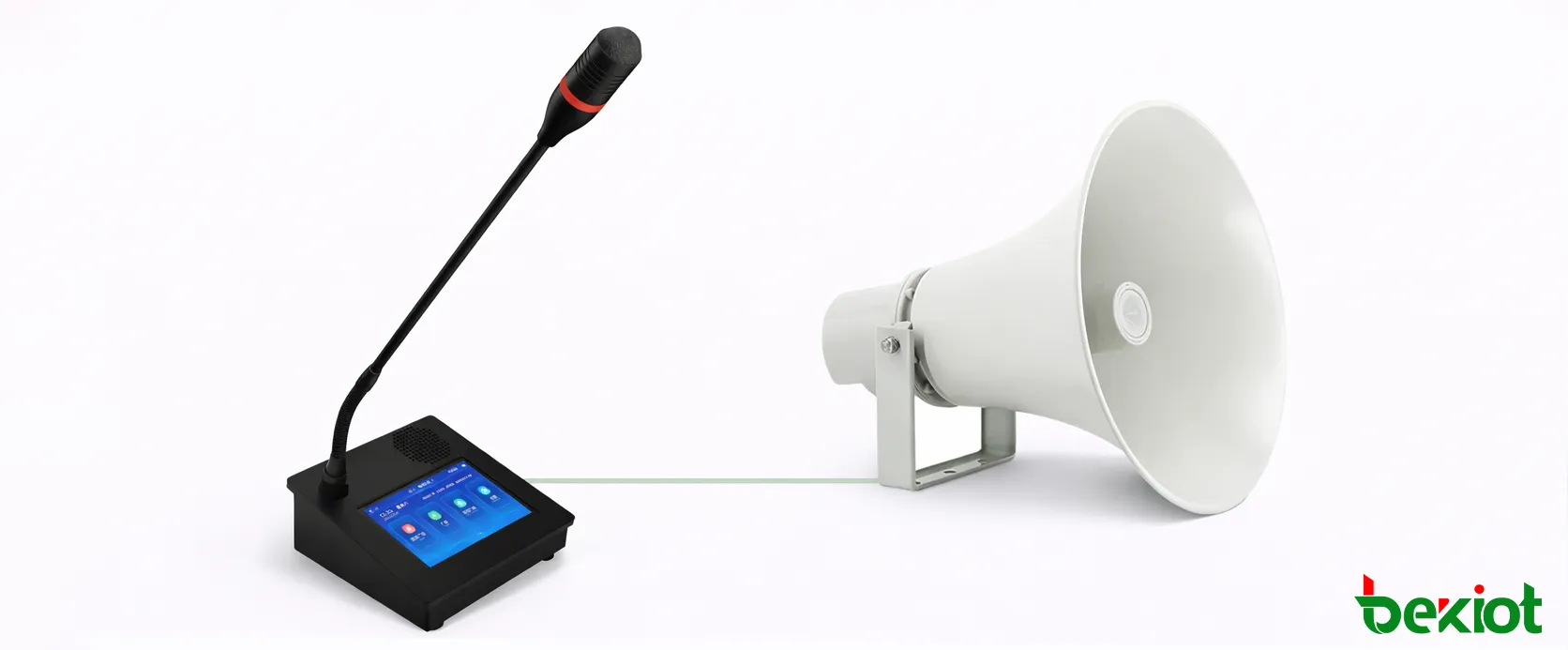
Because the audio output can connect to an external power amplifier, GP600 is not limited to its own desktop presence. It can also participate more effectively in larger paging architectures where external amplification and distributed sound coverage are required.
To better match operational environments, GP600 supports password verification on the microphone itself and can be configured with a six-digit screen lock password. This adds a practical layer of control in shared spaces, public-facing environments, and duty-based installations where the device may be physically accessible to more than one person.
The device also supports enabling or disabling broadcast prompt tones and allows manual control over whether the paging microphone itself receives broadcasts. These kinds of details make a meaningful difference in real deployment, because they allow the terminal to be adapted more precisely to the habits and needs of different sites.
GP600 is highly suitable for schools, universities, training centers, and other education environments where staff need a practical desktop terminal for routine announcements, partition-based paging, and direct communication with intercom terminals. Its touchscreen interface and shortcut-based operation help administrative staff, duty personnel, and broadcasting room users handle daily voice tasks more efficiently without relying on a separate computer for every action.
In these settings, permission-based display is also highly valuable. Different buildings, departments, or campuses can be structured more cleanly, and users can be limited to the terminals and zones relevant to their role. This helps keep operation orderly in larger education systems.
In industrial projects, GP600 works well at production offices, warehouse desks, dispatch points, workshop coordination stations, and plant control rooms where fast announcements and practical intercom communication are essential. The ability to call individual endpoints, groups, or full areas makes the device useful for production coordination, shift messaging, operational notices, and quick voice contact across the site.
Its metal desktop structure also suits environments where equipment is expected to feel solid and dependable during continuous use. Combined with low-latency broadcasting and two-way intercom support, GP600 becomes a more capable communication tool for industrial operations than a basic microphone endpoint.
GP600 is also a strong fit for hospitals, administrative halls, visitor service centers, and other public-service sites where staff may need both public announcements and direct voice contact with selected terminals. The touchscreen model supports clearer interaction and faster task selection, which is helpful when front-line users need straightforward control during busy daily operations.
Because the microphone can integrate paging, intercom, permissions, and external audio support within one device, it is suitable for service-oriented spaces where communication needs are varied rather than purely repetitive.
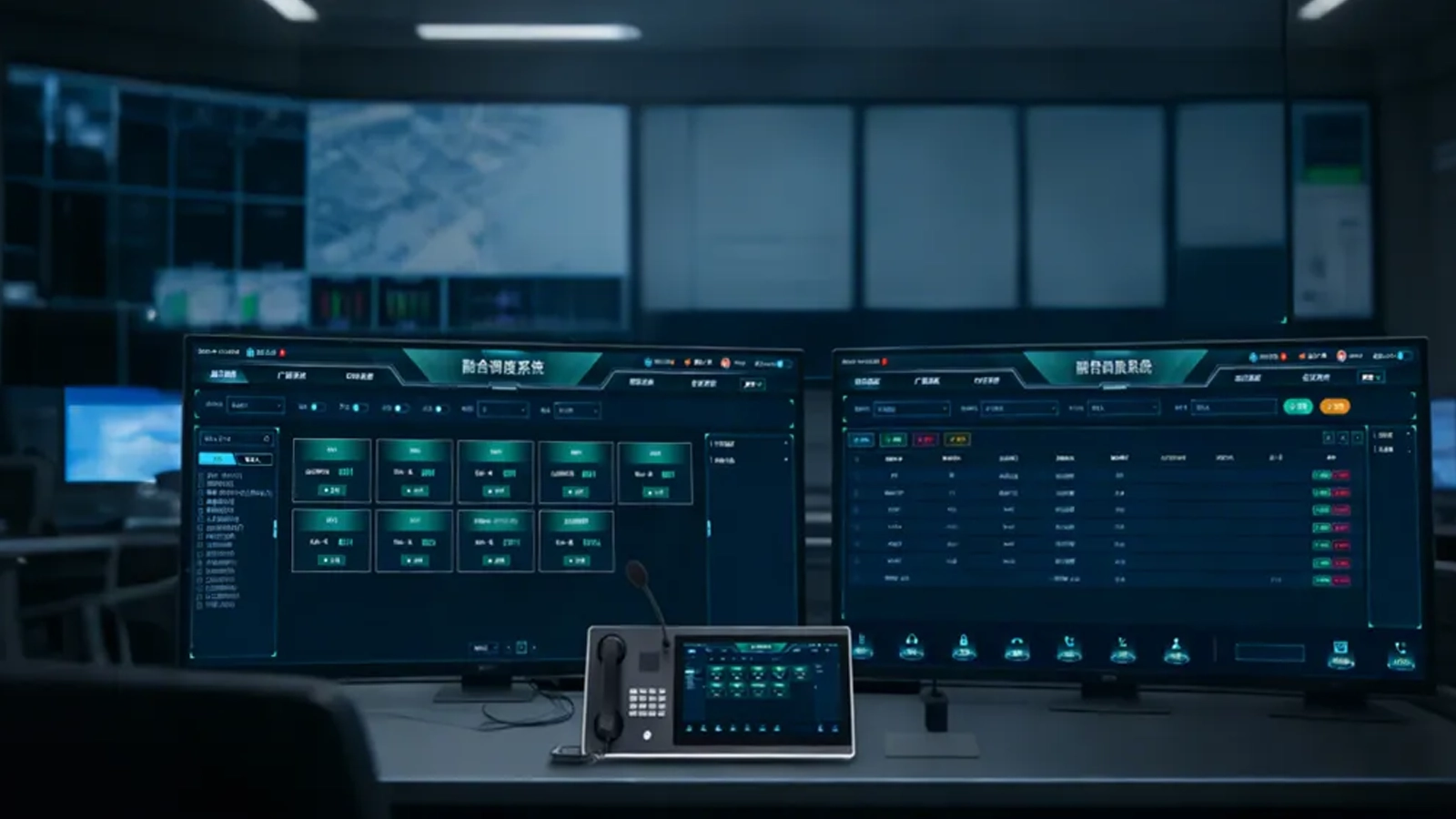
For control rooms, stations, terminals, and operational command points, GP600 provides a more advanced desktop voice interface for sites that need clear visual interaction along with practical voice performance. Operators can manage live announcements, trigger predefined broadcast tasks, and initiate intercom communication from one desk terminal while keeping the workflow direct and structured.
In these environments, the combination of touchscreen control, fast broadcast response, and integration with wider SIP-based infrastructure gives GP600 an advantage over simpler paging microphones that provide only limited local interaction.

GP600 uses a desktop microphone structure with an oxidized aluminum alloy panel and all-metal base housing. It features a 4.3-inch capacitive touchscreen with a resolution of 800×480 or higher, runs on a Linux-based platform, and supports one 10/100M RJ45 network port for LAN and internet access. The device also supports one 3.5 mm audio line input, one 3.5 mm audio line output, at least one short-circuit input, at least one short-circuit output, and DC12V power input.
GP600 is a more capable SIP microphone for projects that require visual operation, faster target selection, richer paging control, and more integrated intercom capability than conventional desk microphones can offer. It combines touchscreen interaction, low-latency broadcasting, two-way intercom, permission-based control, browser management, and external audio flexibility in one professional desktop terminal.
For users building SIP-based paging and intercom systems in campuses, factories, hospitals, service facilities, and command environments, GP600 offers a stronger balance of usability, functional depth, and deployment practicality. It is an especially good choice where the microphone is expected to be a true operating terminal rather than just a simple speaking device.
GP600 adds a 4.3-inch touchscreen, richer paging control, permission-based operation, two-way intercom capability, browser-based management, and shortcut-based broadcast launching, making it much more suitable for interactive daily use.
Yes. GP600 supports calling a single terminal, multiple terminals, a single partition, multiple partitions, and full-area broadcasting, giving it strong flexibility for real project structures.
Yes. It supports rapid initiation of two-way voice intercom with selected terminals, includes a built-in 3W speaker, and supports switching between automatic answer and manual answer modes.
Yes. Administrators can log in through a browser using the device IP address to modify network, audio, and configuration parameters, and they can also update the device software through the browser interface.