
Encyclopedia
An explosion-proof SIP phone is a hazardous-area communication terminal that combines SIP-based VoIP calling with a certified protective design for locations where flammable gas, vapor, mist, or combustible dust may be present. In simple terms, it is an industrial IP phone built not only to connect to a SIP server, IP PBX, or dispatch platform, but also to operate safely in environments where an ignition source could create severe risk.
That combination is what makes this product category important. A standard office IP phone may support SIP registration, HD voice, and network-based call control, but it is not designed for classified industrial locations. An explosion-proof SIP phone is different because communication performance and hazardous-area protection must work together. The device must support dependable voice communication over an IP network while using enclosure, circuitry, materials, glands, and certification methods appropriate for the installation environment.
The practical value of an explosion-proof SIP phone is not just that it can make calls over IP. It is that it can deliver those calls in places where safety, compliance, uptime, and environmental durability matter at the same time.
An explosion-proof SIP phone is best understood as a specialized industrial communication endpoint. On the communication side, it works like a SIP phone: it uses the Session Initiation Protocol to register to a call server or communications platform, establish calls, manage signaling, and support voice sessions over an IP network. On the hazardous-area side, it is engineered for deployment in locations where explosive atmospheres may occur, such as oil and gas facilities, petrochemical plants, offshore platforms, tank farms, fuel handling sites, mines, and certain dust-prone processing environments.
In market language, people often use “explosion-proof phone,” “Ex telephone,” and “hazardous-area SIP phone” in a broad way. In real projects, however, the exact suitability of the device depends on its actual certification, protection concept, and marking for the intended zone, division, gas group, dust group, and temperature class. That is why the most accurate way to describe the product is this: an explosion-proof SIP phone is a SIP communication terminal designed and certified for use in potentially explosive atmospheres, rather than simply a rugged phone with a heavy metal housing.
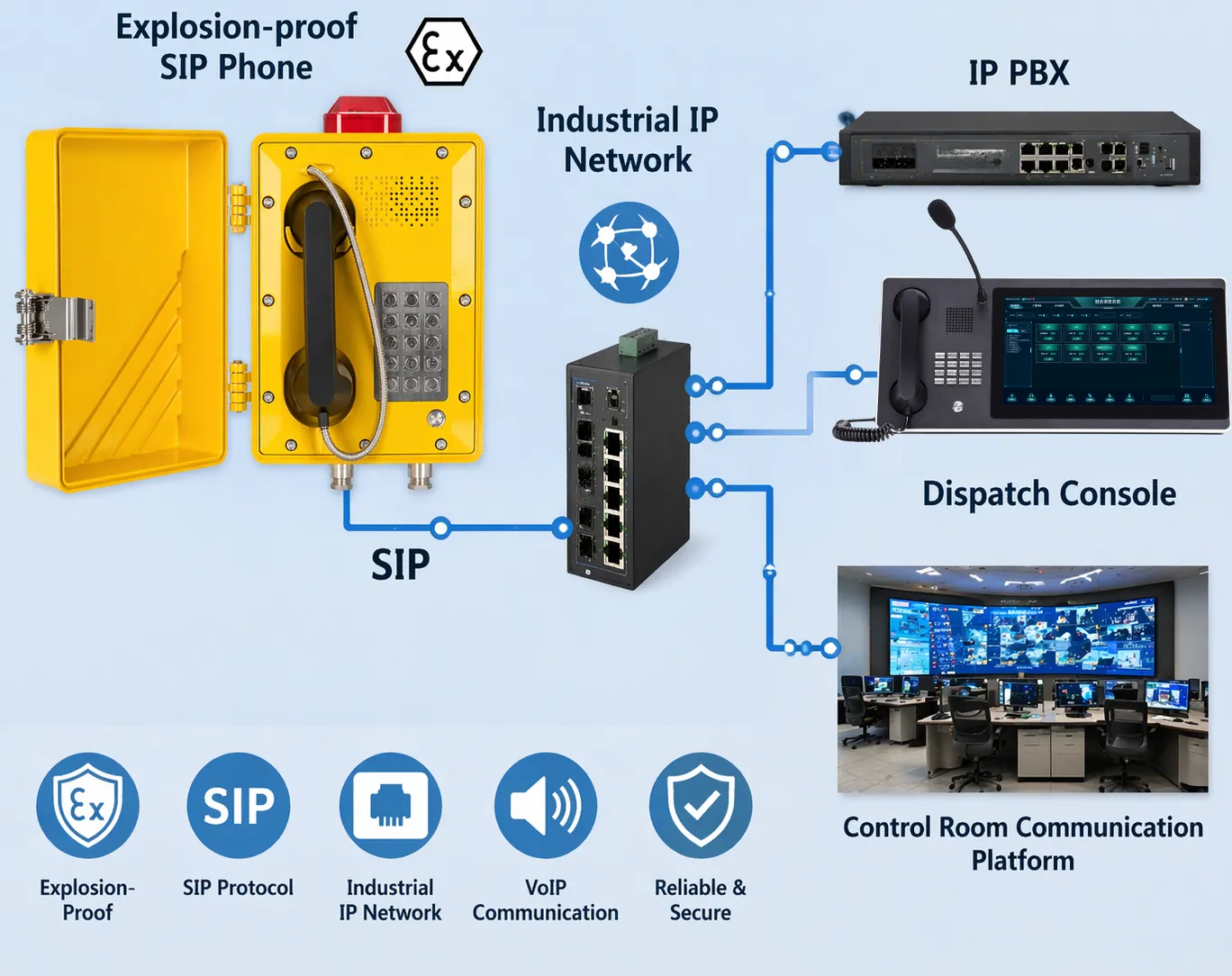
For industrial users, the attraction of SIP is clear. SIP phones can integrate with IP PBX systems, dispatch consoles, emergency communication platforms, recording systems, paging workflows, and other IP-based voice applications. When that SIP capability is packaged into a hazardous-area device, operators gain a communication endpoint that fits both modern network architecture and strict site safety requirements.

At the signaling level, an explosion-proof SIP phone follows the same general communication logic as other SIP endpoints. Once connected to the network, it registers with a SIP server, IP PBX, or unified communications platform using its configured account credentials. After registration, the phone can initiate and receive calls, follow dial plans, use SIP extensions, participate in hunt groups, or connect to dispatch workflows depending on the system architecture behind it.
In a practical deployment, the phone may be assigned to a control room, maintenance team, field station, process unit, loading area, or emergency shelter point. When a user lifts the handset or presses a button, the terminal sends SIP signaling to the server, which handles call routing according to predefined rules. The remote party may be another field phone, an operator console, a supervisor office extension, a help point endpoint, or an emergency response desk. In more advanced systems, the same endpoint can also be integrated with broadcasting, group calling, or recording functions.
Because the device uses SIP, it fits naturally into modern IP communication infrastructure. That matters for industrial operators who want to avoid isolated analog islands and instead bring hazardous-area communications into the same managed ecosystem as IP PBX, paging, intercom, or dispatch systems.
After call setup, the phone transmits audio over the IP network using the media path defined by the deployed solution. In real-world terms, this means the explosion-proof SIP phone captures voice through its microphone or handset, processes the signal, encodes the audio, and sends it to the other endpoint over the network. Incoming voice follows the reverse path and is reproduced through the receiver or speaker. The exact codec, audio tuning, and security features depend on product design and platform compatibility.
In hazardous industrial environments, audio performance is especially important because background noise is often high. Process plants, mechanical rooms, offshore decks, mines, compressor stations, loading areas, and workshops can all create conditions where ordinary office-grade acoustics fail. As a result, many explosion-proof SIP phones emphasize loud ringers, powerful speakers, acoustic echo control, noise handling, and handset or hands-free modes suited to harsh operational use.
This is one reason the product category is not simply a compliance story. The phone also has to remain usable during routine operations, maintenance coordination, alarm verification, incident reporting, and emergency response. A compliant device that cannot be clearly heard in a noisy field area will not deliver real operational value.
The major difference between an explosion-proof SIP phone and a standard SIP desk phone lies in how the hardware is built and approved for use in hazardous locations. The device enclosure, cable entry, internal electrical design, temperature management, sealing strategy, materials, and mechanical structure must align with the relevant protection method and certification scheme for the target application. This is why the product must be specified according to actual Ex approvals rather than general industrial marketing language.
Depending on the market and project standard, the installation may be defined by ATEX, IECEx, Class/Division, or related local frameworks. Engineers must verify whether the selected phone is suitable for the exact area classification, environmental conditions, and installation method. In many projects, that review also includes ingress protection, corrosion resistance, temperature range, gland compatibility, mounting method, and maintenance requirements.
So while the communication process looks familiar from a VoIP perspective, the safety logic is much more specialized. A normal SIP phone answers the question of how to place calls over IP. An explosion-proof SIP phone answers the harder question of how to provide IP-based calling safely and reliably in a potentially explosive atmosphere.

The defining feature of this device category is hazardous-area readiness. That includes the correct certification path for the target market, the corresponding protection concept, and product markings that show where and how the unit may be installed. Buyers should pay attention to certified suitability rather than broad claims alone. A phone intended for one zone or division, gas group, or temperature class may not be suitable for another.
Protective construction is equally important. Many explosion-proof SIP phones use robust enclosures, sealed cable entries, corrosion-resistant materials, reinforced handsets, and industrial hardware chosen for long-term use in wet, dusty, or chemically aggressive environments. In outdoor and industrial installations, resistance to water ingress, dust, shock, and vibration often matters just as much as the basic communication feature set.
For this reason, the best product descriptions do not stop at “explosion-proof.” They explain the approval basis, enclosure rating, operating conditions, and installation assumptions that define real-world suitability.
A major advantage of an explosion-proof SIP phone is that it can fit into the same IP ecosystem already used by modern industrial communications. That can include SIP servers, IP PBX systems, operator consoles, recording platforms, public address interfaces, paging applications, emergency call workflows, and centralized dispatch software. Instead of treating the hazardous area as a disconnected edge, SIP allows the field device to become part of a unified network.
This integration is valuable for both daily operations and incident response. A maintenance worker in a classified process unit may call the control room directly. A field station can be included in a dispatch plan. A hazardous-area phone can be mapped to a specific extension and alarm workflow. Some deployments also connect the phones with paging zones, help points, or visual supervision processes so that communications across the site become more coordinated.
In other words, SIP changes the phone from an isolated endpoint into a managed node in a larger operational communications architecture. That is one of the clearest reasons many industrial projects choose SIP-based hazardous-area phones instead of legacy standalone systems.
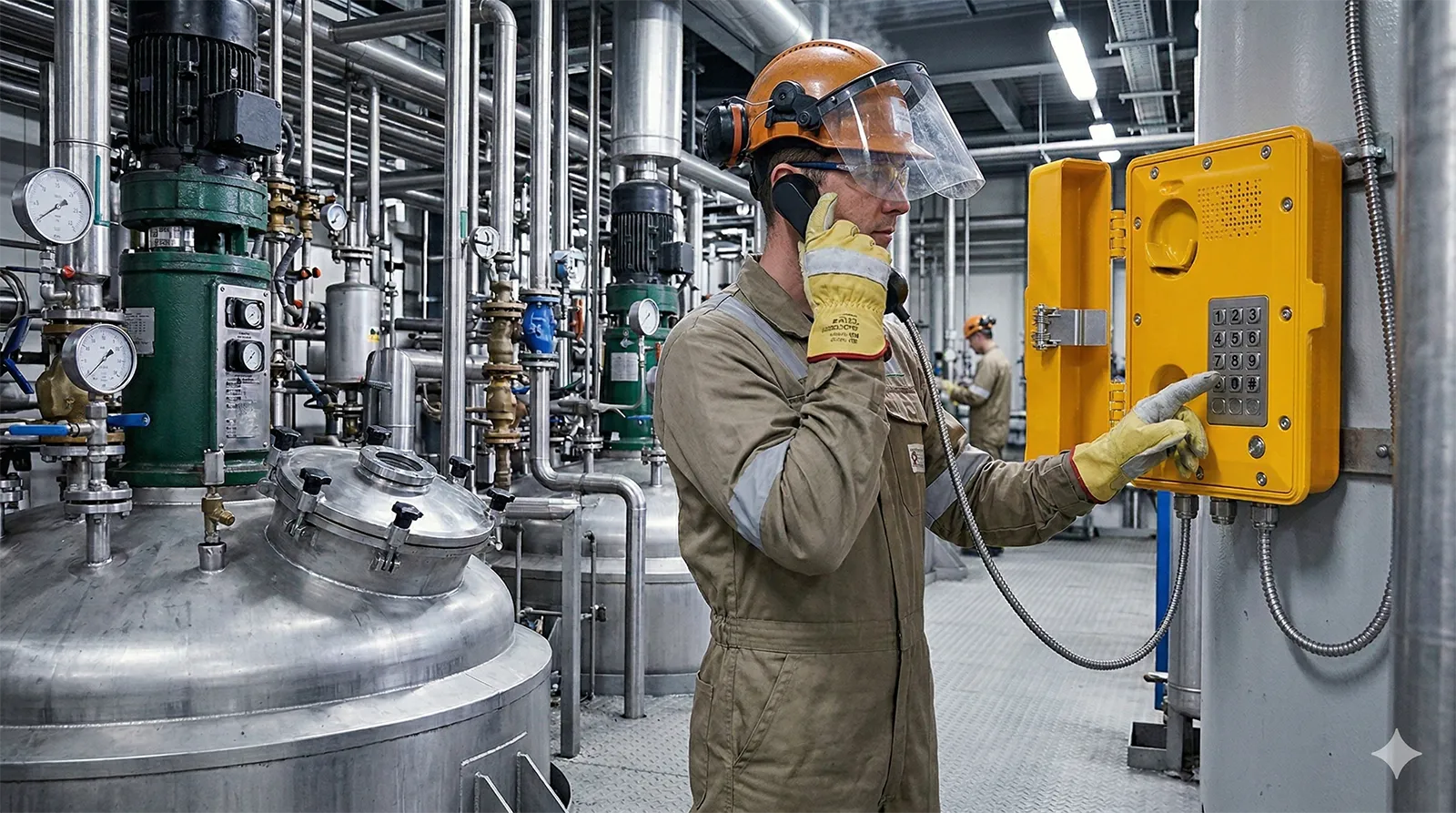
Field communications are often made under stress, noise, and physical constraints. Workers may be wearing gloves, helmets, hearing protection, or other personal protective equipment. Weather may be severe. Machinery may be loud. Visibility may be poor. That is why usability matters. Explosion-proof SIP phones are often built with large buttons, strong visual contrast, durable hooks, high-output ringers, and handset or speaker options that support practical use in harsh working conditions.
Audio quality also matters beyond comfort. During maintenance troubleshooting, permit coordination, process checks, shutdown procedures, or emergency events, misunderstood speech can delay action and increase risk. Products in this category therefore often emphasize clear voice pickup, high acoustic output, and stable operation across industrial noise conditions. Some are optimized for hands-free communication, while others retain a robust handset format preferred by operators in certain environments.
The best device is not the one with the longest feature list. It is the one users can operate quickly, hear clearly, and trust consistently when field conditions become difficult.
Industrial communication equipment is expected to remain available for long periods, often in remote or demanding locations. Reliable construction, stable network behavior, and suitable power options are therefore essential. Depending on product design, deployment may support PoE, dedicated DC supply, or other installation-specific power methods. Buyers should check these details early, especially when the phone will be installed over long cable runs or in outdoor field locations.
Deployment flexibility also affects project success. Mounting style, wall bracket design, cable gland arrangement, weather sealing, service access, and maintenance approach all influence whether the device is practical for the intended site. For example, a refinery pipe rack area, an offshore process deck, and a mining transfer point may each require different assumptions about corrosion resistance, washdown exposure, installation access, and operating temperature.
When communication equipment is chosen for hazardous areas, reliability is never a single specification. It is the combined result of network fit, power strategy, enclosure design, environmental durability, and certification alignment.
In hazardous-area projects, the right question is not “Does this phone support SIP?” but “Does this certified SIP phone support my exact site conditions, communication workflow, and maintenance model?”
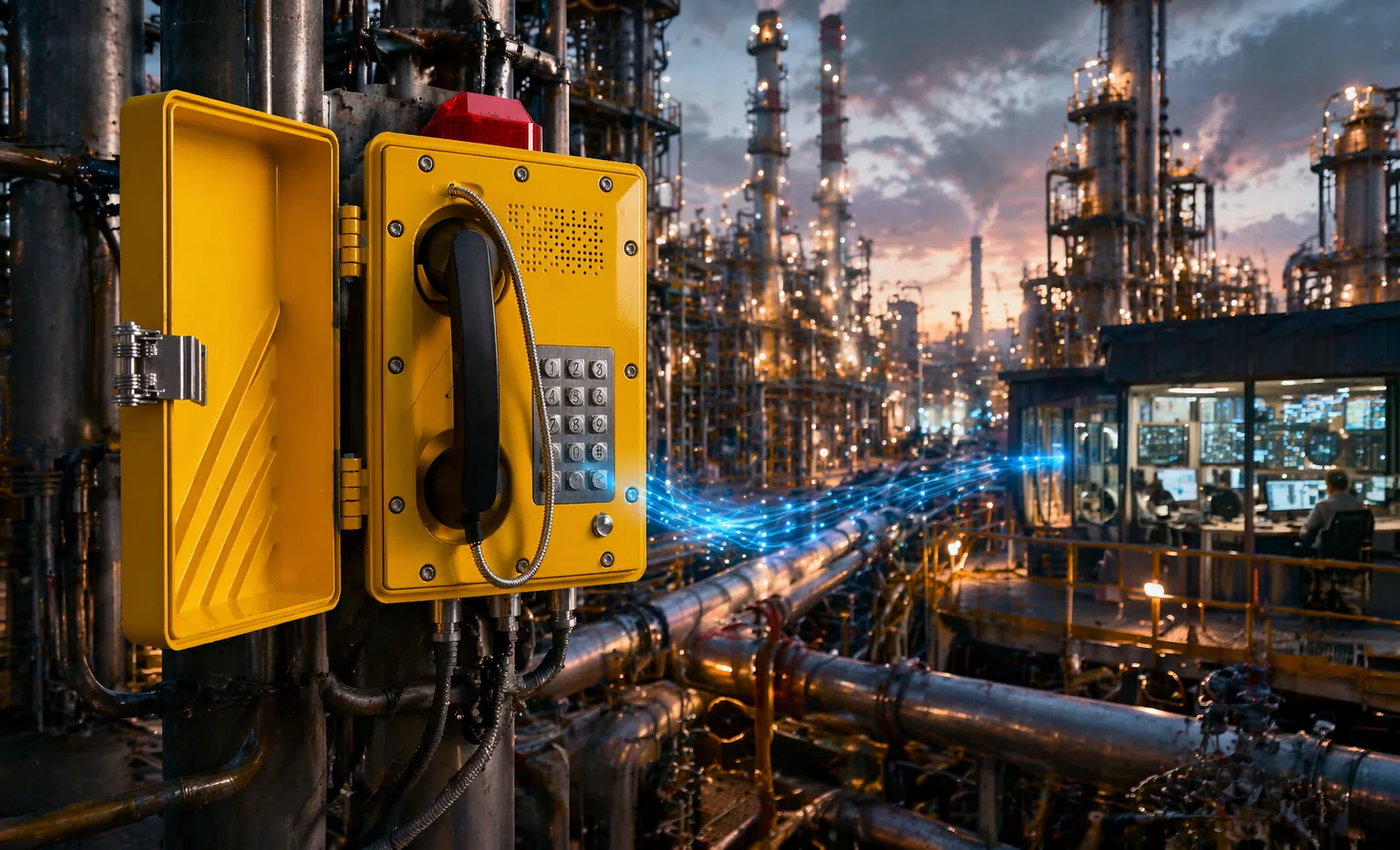
Oil and gas operations are among the most common environments for explosion-proof SIP phones. Refineries, gas processing units, chemical plants, storage areas, and loading systems often require dependable voice communication between field personnel and control rooms. In these environments, workers may need to report process conditions, confirm work permits, request assistance, coordinate maintenance, or communicate during shutdown and startup procedures.
SIP-based deployment is attractive because it allows those hazardous-area endpoints to connect directly into the plant’s wider voice infrastructure. Calls can be routed to operations rooms, security desks, maintenance offices, emergency teams, or dispatch consoles without relying on separate legacy networks. That improves visibility and simplifies communications management across the site.
Just as importantly, these are locations where environmental and compliance demands are high. Corrosive air, outdoor weather, process noise, and hazardous atmosphere classification create a strong case for certified industrial SIP phones rather than commercial office devices.
Offshore platforms and marine industrial facilities present a difficult communication environment because of salt exposure, wind, vibration, humidity, and safety requirements. In these settings, explosion-proof SIP phones may be used at process areas, equipment zones, deck access points, utility stations, and support areas where users need reliable links to operations and emergency contacts.
Mining and heavy industry also create strong demand for durable hazardous-area communications. Depending on the specific process, the communication system may need to support coordination between field workers, supervisors, dispatch staff, and emergency responders across wide operational areas. Ruggedized SIP phones can help bring those points into a centralized voice architecture instead of leaving them isolated.
In both offshore and heavy industrial scenarios, the benefit is the same: dependable, site-appropriate communication at the edge of operations, linked back to a managed IP-based platform.
Explosion-proof SIP phones are also used in terminals, tank farms, transfer stations, utility infrastructure, and fuel-handling locations where clear point-to-point communication is needed. A worker may need to contact the control room from a pump island, a transfer platform, a loading rack, or an access point near critical process equipment. In such cases, communication must be available immediately and must remain stable under outdoor industrial conditions.
These environments often benefit from fixed, always-available communication points rather than relying entirely on mobile devices. A permanently installed SIP phone provides a known location, constant power strategy, and a direct connection into the organization’s voice system. This can be especially helpful for maintenance operations, operational coordination, and emergency escalation.
Because many of these sites are distributed or geographically large, SIP integration also helps organizations standardize extensions, call routing, and management across multiple facilities.
Although explosion-proof SIP phones are used for routine communication, they also play a significant role in emergency readiness. During abnormal events, personnel may need to report a leak, request shutdown confirmation, escalate a safety concern, or contact an emergency response point without delay. A fixed, certified communication device in a hazardous location can provide an immediate and familiar path to assistance.
Operationally, the same endpoint can support non-emergency coordination throughout the day. That includes maintenance scheduling, contractor access control, permit confirmation, production communication, field status checks, and technician dispatch. In other words, the phone is not only an emergency device. It is often part of the site’s everyday operational rhythm.
This dual-use value is one reason the category remains relevant even as industrial facilities add more digital tools. A fixed voice endpoint is still one of the fastest ways to make contact when clarity and accountability matter.

A standard SIP phone is mainly designed for office, commercial, or general indoor use. Its priorities usually include extension calling, user features, conferencing, provisioning convenience, and desktop ergonomics. By contrast, an explosion-proof SIP phone must address a very different operating reality. It still needs SIP compatibility and dependable voice performance, but it must also meet hazardous-area requirements, survive harsh environments, and support field operation in places where ignition risk and physical exposure are real concerns.
Another difference is how the device is evaluated during selection. For a standard SIP phone, buyers often compare display size, DSS keys, headset support, codec options, or corporate UC integration. For an explosion-proof SIP phone, those factors may still matter, but certification, installation conditions, ingress protection, environmental resistance, acoustic suitability, mounting style, and lifecycle durability often become more important.
| Category | Standard SIP Phone | Explosion-Proof SIP Phone |
|---|---|---|
| Typical environment | Office, reception, meeting room, general indoor area | Hazardous industrial or classified area |
| Main priority | Everyday business communication | Safe, reliable communication in harsh and hazardous conditions |
| Certification focus | General telecom and network compliance | Hazardous-area approval plus industrial deployment suitability |
| Mechanical design | Desktop or light commercial housing | Sealed, rugged, corrosion-resistant, heavy-duty construction |
| Typical integration | Office IP PBX or UC system | IP PBX, dispatch, control room, industrial emergency communications |
The key takeaway is simple: an explosion-proof SIP phone is not merely a tougher office phone. It belongs to a different deployment class where safety approval, environmental resilience, and field usability are central to the product decision.
The first step is to verify the installation environment. Buyers should confirm the site classification, applicable standard, and approval expectations before looking at cosmetic features or user-interface options. A product that seems impressive on paper may still be the wrong choice if its certification or protection concept does not match the area where it will be installed.
The second step is to review communication architecture. The phone should align with the intended SIP server, IP PBX, dispatch platform, or industrial communications system. Compatibility with extension plans, call routing, network security policies, provisioning strategy, and maintenance workflows should all be considered early, not after hardware selection is complete.
The third step is to assess operational fit. Consider acoustic requirements, handset versus hands-free use, glove-friendly operation, corrosion exposure, ingress protection, power availability, cabling, mounting method, and long-term maintenance access. In hazardous-area deployments, a phone that is difficult to hear, difficult to service, or difficult to install properly can become a weak point in the overall system.
Selection should start with the site classification and end with the communication workflow. When both sides are aligned, the device becomes a dependable part of the operation instead of a compliance checkbox.
An explosion-proof SIP phone is a specialized communication endpoint that brings SIP-based IP telephony into hazardous industrial environments. Its purpose is not only to provide voice communication, but to do so within the environmental, operational, and certification constraints of locations where explosive atmospheres may exist. That makes it a practical bridge between modern IP communications and field safety requirements.
For operators in oil and gas, petrochemical, offshore, fuel handling, mining, and other demanding industries, this type of phone can support both routine coordination and emergency response while fitting into an IP PBX or dispatch architecture. When selected correctly, it improves communication reach, supports operational continuity, and helps bring hazardous-area voice endpoints into a more unified communications strategy.
If you are evaluating hazardous-area voice communication for an industrial site, Becke Telcom can help you review deployment requirements, communication architecture, and suitable explosion-proof SIP phone solutions for your environment.
No. A normal industrial IP phone may be ruggedized for dust, water, temperature, or shock, but that does not automatically make it suitable for hazardous classified locations. An explosion-proof SIP phone is selected and installed based on specific hazardous-area approvals and site requirements.
Yes. That is one of its main advantages. Because it uses SIP, it can typically connect to a SIP server, IP PBX, or dispatch platform, allowing hazardous-area endpoints to become part of a centralized IP communication system.
They are commonly used in oil and gas facilities, chemical and petrochemical plants, offshore platforms, tank farms, transfer stations, mining sites, and other industrial areas where explosive atmospheres may be present and fixed communication points are required.
Because hazardous-area suitability depends on approved protection methods and certified installation conditions, not on whether the housing simply looks strong or heavy-duty. The enclosure design matters, but the approval basis and site match are what determine whether the device is appropriate.
They should check the hazardous-area classification, certification requirements, SIP compatibility, environmental conditions, audio needs, mounting method, power strategy, and maintenance approach. A good selection balances safety compliance with real communication performance.