
Encyclopedia
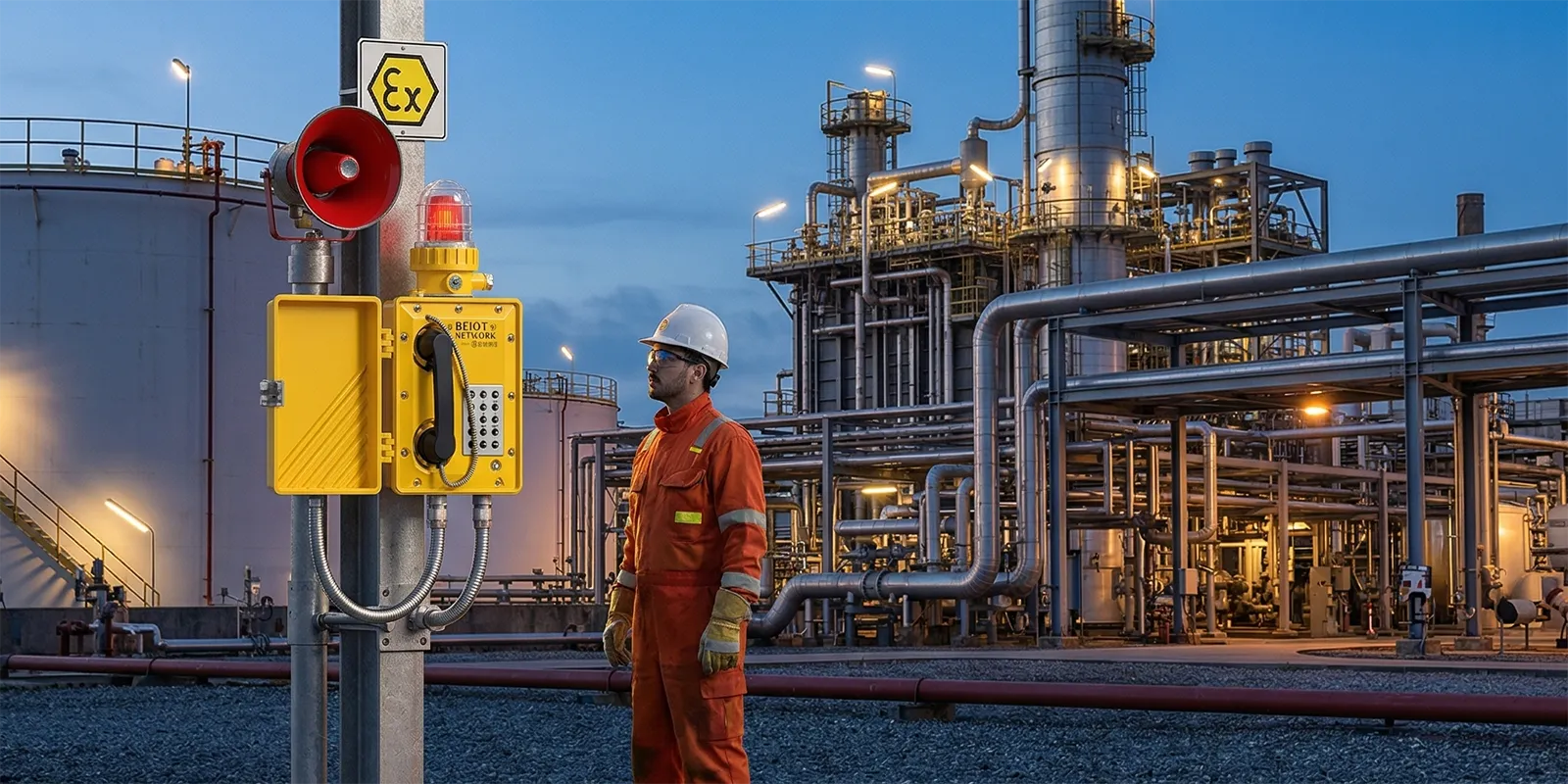
In hazardous industrial environments, communication equipment must do more than deliver clear voice calls. It must also operate safely in areas where flammable gas, vapor, or combustible dust may be present. That is why explosion-proof telephones are used in sectors such as oil and gas, petrochemical processing, offshore platforms, mining, tunnels, utilities, and other high-risk industrial sites.
An explosion-proof telephone is designed for hazardous locations and built to reduce the risk that the device itself could become an ignition source. In practical terms, it gives workers a dependable communication point for emergency calling, routine coordination, maintenance support, fault reporting, and contact with the control room in difficult operating conditions.

An explosion-proof telephone is a rugged communication terminal designed for use in potentially explosive atmospheres. These locations may contain flammable gases, combustible vapors, or dust that can ignite if ordinary electrical equipment creates a spark, arc, or excessive surface temperature.
Unlike a standard office phone, an explosion-proof telephone is designed with enclosure strength, sealing, material selection, electrical protection, and hazardous-area compliance in mind. It is not simply a tougher phone. It is a product intended for a classified environment where communication reliability and operational safety both matter.
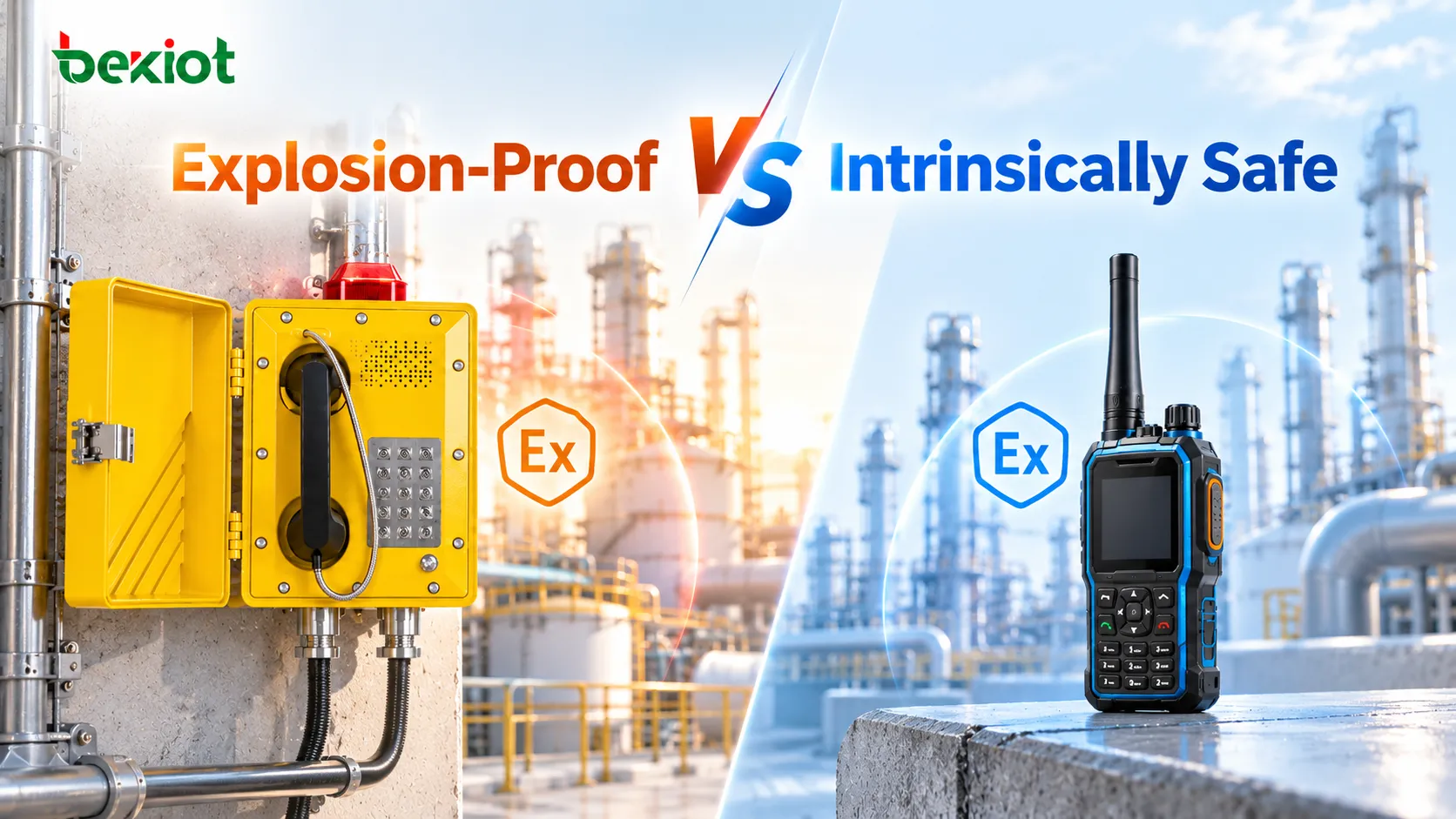
Many buyers confuse “rugged” with “explosion-proof.” A rugged industrial phone may resist water, dust, impact, or corrosion, but that alone does not mean it is suitable for a hazardous area. Explosion-proof selection must be based on the actual site classification, certification requirements, and installation conditions.
This is why project teams should look beyond housing strength or IP rating. The right unit should match the hazardous area, integrate with the site communication system, and support daily operations just as effectively as emergency response.
Explosion-proof does not simply mean stronger construction. It means the telephone is intended for use in a hazardous area and must be selected according to the site’s classified environment and compliance requirements.
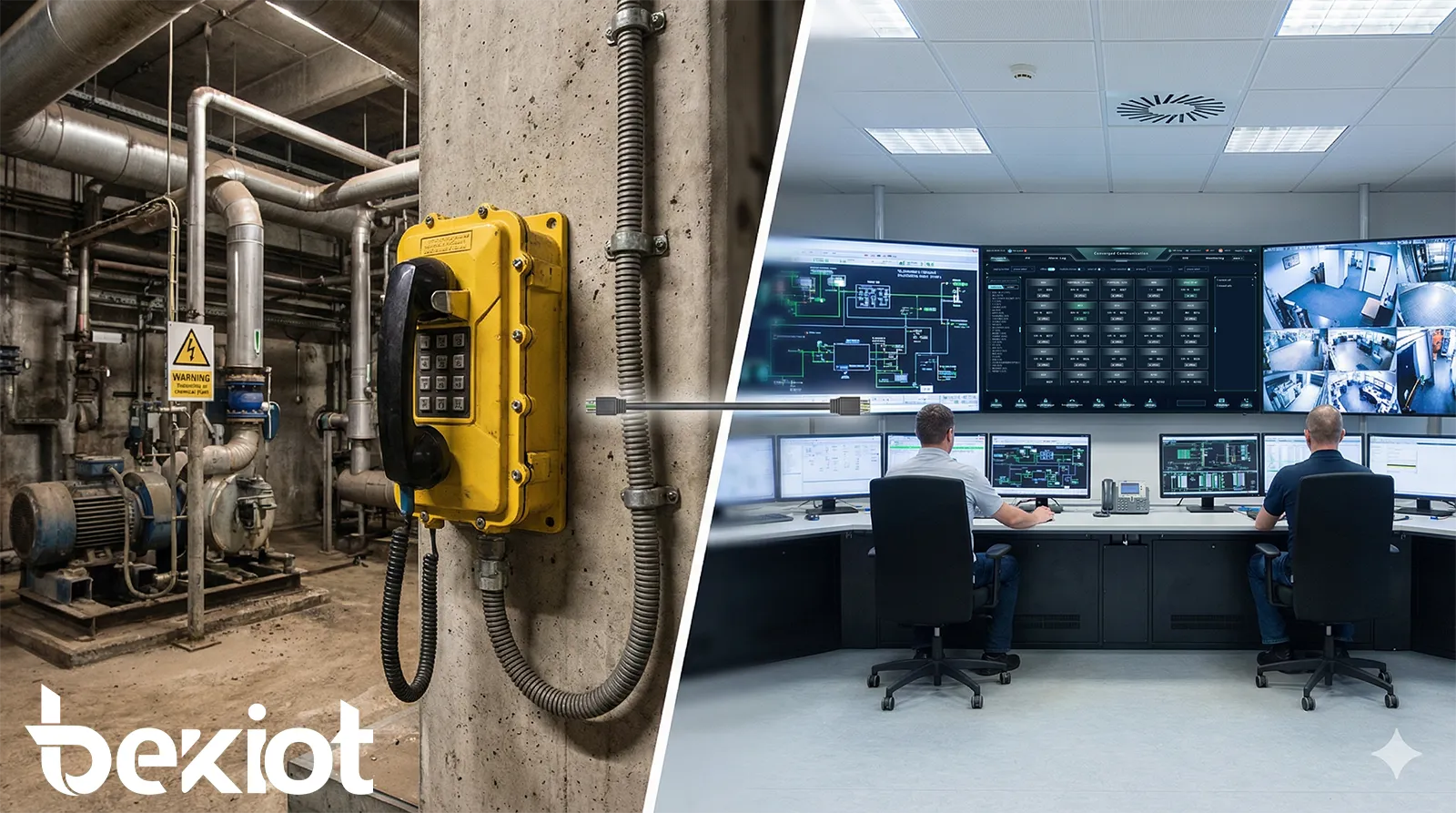
One of the most important uses of an explosion-proof telephone is emergency communication. When a worker needs immediate assistance, the telephone provides a direct line to the control room, dispatch center, maintenance office, or emergency response team. In some projects, it can also be linked with alarms, paging, recording, or monitoring workflows.
Because these phones are usually installed in fixed and visible locations, they help create a reliable communication point in areas where mobile coverage may be weak, handheld devices may not be permitted, or ambient noise makes normal communication difficult.
Explosion-proof telephones are not only for emergencies. They are also used every day for work coordination, inspection support, maintenance dispatch, shift communication, and field-to-control-room reporting. In large facilities, a fixed communication terminal can reduce delays and improve response efficiency when workers need quick guidance or approval.
For example, personnel in tank farms, process areas, pipeline corridors, loading zones, offshore decks, utility tunnels, or mining access points may need a dependable way to contact supervisors without leaving the work area.

Explosion-proof telephones are commonly deployed in oil refineries, petrochemical plants, gas processing sites, LNG facilities, drilling and production areas, offshore platforms, mines, power and energy sites, marine terminals, and other demanding environments. They may also be used in some dust-risk industries where combustible particles are present.
Typical installation points include process units, hazardous outdoor walkways, pump stations, compressor areas, loading bays, tunnel sections, control access points, substations, and isolated equipment zones where workers need dependable communication under harsh conditions.
Industrial sites are often noisy, exposed, and operationally complex. A good explosion-proof telephone is built to remain usable in rain, dust, temperature changes, vibration, and corrosive atmospheres. Features such as high-volume ringing, amplified audio, noise-resistant design, and glove-friendly operation can make a major difference in real-world use.
In hazardous environments, dependable communication is not just a convenience. It supports safer work routines, faster response, better coordination, and fewer delays during abnormal events.
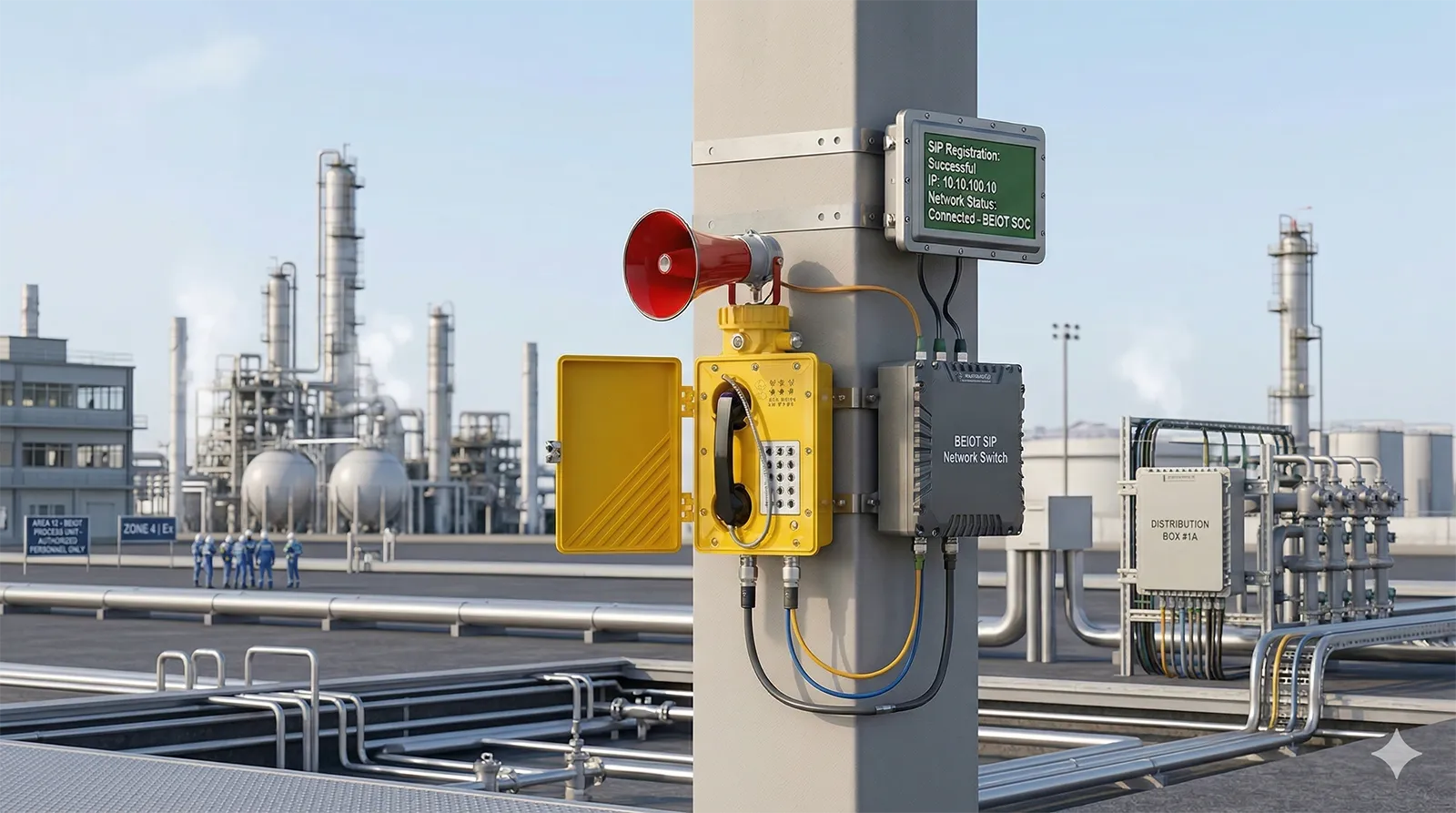
Modern explosion-proof telephones are often available in analog and SIP/IP versions. This gives project teams flexibility when they need to connect the device to a legacy telephone network, an IP PBX, a paging system, a broadcast platform, or a unified dispatch solution.
For sites planning digital upgrades, SIP-based hazardous-area telephones can be especially useful because they fit more naturally into integrated industrial communication architectures that combine telephony, intercom, paging, radio gateways, and control room dispatch.
In many projects, the best explosion-proof telephone is not just the safest compliant model. It is the one that also fits the site’s network, workflow, maintenance model, and long-term communication plan.
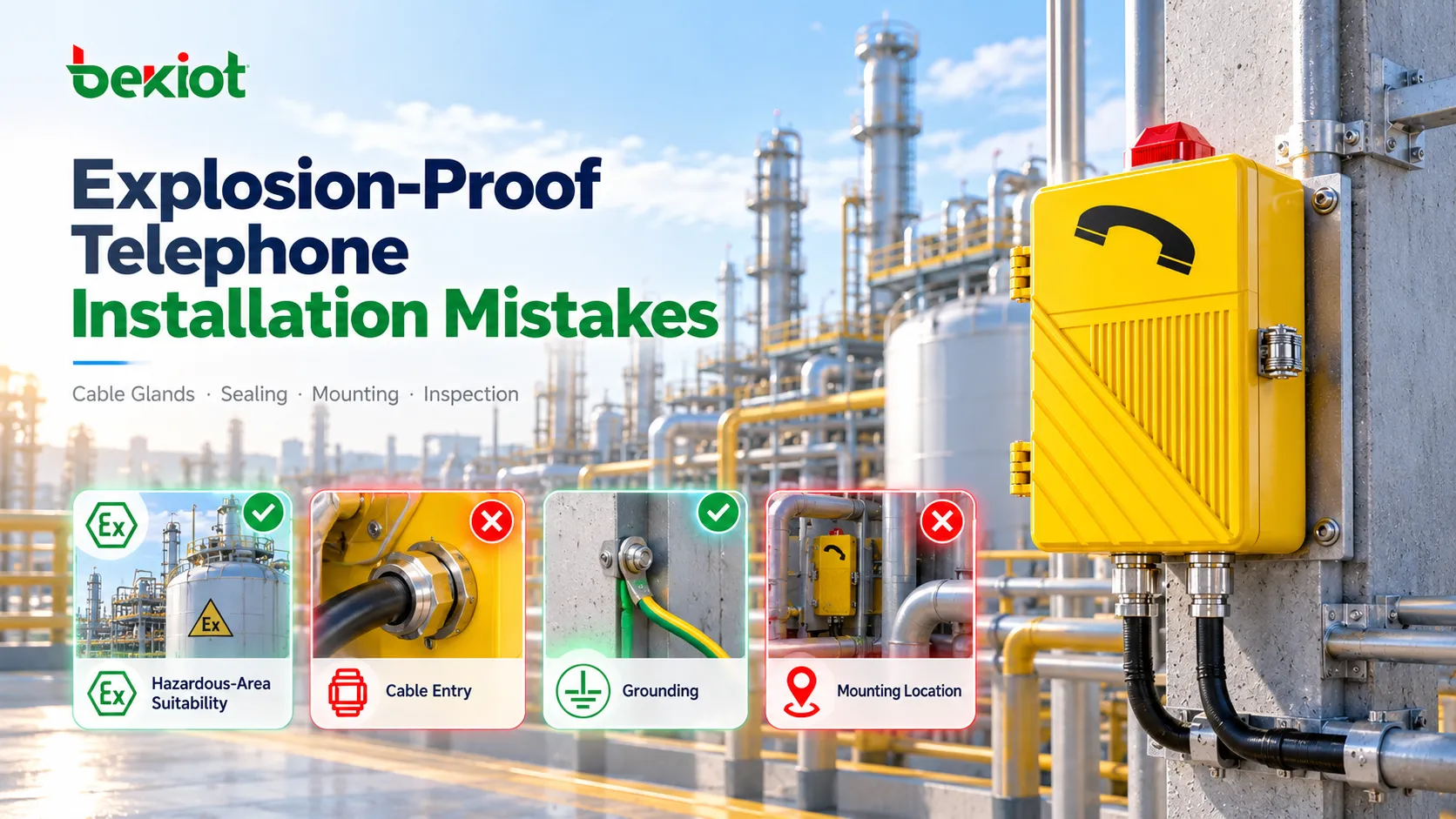
The first step is to confirm the environment where the phone will be installed. The area classification determines what type of equipment is appropriate. This includes the zone or division, the type of hazard present, and the operating conditions of the site. Selecting a telephone before confirming the hazardous classification is a common project mistake.
In practice, buyers should coordinate with the engineering team, safety team, or compliance team to confirm exactly where the phone will be mounted and what standards apply to that location.
After confirming the site classification, review the required certification and product marking. This step is essential for industrial projects, especially in sectors such as petrochemical, offshore, gas, mining, and energy. The telephone should match the required market, project specification, and compliance expectations.
For international or multi-region projects, this can affect model selection, approval workflows, and documentation. It is often better to confirm certification details early rather than treat them as a final purchasing checkbox.
Some projects need analog hazardous-area telephones because the existing infrastructure is already based on legacy copper networks or older PABX systems. Other projects need SIP explosion-proof telephones because they are deploying IP-based communication, paging, or dispatch platforms. There is no single correct answer for every site.
The right choice depends on how the telephone will connect with the wider system. If the site already uses IP PBX, industrial intercom, broadcast, or unified dispatch, a SIP model can provide better flexibility for integration and future expansion.

Hazardous-area suitability is only one part of the decision. You should also consider whether the telephone is appropriate for the real operating environment. That includes corrosion resistance, ingress protection, temperature tolerance, acoustic performance, handset design, keypad usability, mounting type, and maintenance accessibility.
A coastal oil terminal, a tunnel, an offshore deck, and a chemical processing area may all require an explosion-proof telephone, but the best enclosure materials, mounting details, and weather protection can still differ significantly from one site to another.
A phone can be technically compliant and still perform poorly for users. It should be easy to find, easy to operate, and easy to hear in the real sound environment. If workers wear gloves or protective equipment, the device should remain practical to use. If emergency use is a key scenario, speed and simplicity matter even more.
It is also worth considering whether the phone should support hotline calling, hands-free use, programmable keys, visual indicators, external speakers, or integration with alarms and control room workflows.
Price matters, but the lowest-cost option can create problems if it does not match the classified area, the acoustic demands of the site, or the communication platform already in place. Rework, compatibility issues, and maintenance difficulties often cost more than the initial savings.
Industrial communication equipment should be evaluated as part of the operating system, not as an isolated hardware item.
A phone with strong weather protection may still be unsuitable for hazardous locations. IP66 or IP67 can be important for dust and water resistance, but hazardous-area suitability depends on the correct explosion-protection design and certification, not on ingress protection alone.
This is one of the most common points of confusion in industrial purchasing, especially when buyers compare rugged phones with true explosion-proof models.
Another mistake is buying a compliant phone without considering how it will be deployed, managed, and supported over time. Projects often benefit when the telephone can work with existing PBX, SIP, intercom, paging, radio, or dispatch infrastructure rather than being treated as a standalone island device.
When communication systems are planned as a whole, the result is usually easier maintenance, better daily coordination, and stronger long-term value.
The right model is the one that satisfies hazardous-area requirements and still works smoothly in daily operations, emergency response, and long-term system integration.
If you are evaluating models for a real project, the simplest approach is to move through four checks in order: confirm the hazardous area, confirm certification requirements, confirm system compatibility, and then confirm site-specific usability. That process avoids most early-stage selection errors.
For industrial communication projects, it is also helpful to think beyond the telephone itself. In many sites, the best result comes from combining hazardous-area telephones with a wider solution that may include SIP communication, industrial paging, visual dispatch, radio interworking, recording, and control room coordination.
An explosion-proof telephone is a specialized communication device for hazardous environments where ordinary telephones may not be suitable. It helps protect communication continuity in high-risk industrial locations while supporting both emergency response and daily operations.
When choosing one, focus on the real site classification, required certification, network compatibility, environmental durability, and ease of use. A good selection is not only compliant on paper. It is practical in the field, dependable in difficult conditions, and aligned with the wider communication system of the facility.
If your project involves hazardous-area telephony, SIP industrial communication, paging, or unified dispatch, it is often worth evaluating the telephone as part of a complete industrial communication solution rather than as a standalone endpoint.
A rugged industrial telephone is mainly designed to withstand harsh physical conditions such as water, dust, impact, or corrosion. An explosion-proof telephone is selected for hazardous areas where explosive gas, vapor, or dust may be present. The two are not the same, and rugged construction alone does not make a phone suitable for a classified hazardous location.
They are commonly used in oil and gas facilities, chemical plants, offshore platforms, mines, tunnels, energy sites, marine terminals, and other industrial environments where hazardous-area communication is required.
Yes. Many modern models are available as SIP explosion-proof telephones for IP-based communication systems. This makes them easier to integrate with IP PBX, industrial intercom, paging, and dispatch platforms.
No. IP rating only describes protection against dust and water ingress. Hazardous-area suitability depends on the correct explosion-protection design, certification, and matching of the device to the classified environment.
You should confirm the site classification, required certification, network type, installation environment, and the operational features needed by the people who will use the phone in the field.