
Encyclopedia
A school PA system is a communication system used to deliver voice announcements, scheduled tones, emergency alerts, and routine notifications across a campus. In traditional schools, PA systems were mainly used for one-way broadcasting through analog amplifiers and speakers. In modern education environments, however, school PA systems have evolved into IP-based communication platforms that can integrate paging, bell scheduling, intercom, zone broadcasting, and emergency notification into one unified system.
For schools that need faster coordination and better safety communication, the role of the PA system is no longer limited to morning announcements or class-change tones. It now supports real-time operational communication between offices, security teams, teachers, reception desks, dormitory staff, and campus management personnel. When SIP communication capabilities are added, the school PA system becomes even more flexible because it can interact with SIP phones, SIP speakers, intercom stations, paging microphones, and IP PBX platforms over the same network infrastructure.
This makes the modern school PA system not only a broadcasting tool, but also an important part of campus safety, daily administration, and integrated school communication.
A school PA system is a campus-wide audio communication solution designed to distribute live or pre-recorded messages to selected areas or the entire school. It is commonly used in classrooms, hallways, playgrounds, cafeterias, libraries, offices, dormitories, and transportation zones such as school bus waiting areas.
At a practical level, the system allows school administrators to speak to staff and students quickly without requiring person-to-person contact. It can be used for routine information such as start-of-day notices, break schedules, dismissal messages, and event reminders. It can also be used in urgent situations such as lockdowns, severe weather alerts, evacuation instructions, or medical incidents.
In a more advanced deployment, the school PA system operates over an IP network and supports SIP communication. This allows the system to connect voice broadcasting with telephony and intercom workflows, so schools can create a more responsive communication environment rather than relying on isolated audio equipment.
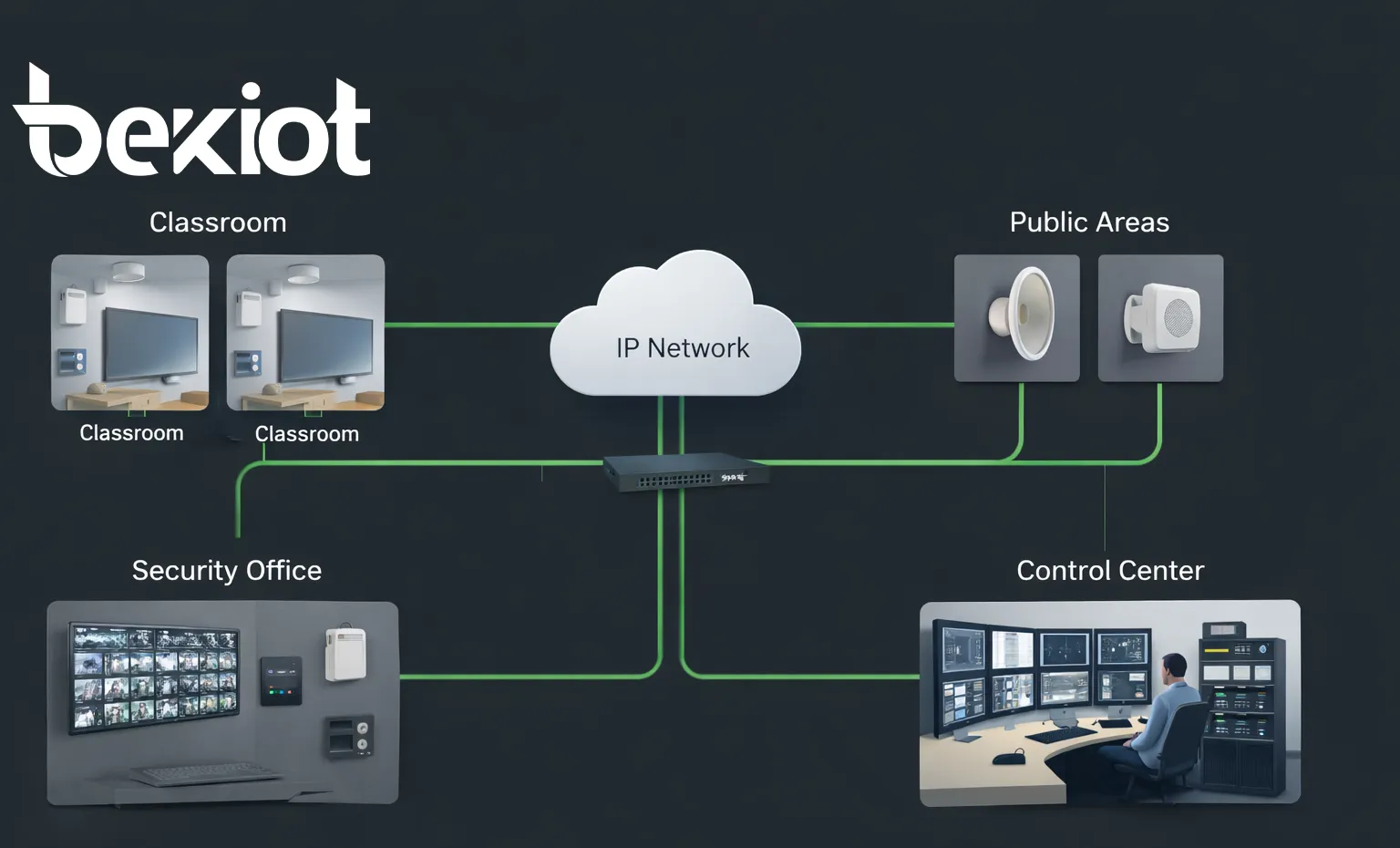
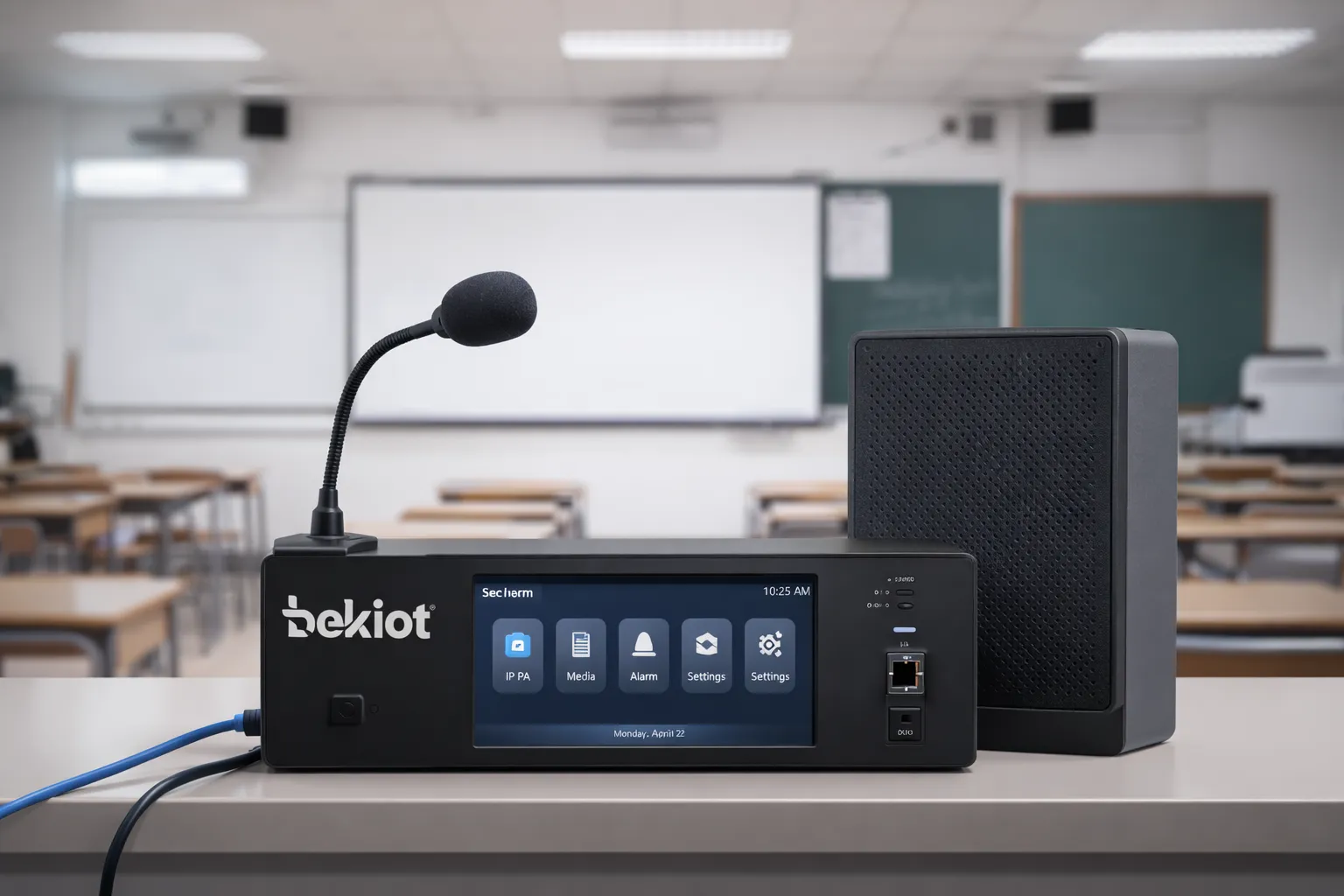
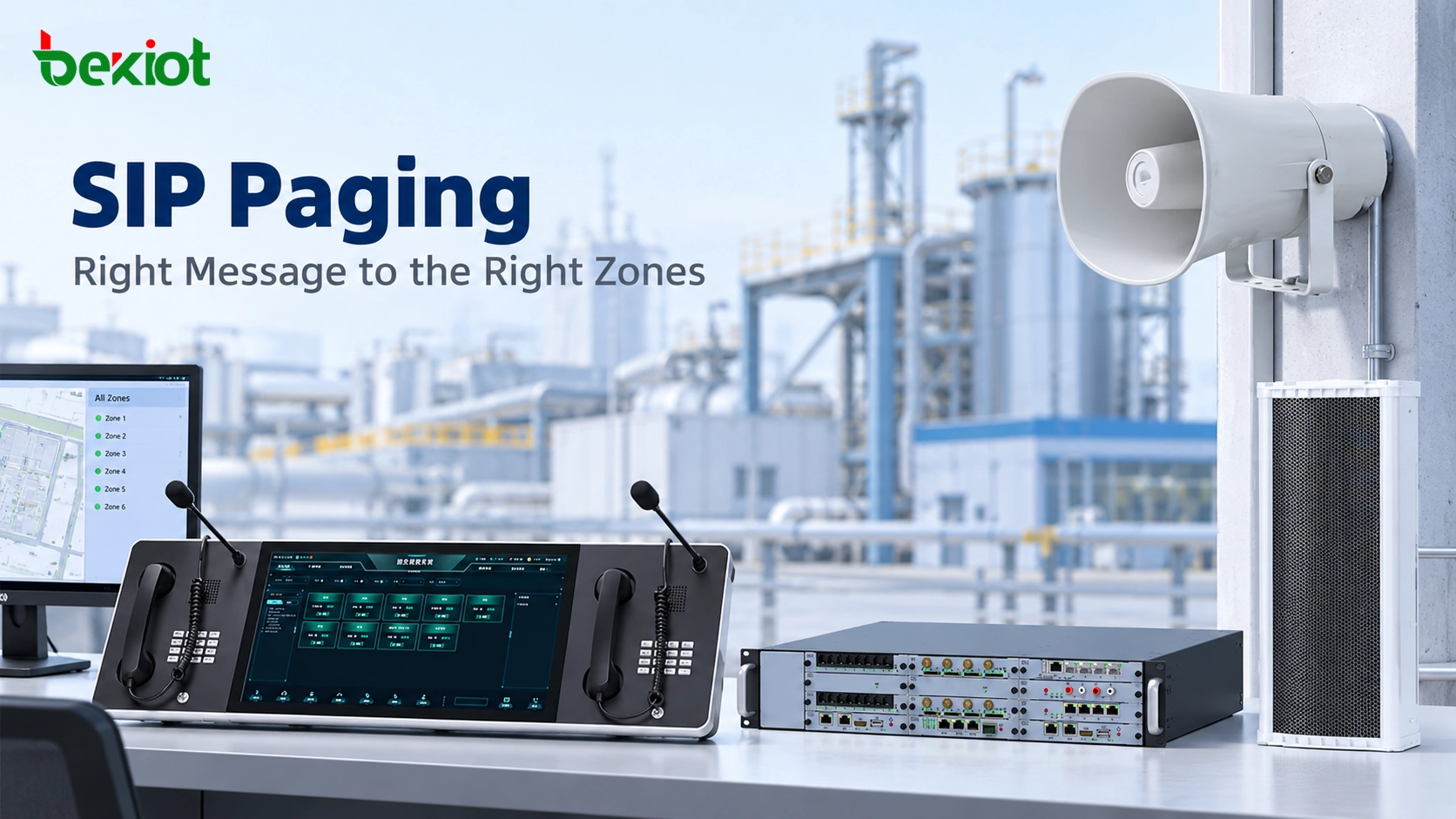
The system begins with an audio source or control point. This can be a desktop paging microphone, a SIP paging console, a school office telephone, a software dispatch interface, or a central control server. When an authorized user initiates an announcement, the system processes the audio and routes it to the intended speaker zones.
In smaller schools, the architecture may be relatively simple, with a microphone, amplifier, speaker lines, and zone selectors. In larger or newer campuses, the control process is usually software-based, allowing administrators to select buildings, floors, departments, or emergency zones from a graphical interface.
This approach improves both flexibility and speed, especially when the school needs to target only specific locations instead of disturbing the entire campus.
Once the message is initiated, it is delivered to the connected audio endpoints. These may include ceiling speakers, wall-mounted speakers, horn speakers, classroom speakers, corridor speakers, and outdoor broadcast devices. Depending on the system design, the message may be amplified through analog infrastructure or transmitted digitally through IP endpoints.
In IP and SIP-based environments, network speakers and SIP speakers can receive paging traffic directly over the LAN. This reduces dependence on long analog cabling and makes it easier to expand the system to new buildings or remote campus areas.
Because the endpoints are addressable, schools can create flexible paging groups such as administration offices only, a single classroom block, sports facilities, or the full campus.
One of the most valuable upgrades in a modern school PA system is SIP communication capability. SIP, or Session Initiation Protocol, allows the PA platform to communicate with SIP phones, SIP intercom devices, SIP speakers, and IP PBX systems using a standardized IP-based signaling method.
With SIP support, a principal or receptionist may be able to trigger paging directly from a SIP phone. A security office can call a SIP intercom in a gate area, then escalate the communication into a zone-wide announcement. A classroom help point or office extension can also be integrated into the same communication network, helping staff move from one-to-one calling to one-to-many broadcasting when required.
This SIP-based model improves communication continuity across the campus. Instead of operating separate systems for telephony, intercom, and public address, the school can use a more unified architecture that supports both daily operations and emergency response.

A core feature of any school PA system is the ability to send announcements across the entire campus or to selected zones. This is important because different announcements serve different audiences. Morning assembly notifications may be campus-wide, while a message to the library or sports field may need to remain localized.
Zoned broadcasting helps reduce unnecessary disruption and allows the school to communicate with greater precision. It is especially useful in multi-building schools, universities, boarding schools, and campuses with separate administrative and teaching blocks.
When combined with IP networking, the zoning logic becomes even more flexible because it can be adjusted in software rather than through fixed analog line grouping alone.
Most schools use their PA system not only for live announcements but also for automatic bell scheduling. The system can play class start tones, end-of-period signals, lunch breaks, dismissal reminders, and other time-based audio events according to a predefined timetable.
This reduces manual workload for administrative staff and helps maintain time discipline across the campus. It is also useful in schools that operate different schedules for weekdays, exams, holidays, or seasonal sessions.
In more advanced platforms, the scheduler can support multiple calendars, pre-recorded tones, voice prompts, and different playback rules for different campus zones.
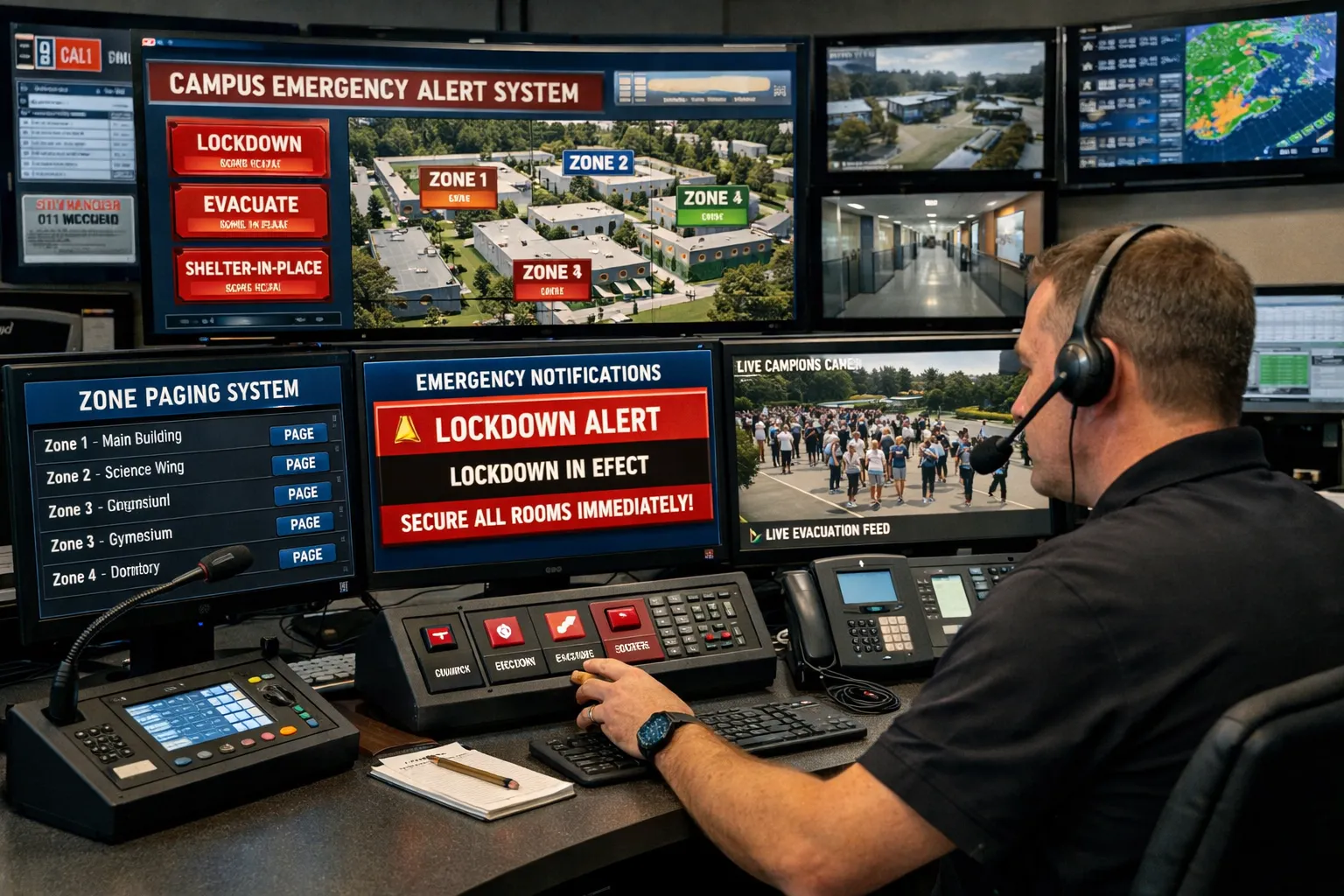
Safety is one of the strongest reasons schools invest in modern PA systems. During emergencies, voice communication is often more direct and actionable than text-based alerts alone. A live voice announcement can quickly tell students and staff whether to evacuate, shelter in place, avoid a building, or wait for further instructions.
A well-designed school PA system can support emergency priority levels so that urgent messages override routine audio. It may also integrate with fire alarms, security systems, access control platforms, or emergency management procedures.
When SIP communications are part of the design, the school can also coordinate emergency announcements with telephony and intercom functions, allowing offices, gates, security stations, and field staff to stay connected during fast-moving situations.
Traditional PA systems are usually one-way. Modern school deployments increasingly need two-way communication at entry gates, reception counters, dormitory access points, nurse stations, and security checkpoints. SIP capability makes this possible by allowing the PA environment to work alongside SIP intercoms and SIP call endpoints.
This means a visitor at a campus entrance can speak with staff through an intercom, while the same communications platform can also trigger audio instructions or announcements to nearby areas. In internal operations, teachers or staff in specific locations may use integrated communication points to request assistance or communicate with the administration office.
This makes the system more than a speaker network. It becomes part of a broader school communication ecosystem.
Schools often expand over time. New classrooms, libraries, labs, sports areas, and dormitories may be added after the original communication system is installed. IP and SIP-enabled PA systems are generally easier to scale because new endpoints can be added through the network with less disruption than traditional point-to-point rewiring.
Centralized management also improves daily operation. Administrators can configure zones, user permissions, schedules, audio priorities, and device status from one interface. In some systems, fault monitoring and remote maintenance can also be supported.
This is particularly valuable for education groups with multiple campuses or for large institutions that want a consistent communication standard across different buildings.
A modern school PA system is no longer just a loudspeaker network. With SIP support, it becomes a practical communication platform that combines paging, intercom, notification, and operational coordination across the campus.
School operations involve constant coordination between administration, teaching staff, security personnel, and support teams. A PA system helps deliver important information quickly without requiring repeated phone calls or physical movement between departments.
This is especially useful during arrival periods, break times, assemblies, visitor handling, and transport coordination. When SIP functions are integrated, the communication path becomes even smoother because voice calls, paging actions, and intercom responses can be linked together in one workflow.
As a result, schools can communicate faster and with less operational friction.
In a school environment, communication delays can create confusion during emergencies. A reliable PA system helps administrators deliver consistent instructions immediately to the people who need them. This can support evacuation, lockdown, weather response, medical alerts, and security incident coordination.
The value becomes even greater when the PA system is tied to network communications and SIP devices, because teams can communicate internally while also issuing public instructions externally.
This combination of internal coordination and campus-wide messaging supports a stronger safety posture.
Schools vary widely in size and layout. Some have one building, while others operate across large campuses with sports grounds, dormitories, libraries, and specialized training spaces. A scalable school PA system can grow with these needs.
SIP-enabled and IP-based designs are particularly well suited for phased deployments because new speakers, intercoms, or paging devices can be integrated into the network more efficiently. This helps protect long-term investment and makes modernization easier.
It also gives schools more freedom to combine communication, safety, and administrative audio services under one platform.
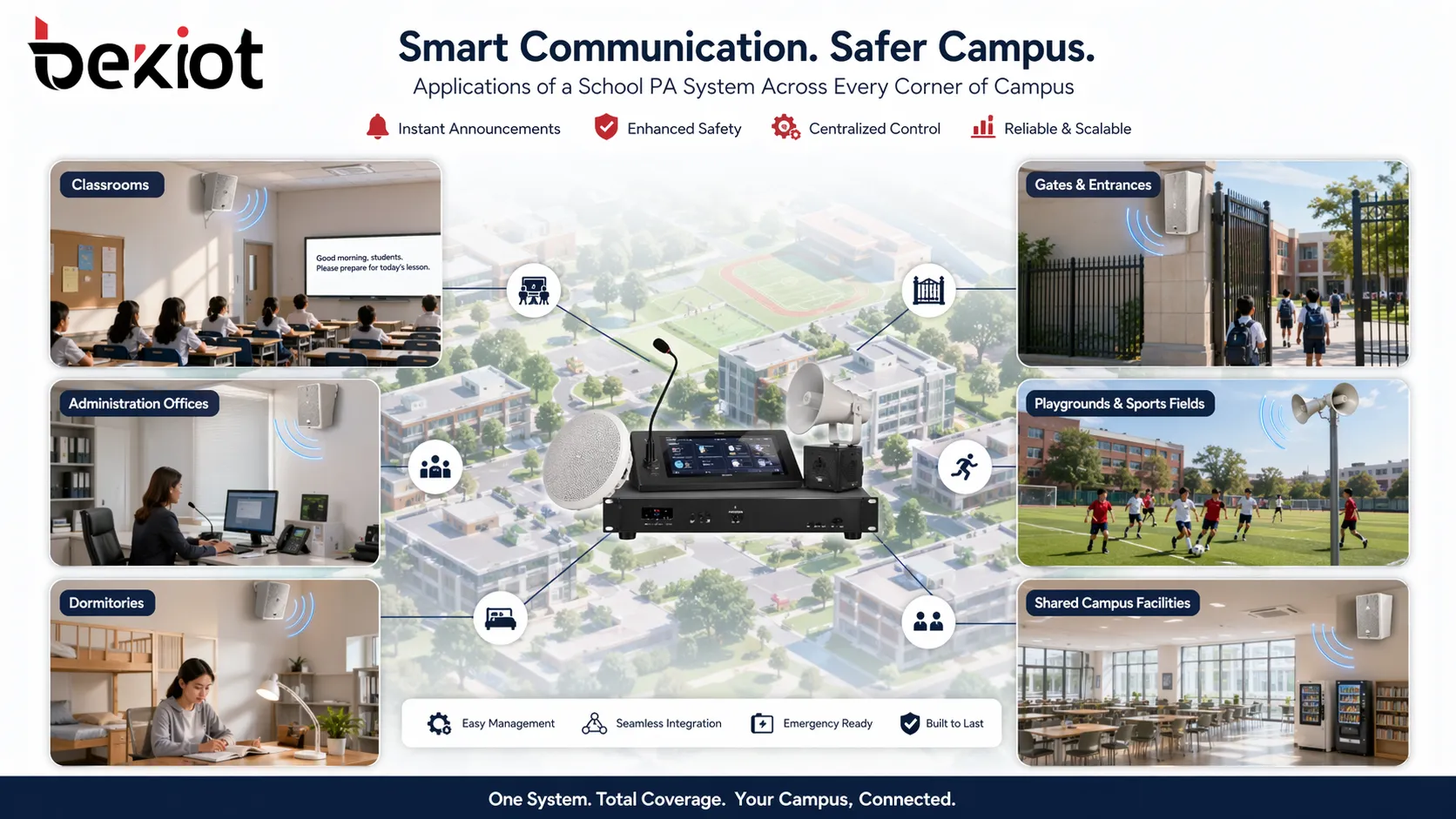
Classroom buildings are the most common application area for school PA systems. Administrators can deliver routine notices, schedule-related messages, event reminders, and urgent instructions to teaching areas without delay. Zoned audio helps ensure the message reaches the right group of students and teachers.
In schools with SIP integration, office staff may initiate these announcements from compatible telephones, paging consoles, or management software instead of relying on a single fixed microphone point.
School entrances, gates, and security stations often require both announcement capability and two-way communication. A visitor may need to contact reception, security may need to broadcast guidance near an access point, or staff may need to issue instructions during crowd movement periods.
By combining PA broadcasting with SIP intercom and SIP telephony, schools can improve both access control communication and general campus awareness.
Outdoor school areas require communication just as much as indoor spaces. Sports events, assembly areas, evacuation zones, and student gathering points all benefit from clear audio coverage. Weather-resistant speakers and horn speakers are often used in these environments.
For larger campuses, IP-connected outdoor endpoints make expansion easier and help ensure that important announcements are not limited to indoor corridors and classrooms.
Boarding schools and larger campuses often need communication coverage beyond teaching spaces. Dormitories, cafeterias, common halls, and student service areas benefit from scheduled announcements, emergency guidance, and targeted voice messaging.
Where two-way communication is required, SIP intercom endpoints can complement the PA system so that staff can both broadcast information and receive calls from remote or supervised areas.

SIP matters because it helps transform the PA system from a standalone broadcast tool into a networked communication platform. In many schools, voice communication needs are no longer limited to one-way announcements. Staff also need extension calling, intercom conversations, remote paging, and coordinated emergency response.
When the PA system supports SIP, it can operate more naturally with IP PBX systems and SIP-based endpoints. This improves interoperability, reduces communication silos, and makes it easier to design a unified solution for broadcasting and direct voice interaction.
From a deployment perspective, SIP also supports standardization. Schools that already use SIP phones or plan to adopt IP communications can build a more consistent architecture by selecting PA equipment that works within the same signaling environment.
For campuses seeking modernization, this is often one of the most practical upgrades because it improves both current functionality and future expansion potential.
SIP communication gives the school PA system a broader role: not only announcing information, but also linking staff, offices, intercom points, and paging devices into a coordinated campus communication network.
A school PA system is an essential communication tool for daily campus operation, scheduled broadcasting, and emergency notification. While traditional systems focused mainly on one-way announcements, modern school PA systems increasingly support IP networking, zone control, automation, and platform-level integration.
When SIP communication capability is included, the value of the system becomes much greater. The school can connect speakers, paging consoles, SIP phones, intercom stations, and IP PBX infrastructure into a more unified environment. This supports clearer daily communication, better safety response, and easier long-term expansion.
For schools planning a new deployment or upgrading an older broadcast network, choosing a PA system with SIP integration is often a more practical and future-ready direction.
For schools looking to build a more flexible and reliable communication environment, Becke Telcom can support SIP-based PA, intercom, paging, and campus communication solutions tailored to different campus sizes and operational requirements. A well-planned system design can help schools improve both everyday coordination and emergency readiness without adding unnecessary complexity.

A school PA system is used for campus announcements, bell scheduling, emergency alerts, routine notifications, and audio communication across classrooms, offices, corridors, and outdoor areas.
Yes. A modern school PA system can support SIP communication, allowing it to work with SIP phones, SIP speakers, SIP intercoms, paging microphones, and IP PBX systems over an IP network.
SIP improves interoperability and helps unify paging, telephony, and intercom functions. This makes the system more flexible for daily communication, campus security coordination, and future expansion.
No. Emergency notification is important, but school PA systems are also widely used for daily announcements, automated bells, event reminders, staff coordination, and zone-based communication throughout the campus.