
Encyclopedia
A phone platform is the communication foundation that allows an organization to manage voice calls, extensions, routing logic, user accounts, business numbers, and related calling features across its operations. In modern environments, a phone platform is no longer limited to a traditional on-premises PBX. It often includes IP telephony, SIP connectivity, cloud communications, mobile access, management tools, and integration with broader business workflows.
From a practical perspective, a phone platform is the system that connects people, devices, departments, and sites through a unified calling environment. It helps businesses organize inbound and outbound calls, support internal collaboration, maintain professional customer communications, and scale voice services more efficiently than isolated phones or legacy analog systems.
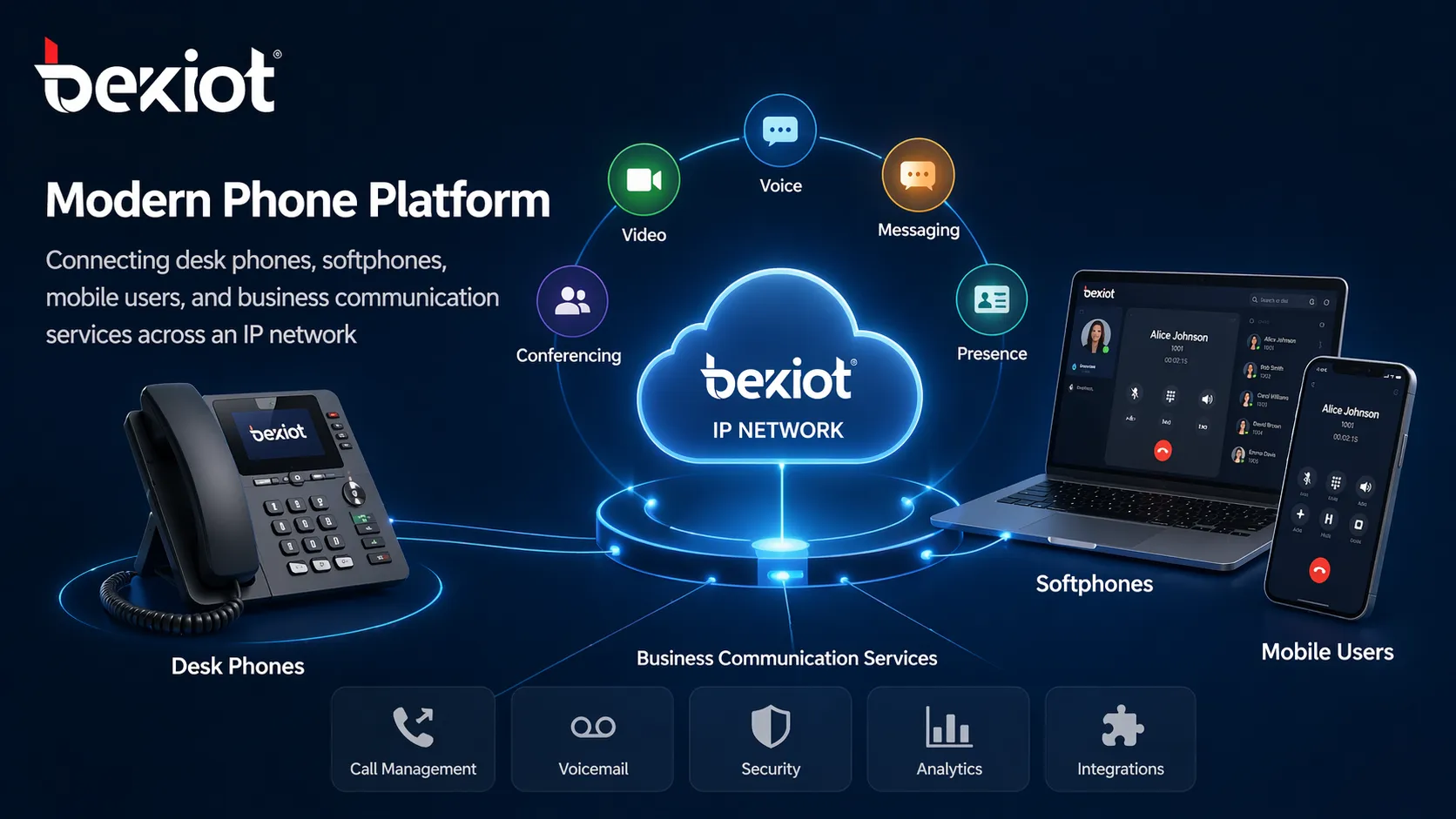
As organizations move toward IP networks, hybrid work, multi-site operations, and customer service digitization, the idea of a phone platform has expanded. It may include desk phones, softphones, mobile apps, SIP trunks, voicemail, call recording, conferencing, auto attendants, analytics, and integration with CRM or dispatch systems. In other words, it is not just about making calls. It is about managing business voice communication as part of a larger operational system.

In many businesses, the term phone platform refers to the complete architecture used to support calling services rather than just the handsets on desks. It includes the core call control system, user provisioning, numbering plans, routing policies, voicemail, feature permissions, and the network methods used to connect local users, remote staff, and external callers.
This broader meaning matters because modern business communication is no longer tied to one office and one wiring closet. A company may have headquarters staff using IP phones, remote employees using apps on laptops, warehouse teams relying on rugged voice endpoints, and customer-facing departments using queue or agent functions. A phone platform brings these elements together into a single manageable framework.
That is why businesses often evaluate a phone platform not only by call quality, but also by scalability, administration, integration options, security, and how well it supports real operational workflows.
A traditional PBX mainly focused on switching calls within a site and connecting to public telephone lines. A phone platform still performs those core tasks, but it usually goes much further. It may support SIP trunks instead of legacy trunks, software clients instead of only desk phones, and centralized web management instead of manual programming through proprietary interfaces.
It may also provide features that older systems could not handle well, such as multi-site extension dialing, cloud-based administration, advanced call routing, browser-based reporting, API connectivity, or integration with unified communications and contact center tools.
Because of this evolution, the phrase phone platform is often more flexible and more accurate than simply saying PBX. It reflects the fact that business voice has become part of a broader digital communication infrastructure.
A strong phone platform is not only a call system. It is a business communication framework that improves reachability, efficiency, and service consistency.
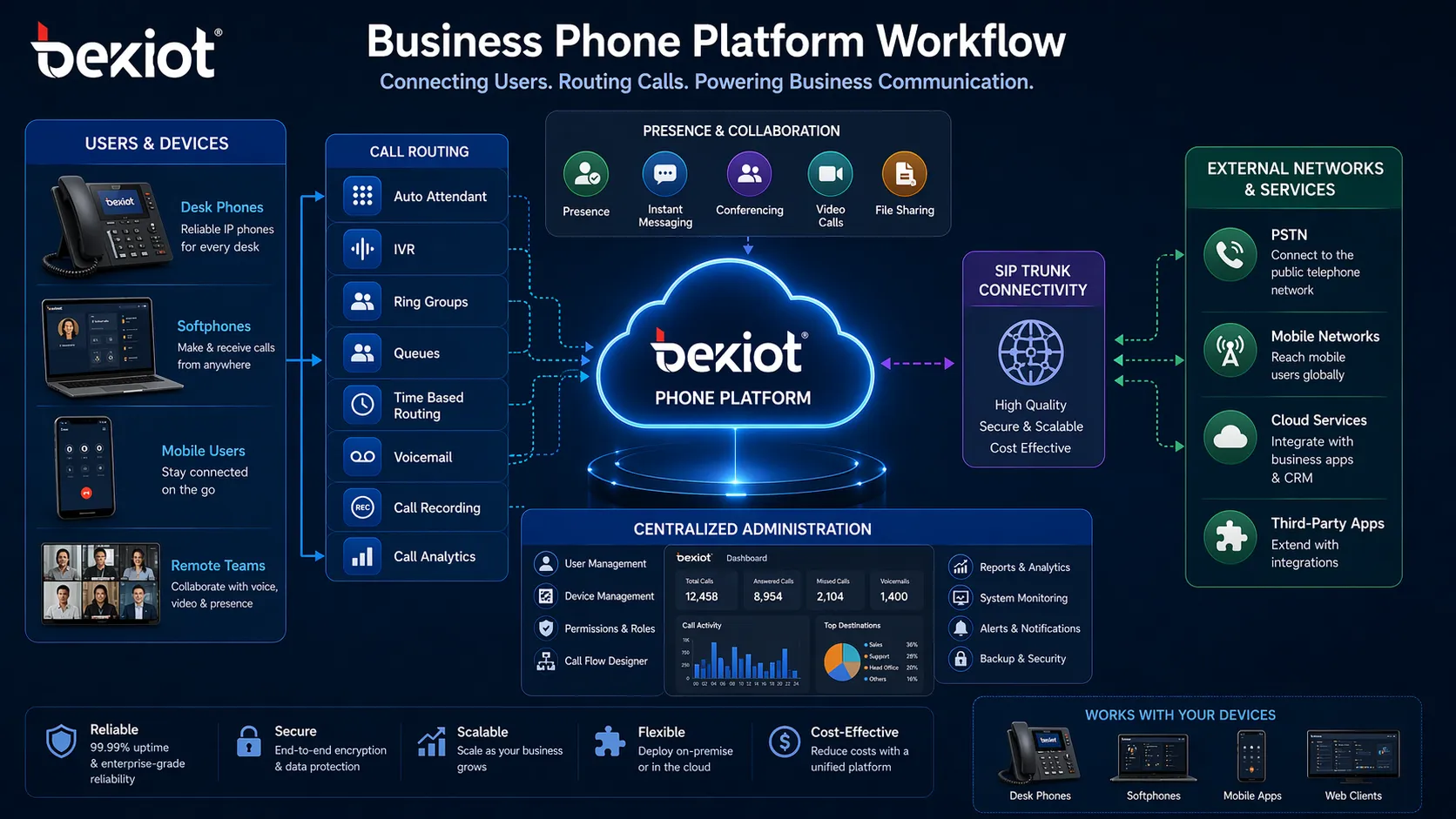
At the center of a phone platform is the call control layer. This is the part of the system that registers users or devices, processes signaling, enforces dialing rules, and decides how calls should be routed. When a user dials an extension or an outside number, the platform interprets the request and determines the correct call path.
The platform also manages business identities such as extensions, direct inward dialing numbers, ring groups, queues, and departmental call flows. Administrators can decide which users receive certain permissions, which numbers belong to which teams, how incoming calls should be handled, and what happens if a user is unavailable.
This centralized logic is what makes a phone platform practical for business use. Without it, every device would behave independently, making consistency, control, and scale much harder to achieve.
A phone platform usually connects to outside callers through SIP trunks, telecom gateways, or carrier services. These connections allow the business to place outbound calls and receive inbound calls using company numbers. In modern deployments, SIP-based connectivity is especially common because it supports flexible routing, scalability, and easier integration with IP environments.
Depending on the deployment model, the platform may also connect to voicemail systems, conferencing resources, emergency notification services, recording platforms, analytics tools, or CRM applications. In some organizations, the phone platform becomes part of a larger communications stack that includes intercom, paging, dispatch, and customer support systems.
This external connectivity is one reason the platform matters strategically. It acts as the operational bridge between internal users and the outside world.
Users interact with the phone platform through endpoints such as desk phones, conference phones, wireless handsets, softphones, or mobile applications. Once the endpoint is registered, the user can place and receive calls according to the policies and features assigned to that account.
In day-to-day business use, this means the employee experiences the phone platform through practical functions like extension dialing, transfer, hold, forwarding, voicemail access, presence, or click-to-call. Managers experience it through reporting, call monitoring, or configuration tools. IT teams experience it through administration, maintenance, and security control.
The result is a layered system in which one platform supports many user types and many communication scenarios without forcing every department to operate a separate voice environment.

One of the most important features of a phone platform is flexible call handling. Businesses need more than basic dial tone. They need call forwarding, hunt groups, time-based routing, auto attendants, voicemail, transfer logic, ring strategies, and failover behavior that matches business priorities.
These routing capabilities help organizations present a more professional image and reduce missed calls. A caller can be directed to the right department more quickly, overflow calls can be distributed intelligently, and different branches or departments can be organized under one business calling structure.
In more advanced environments, the routing layer may also support priority handling, recording policies, IVR logic, and business continuity strategies during outages or peak traffic periods.
Modern business communication is no longer desk-bound. A capable phone platform supports users across office phones, laptops, tablets, and smartphones so they can remain reachable whether they are working on-site, remotely, or across multiple locations.
This flexibility is especially valuable for hybrid work, field operations, branch coordination, and customer-facing staff who need their business identity to follow them across devices. Instead of using personal numbers inconsistently, employees can place and receive business calls through the same managed platform.
Mobility features also help companies maintain a more unified image. The organization keeps control over numbering, calling policies, and service continuity even when work patterns are distributed.
A phone platform is far more useful when it includes centralized management. Administrators need tools for adding users, changing call flows, viewing status, troubleshooting issues, and applying updates without excessive manual intervention. Web-based management has therefore become an important expectation in modern systems.
Analytics and reporting are also increasingly relevant. Businesses often want visibility into missed calls, call duration, queue performance, agent activity, or peak usage periods. These insights support staffing, customer service improvement, and communication policy decisions.
Integration is the next layer of value. A phone platform may connect with CRM software, help desk tools, paging systems, door intercoms, dispatch consoles, or collaboration platforms. That integration turns voice communication into a more actionable business service rather than a standalone utility.
The most direct benefit of a phone platform is improved communication efficiency. Calls reach the right people faster, internal dialing becomes simpler, and employees spend less time managing workarounds. Standardized call handling also reduces confusion across departments and branches.
For customer-facing teams, efficient routing improves responsiveness. For internal teams, unified extension management supports faster collaboration. For management, centralized visibility makes performance and capacity easier to understand.
Over time, these small operational gains create a noticeable improvement in how the organization communicates every day.
A well-designed phone platform supports business growth more effectively than disconnected systems or outdated PBX hardware. New users, new departments, and new branch offices can often be added without rebuilding the entire voice environment. This is one reason IP and cloud-oriented platforms are attractive to modern businesses.
Scalability is not just about user count. It also includes support for new features, additional call paths, changing call volumes, and evolving business structures. A platform that scales well helps protect the original investment and reduces disruption during expansion.
This becomes particularly important for organizations with seasonal demand, distributed operations, acquisitions, or long-term digital transformation plans.
Customers often judge a business by how easy it is to reach the right person and how consistently calls are handled. A phone platform improves this experience through structured greetings, intelligent routing, voicemail coverage, queue handling, and clearer ownership of inbound numbers.
Rather than relying on ad hoc answering behavior, the business can define communication standards. Sales calls, support calls, reception traffic, and after-hours calls can all follow deliberate logic that reflects the company’s brand and service expectations.
Professional call handling does not only improve perception. It can also reduce lost opportunities and help maintain stronger customer relationships.
Because the phone platform centralizes configuration and routing, businesses gain better control over service behavior. Administrators can define permissions, create fallback rules, apply security measures, and respond more quickly when organizational needs change.
This control supports resilience. If one office has an issue, calls may be rerouted. If staff move remote, the business identity can remain intact through softphones or mobile applications. If traffic increases unexpectedly, routing logic can be adjusted more systematically than in fragmented environments.
In short, a phone platform helps the business maintain communication continuity under changing conditions.

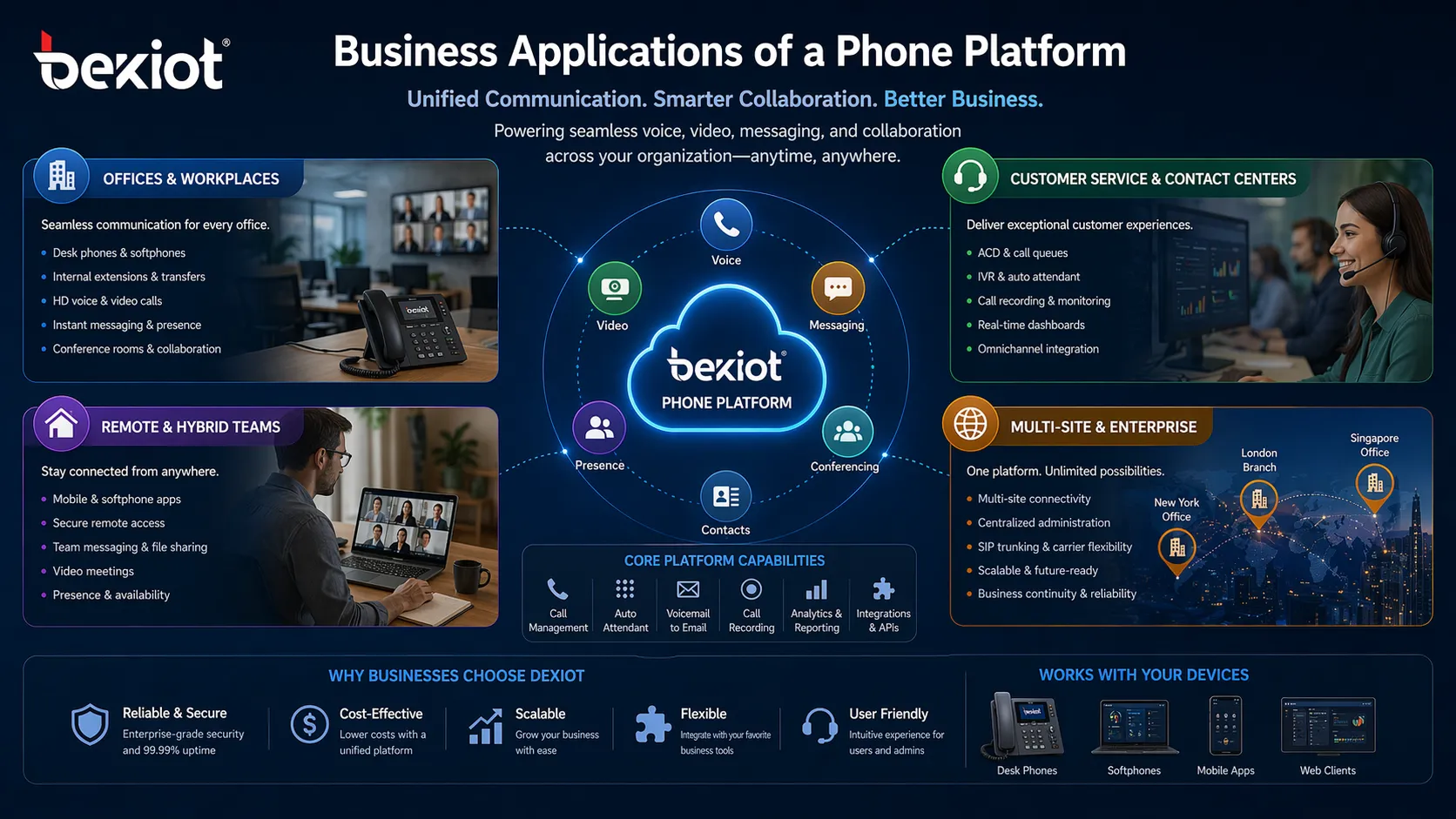
In office environments, a phone platform supports core daily calling needs such as extension dialing, reception routing, department numbers, conference calls, and voicemail. It gives the organization a structured communication system instead of a loose collection of endpoints.
For larger enterprises, the value expands into multi-site numbering plans, branch integration, centralized administration, and policy consistency. Headquarters can maintain stronger control while still allowing regional operations to function efficiently.
This makes the platform especially useful for organizations that want both standardization and operational flexibility.
Many businesses use a phone platform as the foundation for customer-facing communication. Incoming sales lines, service desks, support queues, and callback workflows all depend on controlled routing and reliable call handling.
Even when a company does not deploy a full contact center, it still benefits from queue logic, recorded greetings, reporting, and departmental call distribution. These functions help smaller teams deliver a more organized customer experience without moving immediately to a more complex service platform.
As demand grows, the phone platform can often serve as the base layer for more advanced customer engagement tools.
Hybrid work and distributed teams have made phone platforms more valuable than ever. A salesperson on the road, a remote support engineer, and an office manager in headquarters can all participate in the same business voice environment with the same identity and routing structure.
This is important for continuity, customer trust, and internal collaboration. Staff do not need to expose personal numbers or rely on inconsistent communication methods. The business remains reachable through a unified system even when users are spread across locations.
For growing organizations, this creates a much more adaptable communication model than site-bound telephone infrastructure.
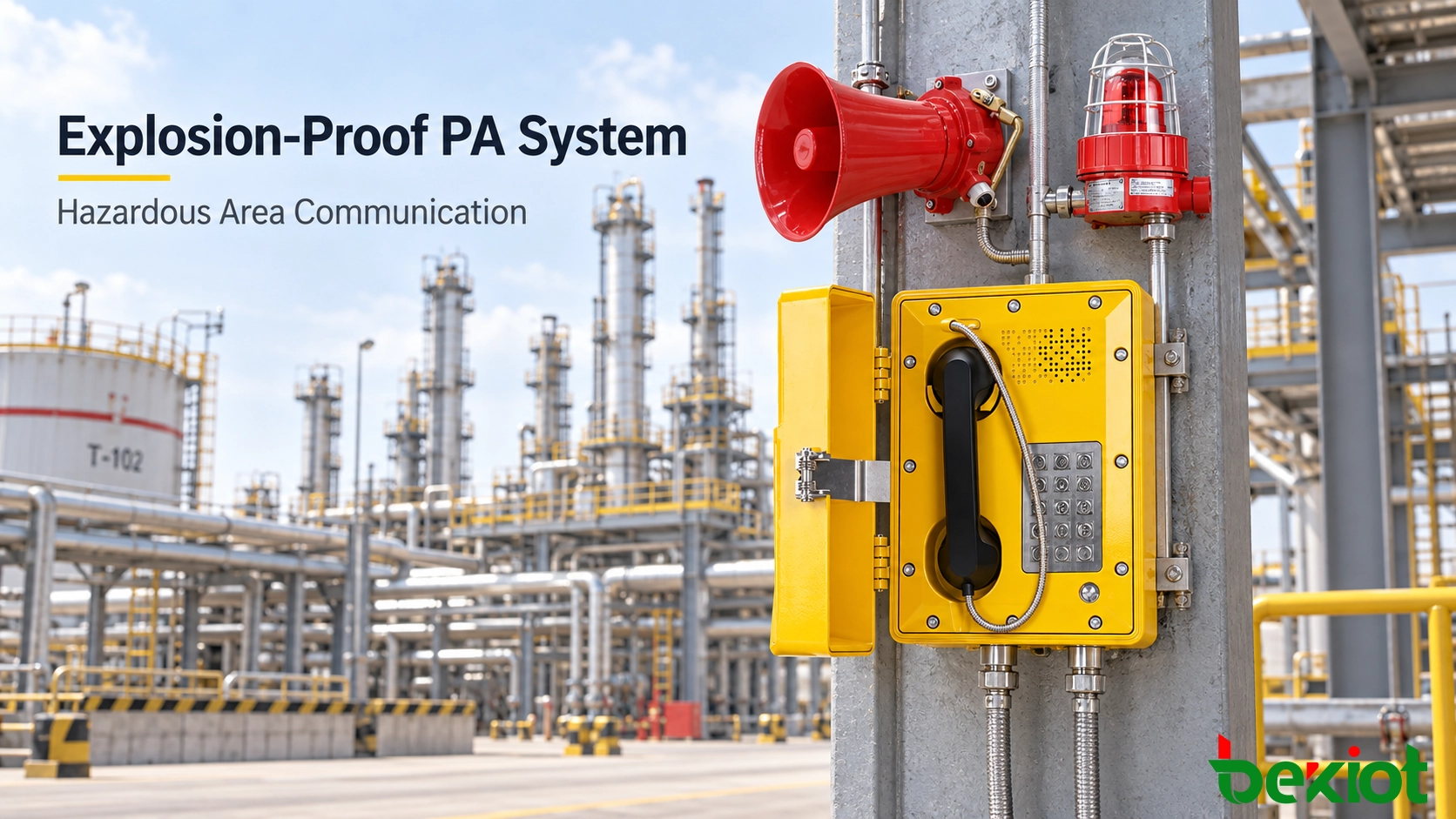
In some sectors, a phone platform also supports more specialized workflows. It may connect with SIP intercoms, paging systems, emergency help points, dispatch consoles, or rugged communication terminals in facilities such as factories, campuses, transport hubs, utility sites, or industrial plants.
In these environments, the platform is not only a business office tool. It becomes part of the operational communication layer, helping coordinate staff, distribute announcements, connect field devices, and support incident response processes.
This broader application is one reason many organizations prefer a platform-oriented approach rather than a narrow desk-phone-only solution.
The right phone platform depends on company size, user distribution, regulatory needs, and operational workflows. A small office may prioritize easy management and affordability, while a multi-site enterprise may prioritize integration, redundancy, analytics, and centralized policy control.
It is also important to consider whether the business mainly needs standard office calling, customer interaction tools, operational communications, or a combination of all three. The more clearly those priorities are defined, the easier it becomes to choose a suitable platform architecture.
A platform that looks feature-rich on paper may still be the wrong fit if it does not align with the organization’s real communication patterns.
Businesses should look beyond basic features and ask how the platform will perform over time. Can it support more users and more sites? Can it integrate with SIP trunks, CRM systems, paging, intercom, or dispatch tools? Is management centralized and practical for the IT team?
Security, reliability, and vendor support also matter. Voice systems are still mission-critical for many organizations, especially those handling customer calls, operations coordination, or emergency communication paths.
A strong selection process focuses on long-term usability, not just short-term checklist compliance.
A phone platform is the business communication system that manages voice services, user identities, routing logic, and calling features across an organization. In modern environments, it often extends far beyond traditional telephony by supporting IP communication, softphones, remote work, analytics, and integration with broader business tools.
For companies that want scalable, manageable, and professional communication, the phone platform is a strategic foundation rather than a simple utility. It improves efficiency, strengthens customer interactions, and gives the organization more control over how voice communication supports daily operations and future growth.
For businesses evaluating IP telephony, SIP-based communications, or industry-oriented voice solutions, Becke Telcom provides communication platforms and related solutions designed for professional business and operational environments.
Not exactly. A PBX is often one part of a phone platform. The term phone platform usually has a broader meaning and may include IP telephony, softphones, SIP connectivity, management tools, analytics, and integration with other business systems.
Yes. Most modern phone platforms support remote use through softphones, mobile apps, VPN-based connectivity, or cloud-access methods, allowing employees to use their business identity outside the office.
Almost any organization that relies on professional calling can benefit from one. Offices, customer service teams, multi-site enterprises, schools, healthcare providers, logistics operators, and industrial organizations all use phone platforms in different ways.
They should evaluate call features, scalability, ease of management, integration options, security, reliability, deployment model, and how well the system fits their real business communication workflows.