
Encyclopedia
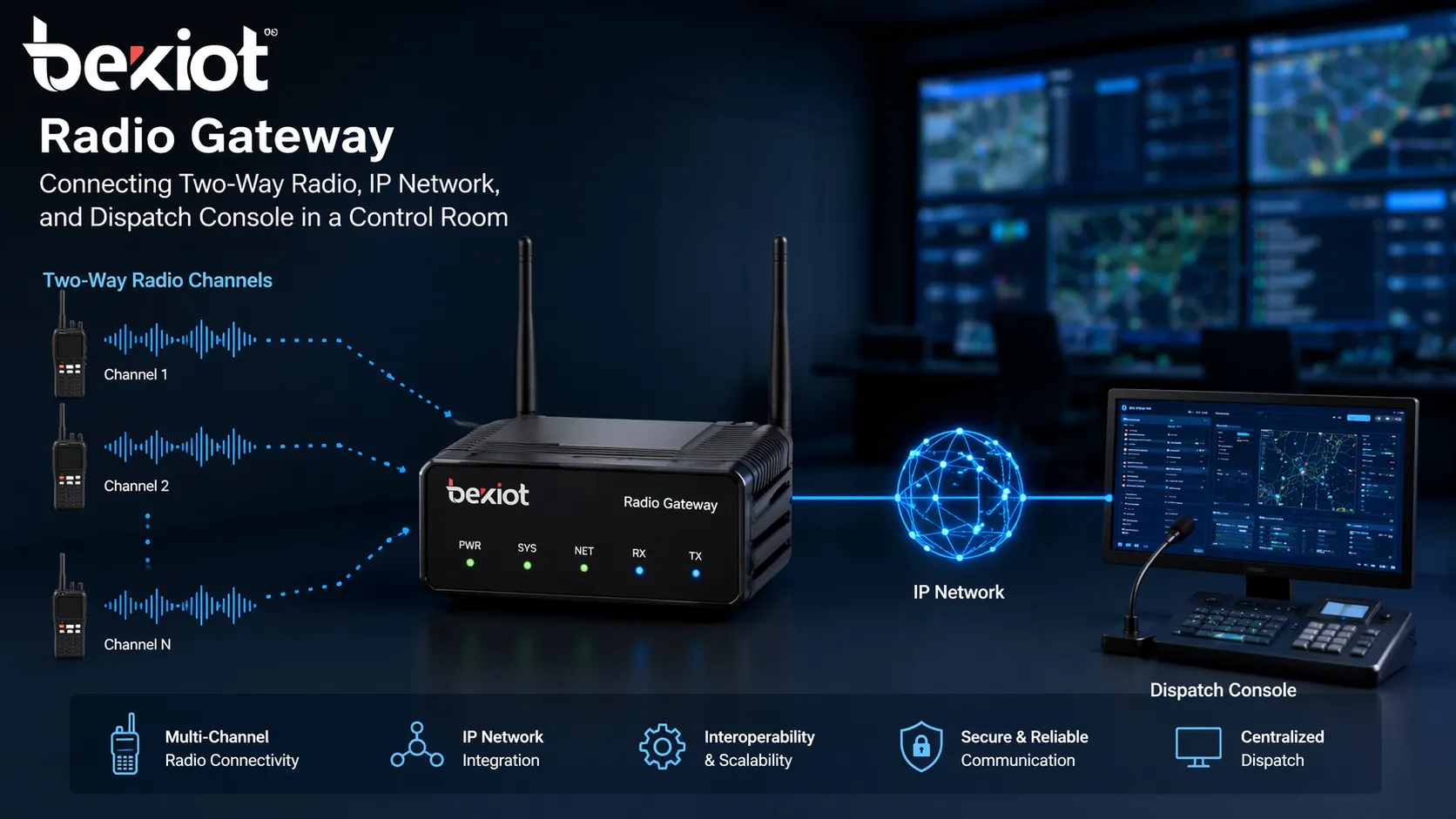
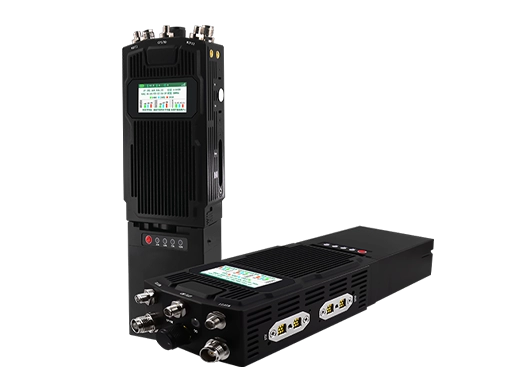
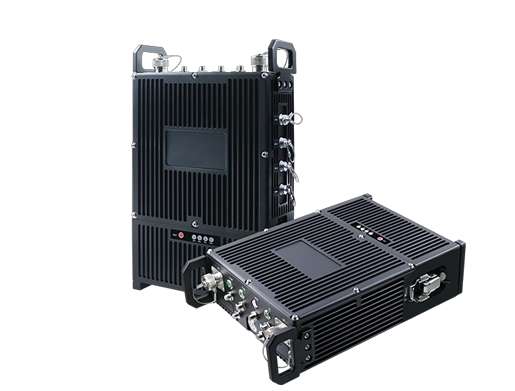
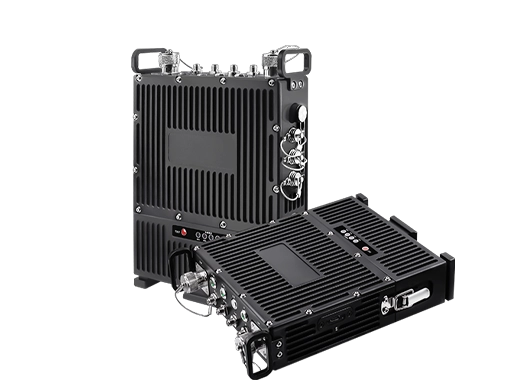
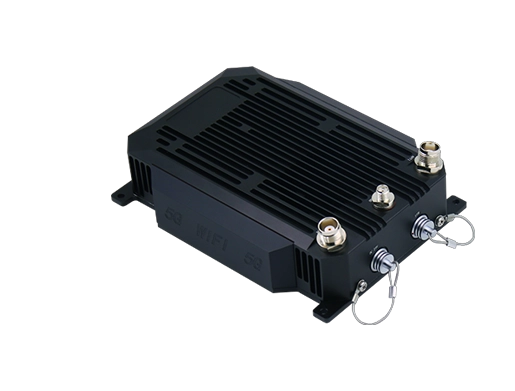
A radio gateway is a communications bridge that connects radio systems to other networks, platforms, or endpoints so voice traffic and control signals can move across environments that would otherwise remain isolated. In practical deployments, it is often used to link two-way radio channels with IP networks, dispatch consoles, telephony systems, broadband push-to-talk platforms, recording systems, or control-room applications.
In many organizations, field teams still rely on radios because push-to-talk communication is immediate, resilient, and easy to use. The challenge is that radio environments are often fragmented. Different sites may use different frequency bands, different signaling methods, or different system types. A radio gateway helps solve that problem by creating a controlled interconnection layer between legacy radio assets and modern IP-based communications.
At a basic level, a radio gateway is a hardware appliance, software platform, or integrated subsystem that receives audio and control signals from one radio side and makes them usable on another side. That second side may be another radio network, a dispatch platform, an SIP-based communications system, a recording server, or a broadband push-to-talk application.
Some radio gateways are built primarily for radio-to-radio interoperability, allowing agencies or departments on different systems to communicate during routine operations or emergencies. Others focus on radio-over-IP transport, extending radio communications over LAN, WAN, private fiber, LTE, or other IP infrastructure. More advanced solutions can combine both roles, acting as an interoperability bridge and as an integration point into a larger unified communications or command-and-control environment.
A useful way to think about a radio gateway is this: it does not replace radios. It allows radio communications to be extended, shared, managed, and integrated more intelligently.
On the radio side, the gateway interfaces with connected base stations, mobile radios, repeaters, or control stations. It handles elements such as receive audio, transmit audio, push-to-talk activation, carrier detection, busy indication, and sometimes channel control or status information. Depending on the deployment, the interface may be analog, digital, GPIO-based, serial, or network-based.
Once the signal is received, the gateway conditions and converts it into a format suitable for transport or interconnection. That may involve audio normalization, signal routing, codec processing, packetization, buffering, and logic for transmitter keying. In digital environments, it may also work with protocol-specific interfaces supplied by the radio system vendor.
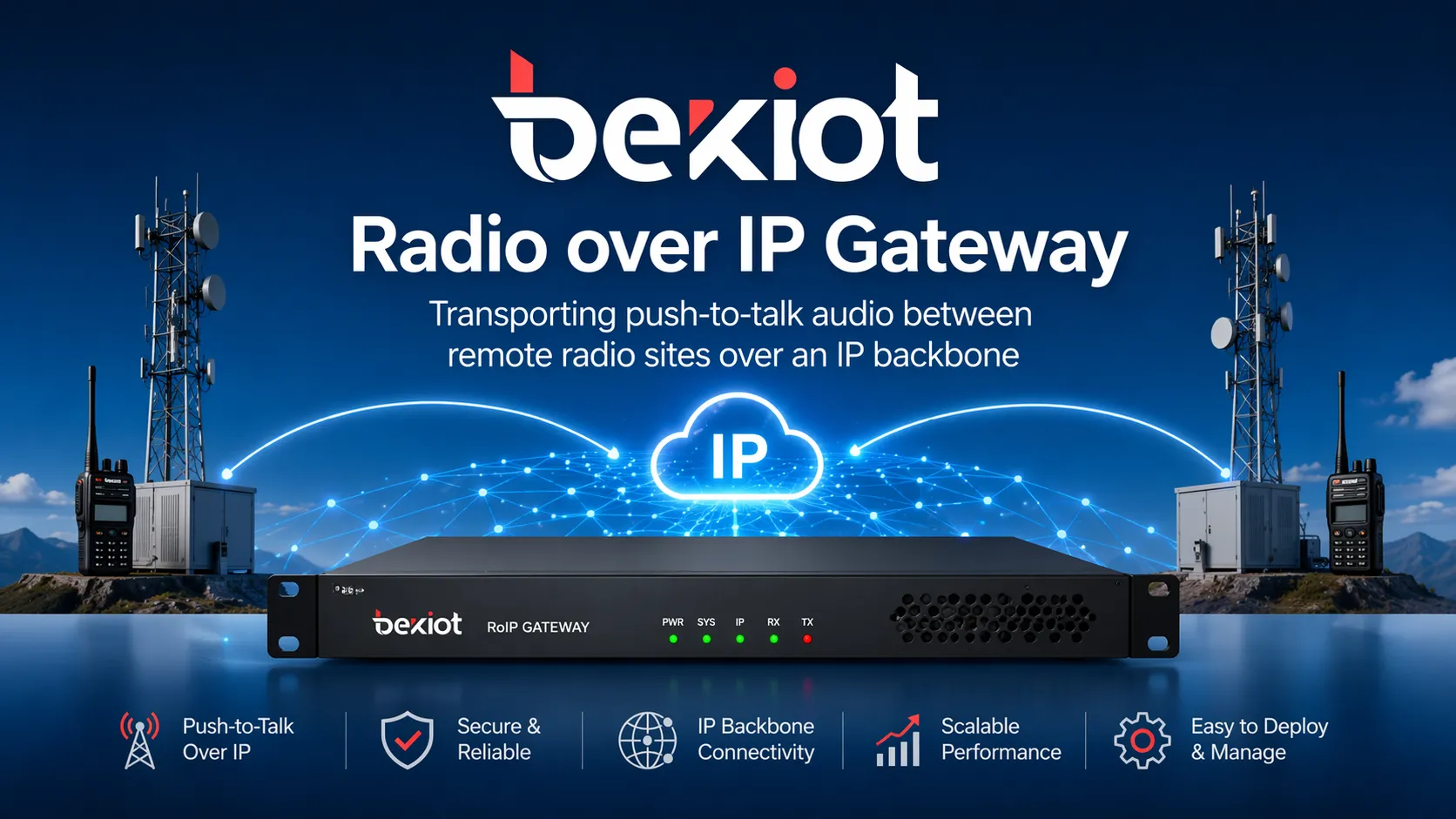
When the gateway is used in a radio-over-IP architecture, it places the radio audio and related control information onto an IP network. This allows the communication path to move beyond the physical coverage boundary of a single radio site. Instead of depending only on direct RF reach, organizations can transport selected radio traffic across campuses, cities, regions, or remote industrial sites through managed IP links.
The IP side may connect to another gateway, a dispatch console, a recorder, a control-room application, or a broadband push-to-talk service. In this way, the gateway becomes the demarcation point between the radio domain and the wider communications network. It makes geographically separated users, centers, or systems behave as though they are part of a more unified operational environment.
In interoperability scenarios, the gateway can link otherwise separate communications groups. For example, it may bridge one conventional radio channel to another, connect a radio network to a dispatch application, or allow a broadband push-to-talk user to participate in a radio talk path. The exact method depends on the system design, but the operating goal is consistent: create a usable and controlled conversation path across systems that were not originally built to work together.
This capability is especially important in mixed environments where legacy radio investments must remain in service while the organization adopts IP-based dispatch, multimedia coordination tools, or wider-area communications infrastructure.
One of the most important functions of a radio gateway is interoperability. Different teams often use different radio systems because of budget cycles, geography, operational needs, or regulatory requirements. A gateway can bridge selected channels, groups, or talk paths so authorized users on separate systems can communicate when required.
This does not mean every network becomes permanently merged. In well-designed deployments, interoperability can be controlled by policy, event, dispatcher action, or workflow. That gives operators the flexibility to build temporary communication bridges during incidents without losing normal system discipline.
A radio gateway can also connect radio traffic into IP-based applications. This includes dispatch consoles, voice logging systems, operator workstations, incident management platforms, alarm systems, and unified communication environments. As a result, radio activity becomes easier to supervise, record, route, and coordinate from a central location.
For organizations with multiple sites, this is particularly valuable. A control room can supervise remote radio resources without placing full radio infrastructure at every operator position. The gateway centralizes access and makes the radio layer more manageable from the perspective of the communications platform.
Beyond simple audio pass-through, a practical radio gateway manages the control behavior that makes radio communication work reliably. That includes push-to-talk keying, receive-state awareness, audio direction control, busy-channel logic, and handling of timing relationships between transmission and playback.
These functions matter because radio communications are not the same as ordinary telephony. The gateway must preserve the immediacy and operating logic of push-to-talk communications while still allowing the traffic to be transported or shared with external systems.
Another major function is network extension. By using IP transport, a radio gateway can make a radio resource accessible from a distant site, control center, or protected facility. This is often more practical than duplicating radio infrastructure everywhere, especially when the goal is to centralize operations but keep field radio assets near the operational area.
In some deployments, gateways also help create redundancy or alternate routing options, which can improve continuity for mission-critical or industrial communications.
The real value of a radio gateway is not only connection. It is controlled connection between radio operations and the wider communications ecosystem.
Many organizations cannot justify replacing an entire radio fleet simply to gain modern integration capabilities. A radio gateway allows existing radios, repeaters, and operational workflows to remain useful while the broader communications architecture evolves.
This makes the gateway an attractive migration tool. It supports modernization without forcing an all-at-once transition away from installed radio infrastructure.
Interoperability is often the most visible business benefit. When departments, contractors, transport operators, utilities teams, or emergency services need to coordinate, the gateway can provide an organized bridge between systems that would otherwise remain disconnected.
The result is faster coordination, fewer relay errors, and less dependence on manual message passing through intermediate operators.
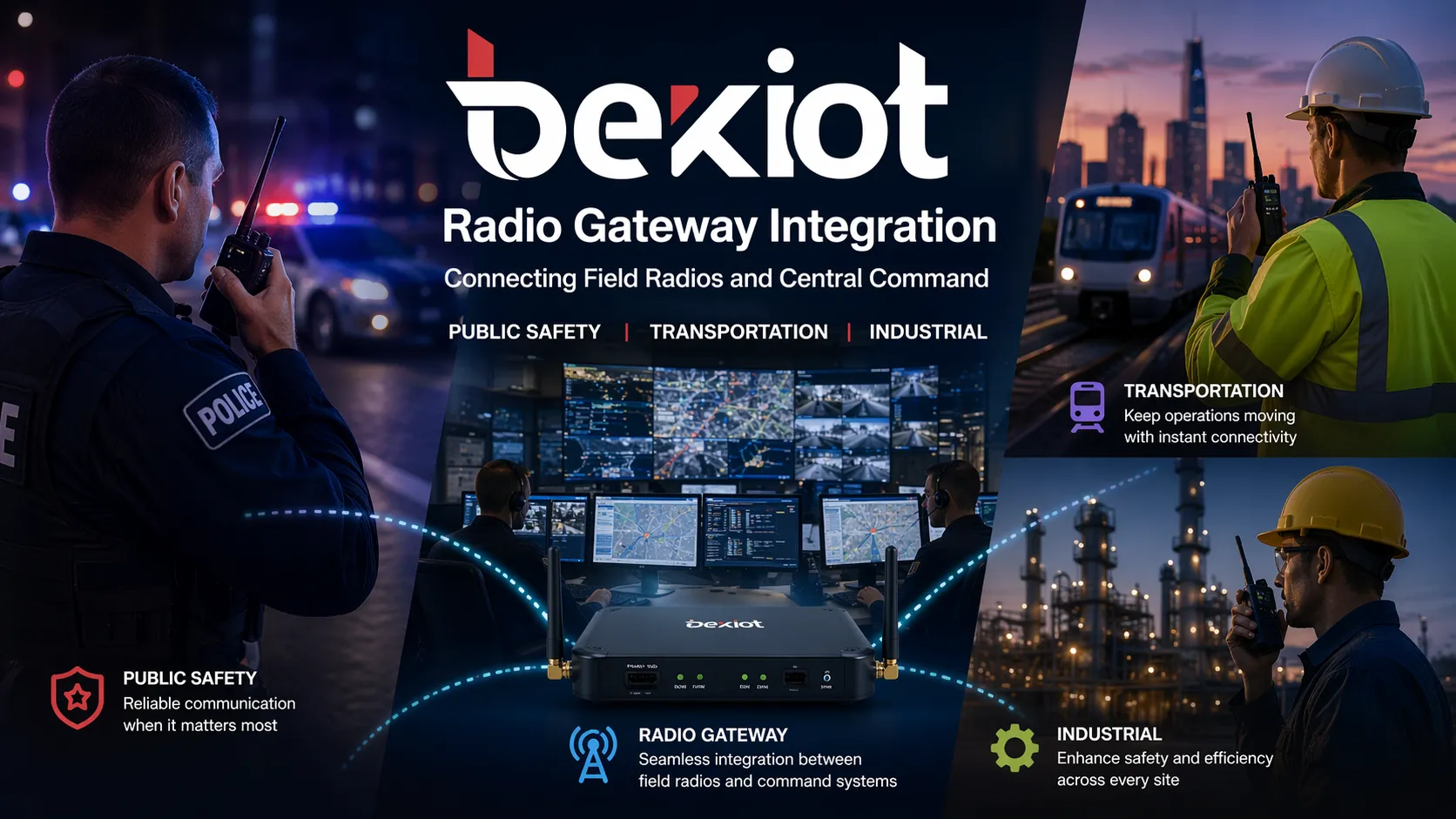
Once radio resources are presented through gateways into dispatch or command platforms, operators can monitor and coordinate more efficiently from centralized locations. This is valuable in public safety, transportation, utilities, industrial plants, ports, campuses, and other environments where field activity and central oversight need to work together in real time.
It also creates a better foundation for recording, supervision, escalation workflows, and integration with alarms, video, or operational events.
Traditional radio coverage is constrained by RF conditions, site placement, and local infrastructure. A radio gateway does not change RF physics, but it can extend operational access to a radio resource by carrying selected communications over IP networks to users or control points outside the immediate radio footprint.
This is especially helpful for multi-site organizations, remote assets, linear infrastructure, and distributed industrial environments.
Because the gateway sits between domains, organizations can add new applications gradually. They can begin with radio bridging, then add dispatch integration, then connect logging, SIP endpoints, or broader command applications as the project matures.
That staged approach reduces disruption and makes communications modernization easier to manage.
Police, fire, emergency medical, emergency management, and mutual-aid organizations often need to communicate across different radio resources during planned events and incident response. A radio gateway can help create interoperable talk paths between agencies, dispatch positions, and supporting communication tools.
That is why radio gateway technology is frequently associated with emergency coordination, incident command, and multi-agency operations where fast and reliable voice exchange is essential.
Rail, metro, airports, ports, highways, power utilities, water utilities, and similar operators often have geographically distributed teams working across large operational footprints. A radio gateway allows those radio resources to be integrated into control centers and extended over managed IP networks.
This supports centralized supervision while preserving the practical benefits of push-to-talk radio for field operations, maintenance, traffic handling, and emergency response.
Large factories, petrochemical sites, mining areas, offshore facilities, warehouses, and utility plants commonly use radios because they are fast and operationally familiar. At the same time, these environments increasingly rely on central control rooms, alarms, and integrated incident workflows.
A radio gateway helps connect those two worlds. It can make radio traffic available to control-room systems, remote operators, or broader communications platforms without discarding the established radio operating model used by field staff.
Universities, hospitals, municipal facilities, logistics parks, and enterprise campuses may use radio for security, operations, maintenance, and mobile coordination. A gateway can unify access to those radio resources across multiple buildings or sites and support integration with telephony or dispatch environments where appropriate.
This is useful when organizations want a more connected operational communications layer without giving up the speed of push-to-talk workflows.
These terms are related but not identical. A radio gateway is the broad concept: a system that bridges radios with other systems or networks. A RoIP gateway is a specific type of radio gateway focused on transporting radio communications over IP infrastructure. A dispatch system is the operator-facing application layer used to monitor, control, record, and coordinate communications resources.
In many real deployments, these components work together. The radio gateway handles the actual interconnection, the RoIP function carries radio traffic over the network, and the dispatch platform provides user control, visibility, and workflow management.
The first requirement is compatibility. The gateway must match the radio environment it is expected to serve, including interface type, signaling method, audio path requirements, and any vendor-specific integration needs. A gateway that looks capable on paper may still be unsuitable if the radio-side interfacing is incomplete.
For that reason, interface validation is usually more important than headline feature counts.
It is also important to evaluate how the gateway will fit into the wider communications architecture. Some projects need only a simple radio bridge. Others require integration with dispatch consoles, SIP communications, voice recording, alarm events, or centralized command platforms.
Selecting a gateway with appropriate network, API, management, and expansion capabilities can prevent redesign later in the project lifecycle.
Because many radio gateway deployments support operationally important communications, reliability matters. Buyers should review redundancy options, fault behavior, device hardening, remote management, and serviceability. Where the gateway is exposed to wider networks, security architecture also becomes a key consideration.
Latency, audio consistency, and signaling stability are equally important. The best gateway is not the one with the longest feature list, but the one that maintains intelligible, predictable, and operationally usable communications under real field conditions.
A radio gateway is a practical integration layer that links radio communications with the broader operational network. It helps organizations preserve the speed and familiarity of push-to-talk radio while gaining the reach, visibility, and coordination advantages of IP-based communications.
Whether the goal is radio interoperability, remote access, centralized dispatch, or staged modernization, a well-designed radio gateway can turn isolated radio resources into part of a larger and more capable communications ecosystem.
No. A repeater primarily extends radio coverage within the RF domain by receiving and retransmitting radio signals. A radio gateway is designed to interconnect radio traffic with other systems, such as IP networks, dispatch applications, or different radio resources.
Yes. That is one of its most common uses. Many organizations deploy radio gateways specifically to keep legacy radio infrastructure in service while adding IP transport, centralized dispatch, recording, or wider interoperability functions.
No. The gateway and the dispatch console serve different roles. The gateway performs the interconnection and transport functions, while the dispatch console provides the user interface for monitoring, control, and operational coordination.
It is especially useful in environments that combine field radio operations with centralized coordination, such as public safety, transportation, utilities, industrial sites, ports, campuses, and distributed enterprise facilities.
A RoIP gateway is usually a subset of the broader radio gateway category. It focuses on carrying radio audio and control information over IP networks. A radio gateway may do that as well, but it can also support broader interoperability and integration roles depending on the system design.