
IndustryInsights
Business communication is no longer limited to a desk phone on an office table. Companies now operate across headquarters, branch offices, warehouses, service centers, retail locations, home offices, and mobile teams. In that environment, many traditional PBX systems feel rigid, expensive to maintain, and difficult to expand. That is one of the main reasons businesses are moving to IP PBX systems.
An IP PBX uses an IP network to handle voice communication, call routing, extensions, and related features. Instead of depending entirely on old-style telephone cabling and fixed line infrastructure, it allows organizations to run business telephony on a more flexible and scalable network foundation. For many companies, this is not just a technology refresh. It is a practical step toward more efficient operations and better communication management.
As business needs continue to change, decision-makers are looking for communication systems that can support growth, mobility, cost control, and easier administration. IP PBX fits that direction well, which is why it has become a preferred option for companies replacing legacy PBX platforms or building new communication environments from the ground up.
Traditional PBX systems were designed for an earlier business model. In many cases, they worked well when a company operated from a single office, relied mainly on voice calls, and had relatively stable staffing and extension requirements. That model still exists in some places, but for many organizations it no longer reflects how work is done today.
Modern businesses often need to connect multiple sites, support remote employees, integrate with mobile devices, and adapt quickly when departments expand or workflows change. Legacy PBX systems can struggle in these situations because they are often tied to dedicated hardware, fixed cabling structures, and limited expansion paths. Even simple changes may require more installation work, more vendor dependency, or additional hardware modules.
Another challenge is that traditional PBX platforms are often voice-centered rather than communication-centered. Businesses now expect more than extension dialing and call transfer. They want conferencing, voicemail-to-email, softphone access, mobile reachability, call recording, CRM integration, and centralized management. When the old system cannot keep pace with those needs, migration becomes a logical next step.
Cost reduction is one of the first reasons companies begin evaluating IP PBX. By using IP-based communication and SIP trunks, businesses can often reduce their dependence on traditional phone lines and simplify external calling architecture. This can be especially valuable for companies with multiple offices, international calling requirements, or frequent inter-branch communication.
The savings are not limited to call charges. An IP PBX can also reduce the cost of moves, adds, and changes. When users relocate within the office or between sites, the system can often be adjusted through software and network provisioning rather than extensive rewiring. Over time, this helps reduce operating friction and lowers the total cost of ownership.
Remote work and hybrid work have changed expectations for business telephony. Employees may answer calls from laptops, smartphones, desktop SIP phones, or softphone clients while working from different locations. Businesses need a system that allows staff to remain reachable without forcing every user to be physically present in the main office.
IP PBX supports this model much better than many legacy platforms. Users can keep their business identity, extension, and call features across devices and locations. This helps maintain continuity for internal collaboration and customer communication, even when teams are distributed.
Modern business communication is no longer about where the phone is placed. It is about how reliably people can stay connected wherever they work.
Growth creates pressure on communication systems. A company may open new branches, hire more staff, add customer service teams, or launch operations in new regions. If the phone system is difficult to scale, communication becomes a bottleneck instead of a business enabler.
IP PBX systems are often easier to expand because they are built on network-based architecture. New users, endpoints, and locations can usually be added more efficiently than in a traditional PBX environment. This makes IP PBX attractive to growing businesses that want a platform capable of evolving with organizational needs.
Many businesses no longer want to be locked into a single rigid deployment model. Some prefer on-premises systems for security or internal control. Others want cloud-hosted communication. Some need a hybrid approach that combines local infrastructure with remote connectivity. IP PBX provides more flexibility in how the system is deployed and managed.
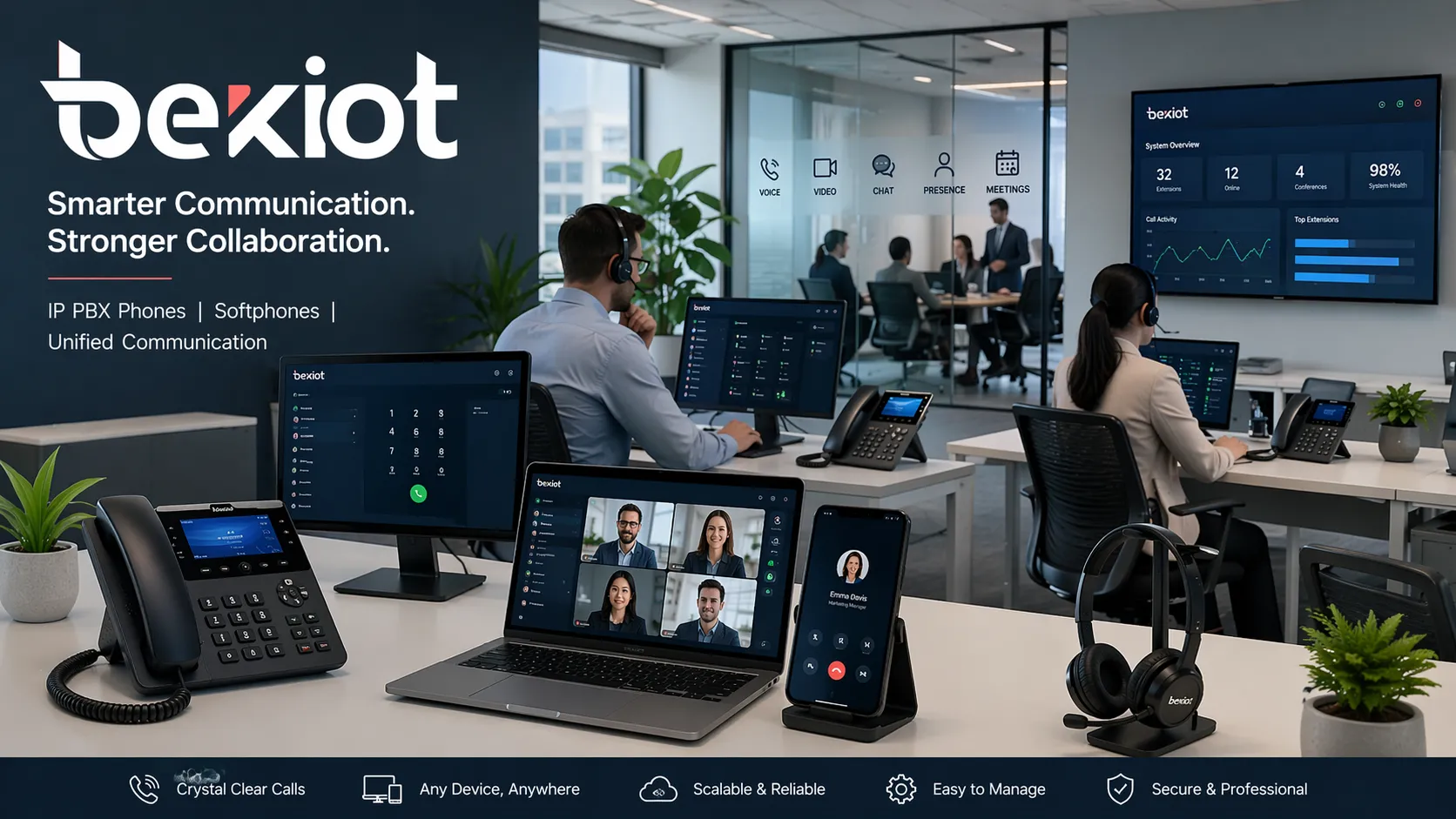
There is also more freedom at the endpoint level. Companies can mix desk phones, conference phones, softphones, video phones, and mobile clients according to role and budget. This allows them to tailor the communication environment to real operational needs instead of forcing every user into the same device model.
Communication systems become harder to manage when they are spread across multiple offices and multiple hardware platforms. IT teams and administrators want centralized control over users, extensions, call routing, permissions, recordings, and maintenance. IP PBX helps deliver that through software-based administration and web-based management interfaces.
Instead of relying heavily on manual intervention for routine changes, organizations can often manage updates more efficiently. This improves responsiveness, reduces administrative workload, and supports more consistent communication policies across the business.
One of the strongest advantages of IP PBX is that it creates a more unified communication experience. A user in the main office, a colleague in a remote branch, and a manager traveling with a mobile client can all remain part of the same communication environment. Internal extensions, transfers, group ringing, and shared call handling become easier to manage across locations.
This is particularly useful for businesses that want to present a single, professional communication structure to customers while internally supporting a distributed workforce.
Communication is more valuable when it connects with business workflows. Many companies want their phone system to work with CRM platforms, help desk tools, ERP environments, security systems, intercom platforms, or collaboration software. IP PBX usually offers better integration options than legacy PBX systems because it is built around modern IP and software-based architecture.
That means calls can become part of a wider process instead of remaining isolated events. Customer interactions can be tracked more clearly, internal workflows can move faster, and communication data can contribute to better management visibility.
Businesses increasingly expect communication systems to do more than route voice calls. They also want conferencing, presence, voicemail handling, ring groups, auto attendants, call recording, remote extensions, and in some cases video communication. IP PBX often serves as a better foundation for these features because it is designed for networked communication rather than purely legacy telephony.
This does not mean every business needs every advanced function immediately. It means the system is better positioned to support those functions when the organization is ready to adopt them.
Small and medium-sized businesses often move to IP PBX because they need professional communication features without the complexity of traditional enterprise telephony. They may want auto attendants, extension management, voicemail, mobile access, and lower operating costs, but they also need the system to remain manageable.
IP PBX is well suited to this balance. It provides more capability than a basic analog phone setup while remaining flexible enough to grow with the business.
Organizations with multiple locations usually benefit strongly from IP PBX because they need a consistent internal dialing structure, easier inter-office communication, and centralized administration. Without that, each site can become an isolated communication island, which creates inefficiency and management complexity.
IP PBX helps bring those sites into one coordinated communication environment. That improves collaboration and can make the business appear more unified to external callers as well.
Departments that handle large call volumes need features such as queue management, call recording, ring groups, supervisor visibility, and flexible routing. IP PBX can support these workflows more effectively than many basic legacy systems, especially when integrated with customer-facing software platforms.
For sales and support teams, communication speed and continuity often affect revenue and customer satisfaction directly. That makes the phone system a strategic tool rather than a background utility.
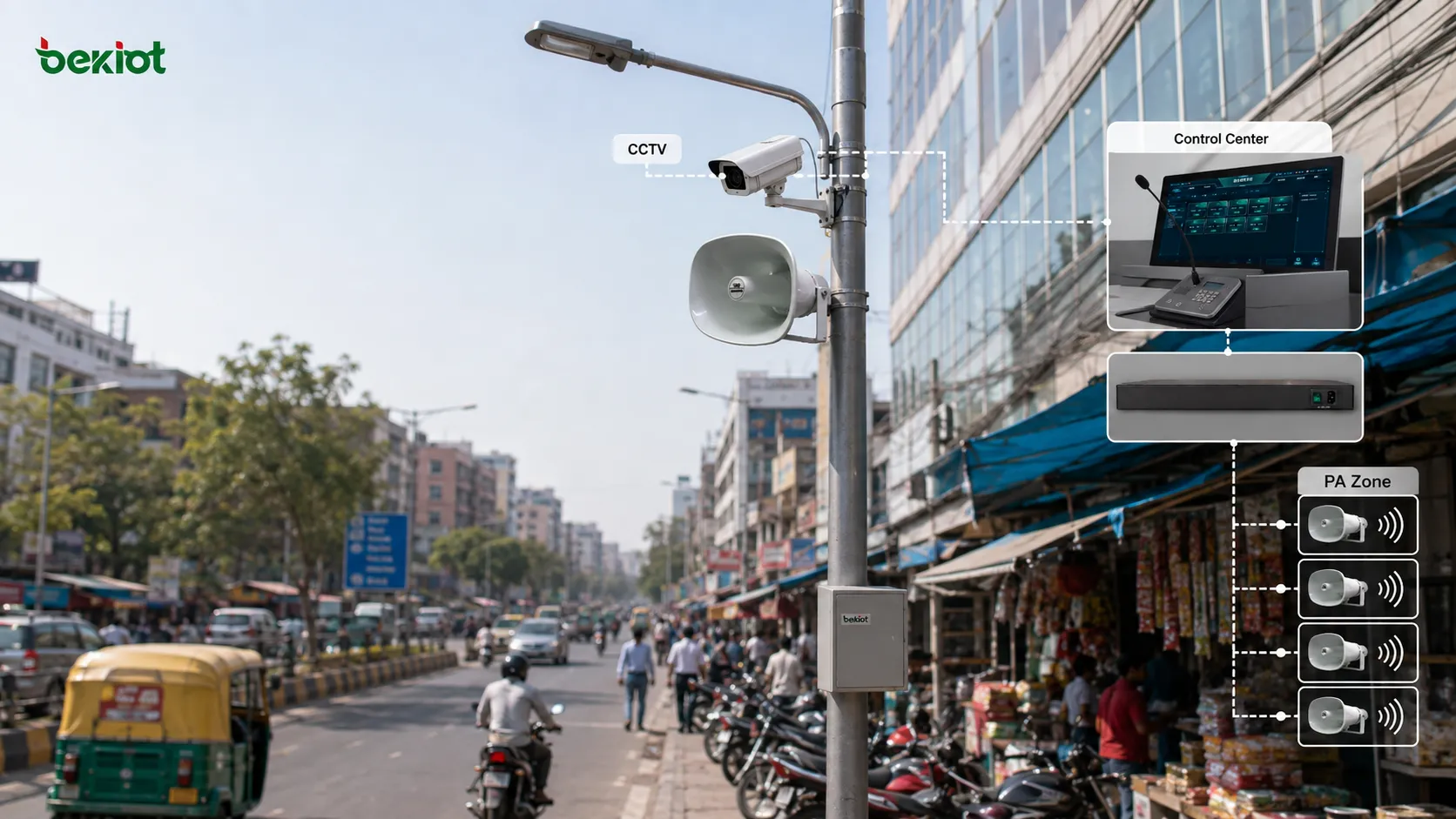
Many specialized environments also benefit from IP PBX. Factories, schools, hospitals, office parks, and large campuses often need more than office voice calls. They may also require paging, intercom, emergency communication, access integration, broadcast linkage, or communication across dispersed facilities.
Because IP PBX can operate as part of a broader IP communication environment, it often fits well into these more demanding operational scenarios.
Although cost is important, most companies do not upgrade only to reduce phone bills. They upgrade because the communication system affects daily efficiency, employee responsiveness, customer experience, and future flexibility. A modern IP PBX can help reduce missed calls, improve internal coordination, and support more professional communication workflows.
It also helps organizations prepare for future requirements. A business that adopts IP PBX today is often creating a better foundation for later additions such as advanced call analytics, unified communication tools, mobile extensions, video endpoints, intercom systems, or integrated collaboration services.
For many organizations, moving to IP PBX is less about replacing old hardware and more about building a communication platform that can support the next stage of business growth.
Because IP PBX depends on network infrastructure, businesses should review LAN performance, bandwidth planning, switch capacity, and QoS strategy before migration. A strong network foundation helps ensure good voice quality and stable endpoint performance.
It is also important to think about power, PoE availability, and redundancy where needed. Communication reliability remains critical, even when the architecture becomes more flexible.
As communication moves onto IP infrastructure, security planning becomes more important. Businesses should review account policies, device provisioning, network segmentation, encryption options, and external access control. A well-designed IP PBX deployment should combine flexibility with disciplined administration.
Not every migration starts from zero. Some businesses want to retain existing numbers, connect legacy devices, integrate SIP trunks, or link the PBX with third-party systems. The migration plan should consider what needs to be preserved, what should be replaced, and what future integrations are expected.
A successful upgrade is not just about the server or the phones. It is also about how users adapt. The system should be easy to use, consistent across departments, and aligned with actual workflows. Training, deployment planning, and role-based device selection all help ensure the business gets real value from the move.
Businesses are moving to IP PBX systems because communication requirements have changed. Companies need lower operating costs, more deployment flexibility, stronger support for remote and hybrid work, and better tools for growth. Traditional PBX systems may still work in some environments, but for many organizations they no longer provide the agility or integration modern operations require.
IP PBX offers a more adaptable approach. It helps businesses connect users across locations, manage communication more efficiently, support multiple device types, and create a stronger foundation for future collaboration needs. That is why more organizations are replacing legacy PBX platforms and building their next communication environment around IP.
For businesses planning a communication upgrade, the move to IP PBX is not simply a technical trend. It is a practical response to how modern organizations work, serve customers, and grow.
Businesses are replacing traditional PBX systems because IP PBX offers better flexibility, easier scalability, lower operating costs, and stronger support for remote work, multi-site communication, and software integration.
No. IP PBX is suitable for small businesses, medium-sized companies, and large enterprises. Small organizations often choose it for professionalism and scalability, while larger ones value centralized control and multi-site connectivity.
In many cases, yes. IP PBX can reduce dependence on traditional phone lines, simplify inter-office calling, and lower maintenance and expansion costs over time.
Yes. One of the main reasons businesses move to IP PBX is that it can support remote and hybrid work through softphones, mobile clients, remote extensions, and network-based access.
A company should review network readiness, endpoint requirements, security policies, integration needs, SIP trunk plans, and user workflow requirements before moving to IP PBX.