

公共廣播系統通常稱為 PA system,是一种音訊通信系統,用於向指定區域或多個區域發布語音通知、告警信息、尋呼訊息、現場讲话或預錄音訊。在實際應用中,公共廣播系統的核心價值是让一個音源同时覆蓋大量聽眾。它廣泛用於學校、工廠、辦公樓、交通樞紐、医院、購物中心、體育場館、工業現場以及公共安全場景,在这些場所,清晰、可控的大範圍音訊通信非常重要。
从基礎層面看,公共廣播系統会从一個或多個音訊源擷取聲音,对聲音进行處理和放大,然後分發到安裝在現場各處的揚聲器。这个概念看似簡單,但真實專案中的系統規模可以从一個小型本地通知系統,擴展到大型多分區通信平台,并可連接尋呼台、SIP 網路、對講系統、應急广播邏輯和集中管理軟體。在現代環境中,公共廣播系統已经不再侷限于類比揚聲器和手動麥克風,而是越來越多地成为 IP 化通信架構的一部分。
公共廣播系統的價值在于快速、清楚地觸達人員。在日常營運中,它可用於例行通知、背景尋呼、班次指令、排隊管理、上下課鈴聲或服務提示。在緊急情況下,它的重要性更高,因为系統可以引導疏散、發布警告、協調回應并辅助現場秩序控制。因此,公共廣播系統通常不僅是便利工具,也是營運管理和安全保障基礎設施的重要組成部分。
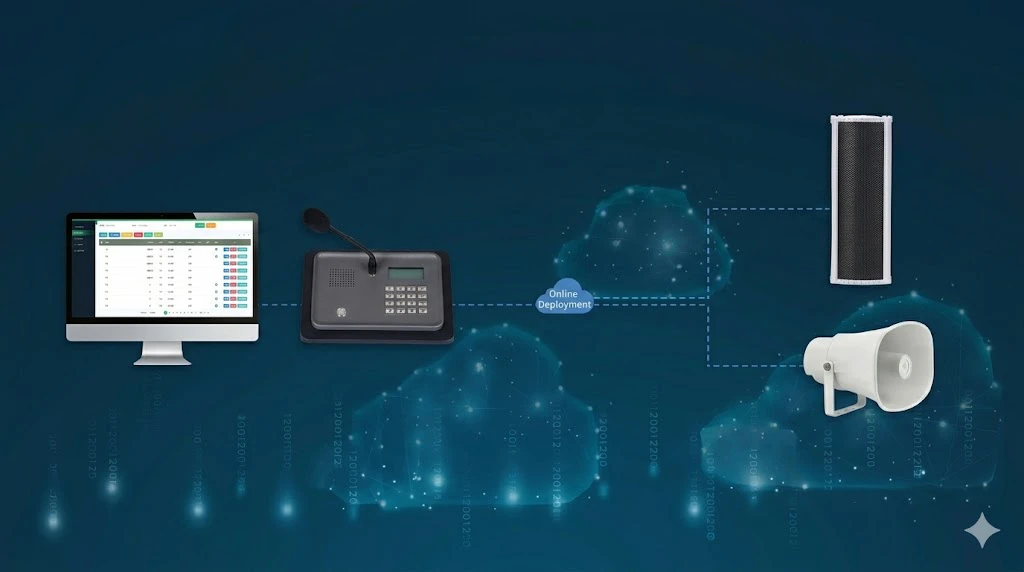
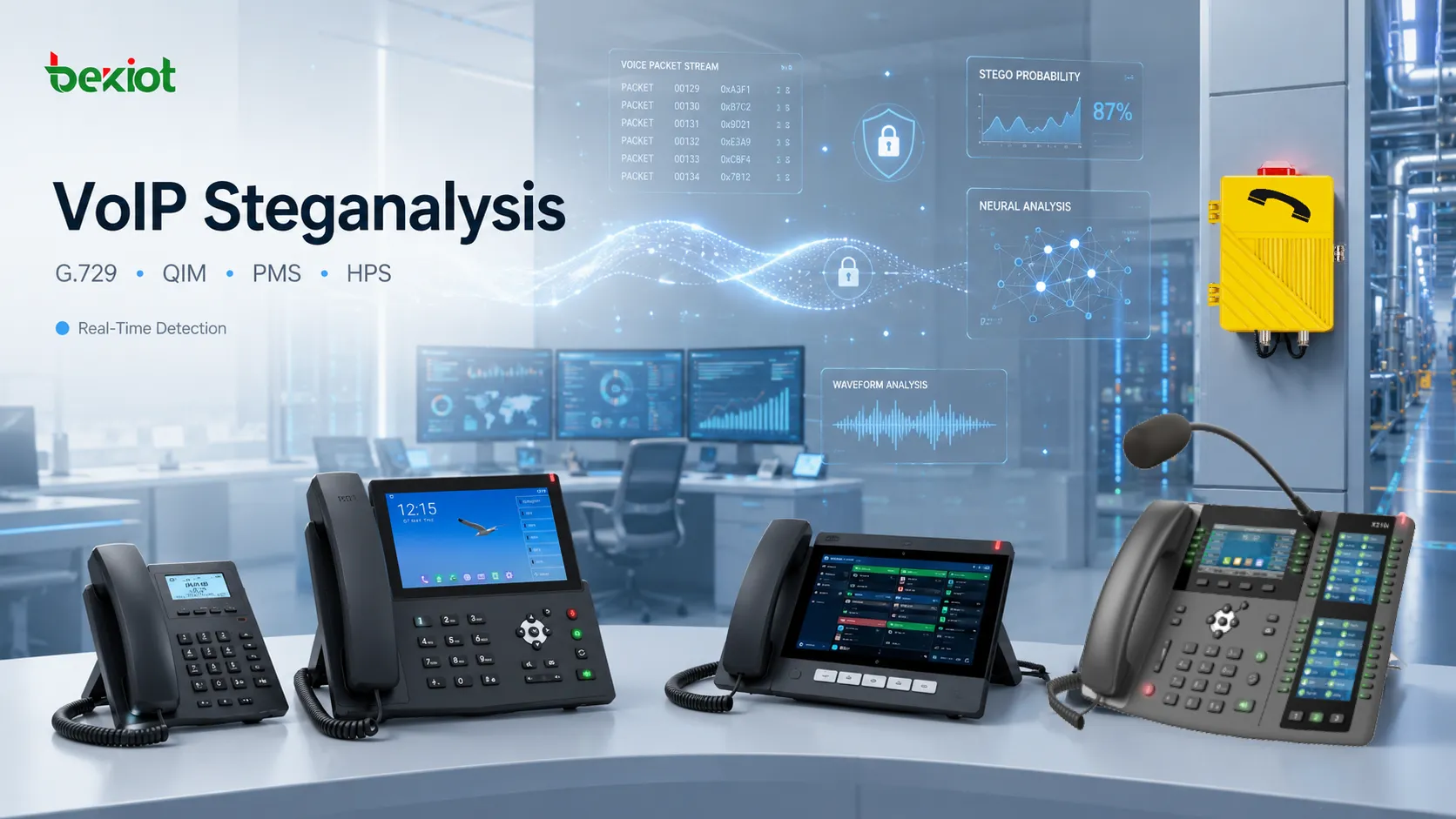
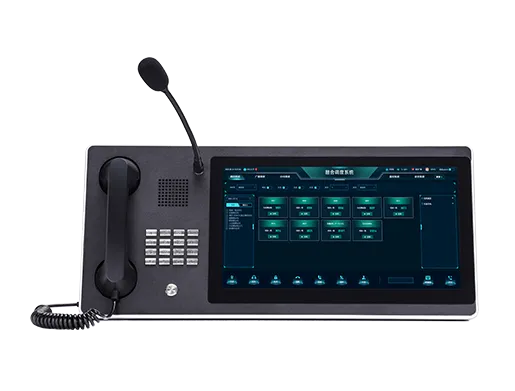
公共廣播系統可将現場語音或預錄音訊分發到一個或多個區域,用於日常通信和應急通知。
公共廣播系統的定义
面向一对多音訊通信的系統
公共廣播系統的主要目的,是将来自單一音源或少量音源的聲音广播给大量聽眾。一般電話或對講通常面向一個人或一個小群體,而 PA 系統面向一对多通信。因此,它特别適合信息需要直接、清晰地傳遞给某个受眾群体、運作區域、建築物或整個站點的場景。
在實際環境中,广播内容可能是麥克風的現場讲话、定時鈴聲、背景音樂、預錄安全提示,或由系統自動觸發的緊急告警。聽眾可能是工廠員工、车站乘客、學校師生、医院訪客,或戶外公共區域内的人群。这些場景的共同要求,是聲音必须高效、清楚地传送,并且通常需要根據區域和優先級进行選擇性發布。
因此,公共廣播系統并不只是揚聲器的集合。它是一個有組織的音訊分發平台,包括音訊輸入、放大、訊號路由、揚聲器輸出以及分區管理。在高级系統中,还可能包括網路介面、狀態監測、應急邏輯以及与其他通信系統的聯動。
从簡單尋呼到全站通信基礎設施
有些人认为 PA 系統只是一個麥克風連接幾只吸頂喇叭的小系統。在一些小型場所確實如此,但现在的公共廣播系統已经覆蓋更複雜的方案。在大型學校或工廠中,系統可能支援幾十个广播分區、多台尋呼話筒、定時广播、優先級搶占、SIP 電話整合以及基于網頁的集中控制。在交通或工業安全場景中,它还可能接入报警、控制室和應急通信流程。
正因为这种演進,現代 PA 系統常常位於音訊基礎設施与營運通信基礎設施之間。它仍然承擔传统的聲音广播功能,同时也參與流程管理、安全通知和現場協調。許多情況下,系統不僅要提供足夠音量,还要確保訊息路由正確、觸發邏輯可靠,并在複雜声学条件下保持語音可懂度。
这种更宽的理解,有助于解释为什麼公共廣播系統在商業和工業領域都非常重要。系統不只是“让聲音被听见”,还要在正確时间、正確地點、以正確控制邏輯让人員清楚听懂。
公共廣播系統不只是揚聲器组合,而是一個在时间、覆蓋和語音清晰度都很重要的場景中,用於分發語音与音訊的受控平台。
公共廣播系統如何運作
音訊輸入、處理、放大与輸出
PA 系統通过擷取音源、准备傳輸音訊、将音訊提升到可用功率,再傳送到覆蓋區域内的揚聲器来運作。音源可以是手持麥克風、桌面尋呼話筒、應急話筒、媒體播放器、網路音訊流、電話介面、SIP 終端或預錄語音源。聲音擷取后,通常会经过控制設備處理,实现音量調整、音源選擇、音色调整和分區分配。
隨後,訊號進入功放或功放组。功放将低電平音訊訊號提升到能够驅動揚聲器的功率水平,使聲音可以通过短距離或長距離線路傳輸。放大后的聲音会根據應用場景送至吸頂揚聲器、壁掛揚聲器、號角揚聲器、音柱或戶外防水揚聲器。在部分系統中,IP 分散式音訊会取代部分传统類比分發方式,使網路功放或網路揚聲器可以更灵活地接收广播訊息。
最終效果是,一個音訊源能够覆蓋一個或多個地點。系統可以同时呼叫所有揚聲器,也可以只呼叫选定分區。这取決於 PA 平台的設計方式和現場的營運控制要求。
分區控制与選擇性广播
分區是實用型 PA 系統最重要的功能之一。一個分區可以是某一樓層、建築翼區、生產線、月台、倉庫區域、教學樓、停車場或戶外圍界。系統無需把每條通知都傳送给所有揚聲器,而是可以只推送到相關區域,从而提升營運效率并減少不必要的噪音干扰。
例如,學校可以向全校播放上课鈴聲,但只把員工尋呼通知傳送到行政區域;工廠可以只呼叫某一車間的維修人員,而不打扰其他區域;医院可以将候診區通知与内部員工尋呼分開;在交通場景中,不同月台或候车区可能同时需要不同訊息。分區控制使这些需求成為可能。
現代系統通常支援分區編組、優先級層級和選擇性音源路由。这意味着某些輸入只能到达特定分區,而緊急訊息可以覆蓋一般音訊并推送到全站或指定安全區域。由此,PA 系統成为結構化通信平台,而不只是簡單的广播鏈路。
優先級邏輯与應急搶占
许多 PA 系統需要同时處理多种音源,而不同訊息的重要程度并不相同。这就需要優先級邏輯。例如,背景音樂应立即让位於現場尋呼,一般通知应让位於應急疏散指令,全站报警音可能需要自動覆蓋所有其他内容。因此,系統必须具备判断多個輸入竞争时由哪个音源取得控制权的邏輯。
在具备應急能力的系統中,優先級行为尤其重要。平台可能与消防报警主机、控制室控制台或應急广播觸發器聯動。当重大事件發生时,系統能够自動靜音低優先級音訊,并向指定分區播放警示音或預錄指令。在一些安裝中,最高優先級的現場應急尋呼还可以隨後接管广播。
这种受控搶占能力,是 PA 系統廣泛應用於安全敏感環境的重要原因。系統的價值不只是能发声,而是能够在現場状况快速變化时,以正確的緊急程度和路由發布正確聲音。
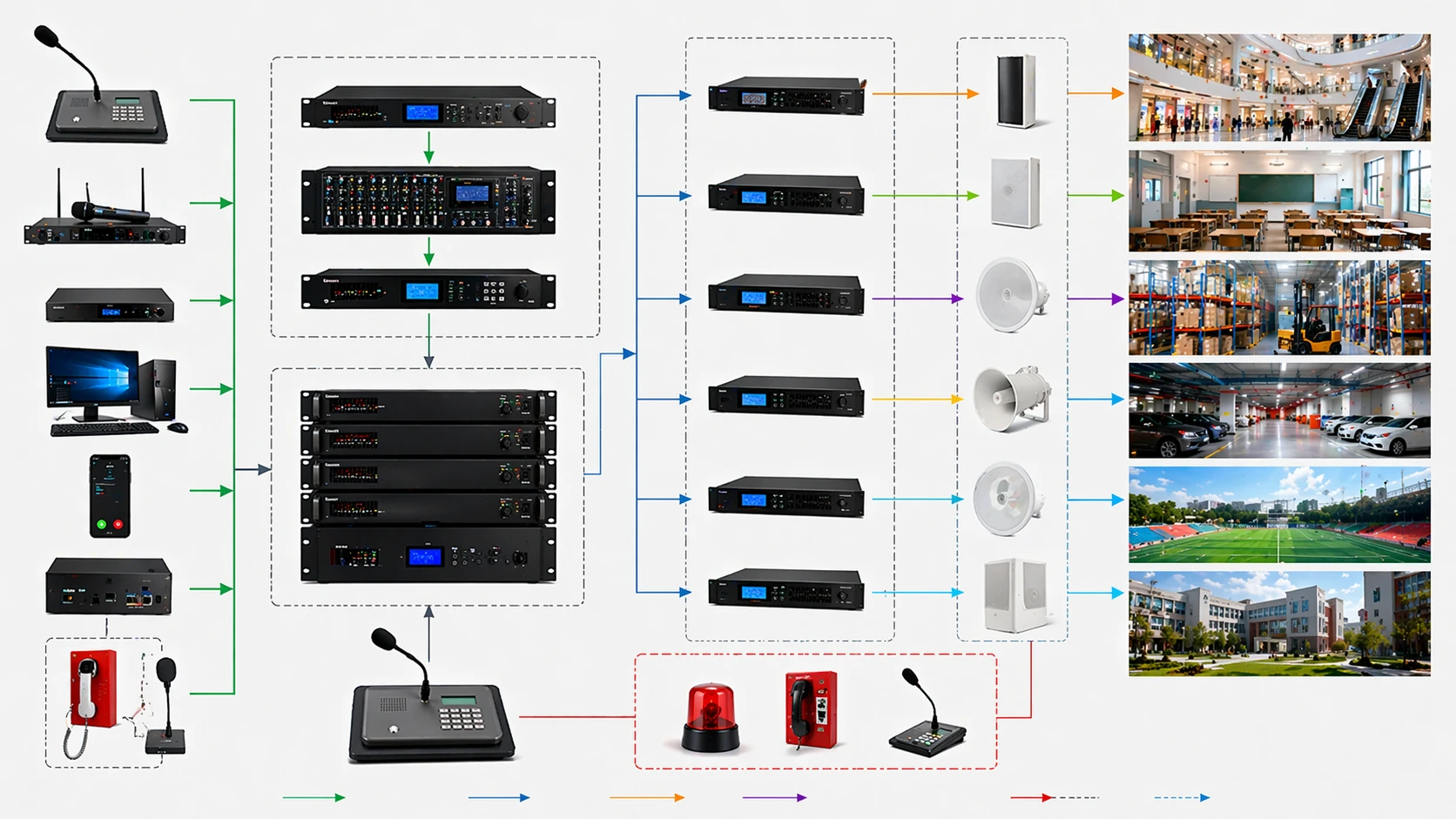
典型 PA 系統流程包括音訊輸入、控制与分區、功率放大以及揚聲器分發。
公共廣播系統的主要組成
麥克風、尋呼台与音訊源
PA 系統的輸入端由產生或導入音訊的設備組成,包括手持麥克風、鵝頸尋呼話筒、調度台、音訊播放器、媒體服務器、網路音訊流或整合 SIP 尋呼終端。在传统安裝中,一個簡單尋呼話筒可能已经足夠;在大型系統中,話筒可能带有分區按键、狀態指示、呼叫控制和多個可程式功能。
有些環境还使用定時或自動音訊輸入。學校可使用時鐘驅動的鈴聲,工業厂区可使用換班提示,医院可使用服務通知,應急系統可使用預錄指令确保信息一致。在現代 IP 環境中,音訊輸入还可以来自電話系統、軟體平台和遠端控制界面,而不只依赖本地類比設備。
因此,PA 系統中的“音源”已经不再侷限于拿着麥克風讲话的人,而是任何被授權的現場或自動化音訊來源。
功放、控制器与訊號管理
功放是核心元件,因为它提供驅動覆蓋區域内揚聲器所需的功率。根據系統規模,小型系統可能只需要一台功放,大型系統则可能按分區、建築或功能部署多台功放。現代設計中的功放还可能支援類比輸入、網路音訊介面、狀態監測和遠端管理。它们的作用不僅是放大聲音,还要確保揚聲器網路的穩定輸出。
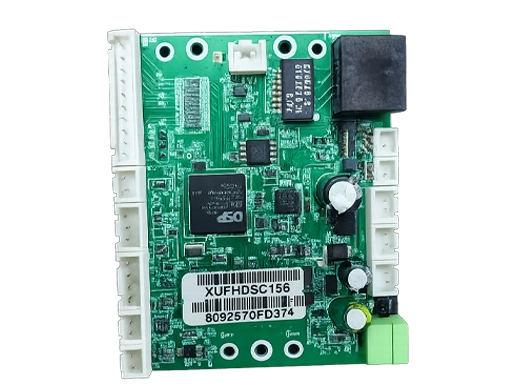
控制器負責系統邏輯,包括音源選擇、優先級规则、分區路由、音訊日程、故障回報和外部系統整合。在小型系統中,这些邏輯可能直接内置在混音功放或尋呼台中;在大型架構中,專用控制器或軟體服務器会協調整個系統。
訊號管理非常关键,因为 PA 系統必须保持語音可懂度,避免失真,并确保音訊輸出可预测。在專業環境中,系統評價標準不僅是音量大小,更重要的是聽眾能否在真實声学環境中清楚理解訊息。
揚聲器与覆蓋設備
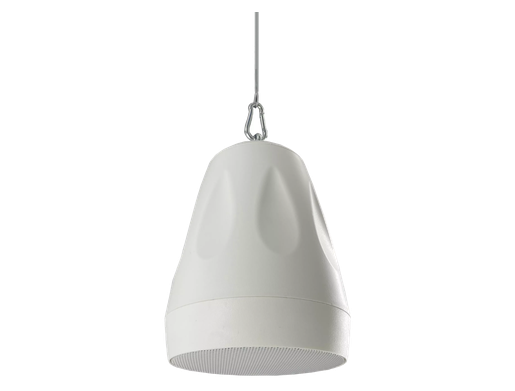
揚聲器層決定聲音在哪里、以什麼方式被听见。不同類型揚聲器要根據環境選擇。吸頂揚聲器常用於辦公室、學校、医院和商業建築;壁掛揚聲器適合需要定向覆蓋的位置;號角揚聲器常用於工廠、戶外區域和高噪音環境,因为它的聲音投射能力更強;音柱可用於走廊、大厅和殘響较强、需要提高語音清晰度的空間。
戶外和工業應用可能需要防水外壳、抗腐蝕能力、更高聲壓輸出或更醒目的安裝形式。在交通樞紐或大型工業現場,揚聲器布點本身就是整体通信設計的一部分,因为覆蓋盲區或过度重疊都会降低信息清晰度。
因此,揚聲器選擇不僅是声学決策,也是由環境、安裝条件、噪音水平、防护要求和訊息用途共同決定的工程決策。
公共廣播系統的关键功能
大範圍音訊分發
PA 系統最基礎的功能,是在大範圍空間内分發聲音。这个空間可能是一個房間、一個樓層、一個園區、一座工廠、一条隧道或一個戶外設施。系統的設計目標是让一条訊息無需人員移動就能覆蓋多人,从而提升速度、一致性和營運觸達能力。
在日常使用中,大範圍音訊分發支援例行通知和流程協調;在應急使用中,它支援立即發布全站或分區警告。这种高效覆蓋空間的能力,正是公共广播區別於一般點對點通信工具的地方。
分發規模取決於設計。有些系統较小且本地化,有些系統则用於支援大型、多建築或地理分散的環境,并由中心平台统一管理。
分區尋呼与區域化控制
分區尋呼是 PA 系統最實用、需求最广的功能之一。它允许操作員決定谁听到訊息,而不是把所有内容广播给所有人。这可以減少干扰、提高相關性,并让系統在大型或多用途設施中更實用。在许多環境中,分區能力決定了系統是粗放广播工具,还是一個真正有價值的通信系統。
區域控制还可以让系統贴合現場的實際營運方式。例如倉庫可能有收貨區、儲存區、出貨區和辦公室;學校可能有教学区、戶外区和行政区;医院可能需要公共区、限制區和員工專用尋呼区。良好的 PA 系統会在邏輯上反映这些營運邊界。
因此,分區不僅是技术功能,更是提升系統效率和使用者接受度的運作流功能。
与 SIP、IP 網路和其他系統整合
現代公共廣播系統越來越多地与 SIP 電話、IP 網路、對講平台、报警輸入和管理軟體整合。支援 SIP 的 PA 系統可以让使用者通过 IP 電話、調度台或網路話筒发起尋呼;IP PA 平台可以通过標準網路基礎設施連接多栋建築或戶外站點;与报警和控制系統的聯動还可实现自動應急广播。
这种網路化模式擴展了 PA 系統能力。它可以成为统一通信環境的一部分,而不是孤立的類比子系統。管理员可以通过網頁界面配置分區、遠端監測設備狀態、集中安排定時广播,或将語音广播功能与事件回應流程聯動。
从这个角度看,PA 系統正在从独立通知工具演進为支援現代現場營運的廣義通信服務。
應急广播能力
在许多產業中,應急广播是 PA 系統最重要的功能之一。在火災、安防事件、極端天氣、工業报警或疏散場景中,系統可以快速向相關人員發布警示音和語音指令。这使其成为许多環境中生命安全通信的重要組成。
應急广播的效果并不只取決於音量。系統必须具备語音可懂度、合理分區、正確優先級,并在压力環境下保持可靠。在一些場景中,它还需要备用电源、線路監測或与應急控制平台整合。涉及安全时,PA 系統可能还需要满足额外設計和法规要求。
对许多組織来说,應急作用是選擇專業設計 PA 系統的重要原因,而不是臨時使用零散揚聲器取代。
PA 系統的真正优势,不只是能够發布通知,而是能在最关键时刻把正確訊息傳送到正確區域。
公共廣播系統的應用
學校、園區与教育設施
學校是 PA 系統最常见的應用環境之一。學校公共廣播系統可處理朝會通知、上下課鈴聲、應急指令、分區尋呼以及辦公室与員工區域之間的日常通信。在現代校园環境中,系統还可与 SIP 電話、網路揚聲器、對講站和數位日程工具整合。
教育場所非常受益于分區能力,因为校园不同部分常常需要不同音訊行为。全校鈴聲、辦公室定向尋呼以及緊急封锁或疏散通知是不同類型的需求。PA 系統可以在一個協調平台中管理这些需求。
因此,系統不僅支援便利性,也支援校园安全和日常行政效率。
工廠、倉庫和工業現場
工業環境使用 PA 系統發布換班通知、操作指令、緊急告警、安全訊息和全厂通信。在高噪音環境中,系統可能需要號角揚聲器、高輸出功放和经过规划的覆蓋設計,确保訊息既能听见也能听懂。在大型场地中,分區可以让訊息只覆蓋相關車間、生產線或戶外工艺区。
在一些工業設施中,PA 功能可能属于更大的 PAGA 或工業通信平台,与尋呼、报警、電話和應急協調結合使用。这在現場条件惡劣且事故期间通信必须保持可靠的環境中尤为重要。防水揚聲器、冗餘电源和網路整合都可能成为必要設計内容。
在这里,PA 系統不僅提供營運便利,还支援工人感知、危害通知和協同回應。
医院、商業建築与服務設施
医院、诊所、飯店、辦公樓和购物設施经常使用 PA 系統进行受控公共通知和内部服務通信。例如,在医院中,广播可用於候診區提示、支援流程或應急通信;在飯店和商業場所中,系統可支援訪客引導、定時訊息和公共通知,而無需運作人員人工傳遞到每个區域。
这些環境通常需要在可聽性与舒適度之間取得平衡。聲音必须清楚有用,但不能过于刺耳造成干扰。分區、音量控制、定時内容和更合适的揚聲器選擇,有助于实现这种平衡。
由于这些場所通常直接面向公眾,通知体验的质量会影响營運效率和使用者感受。
交通、公共安全与戶外環境
交通樞紐、鐵路月台、機場、停車設施、隧道、公共廣場和戶外服務点都是 PA 系統的重要應用區域。在这些環境中,广播可用於乘客信息、營運指引、安全警告或應急指令。由于背景噪音、开放空間、天氣暴露和人流移動,覆蓋要求通常更高。
因此,戶外和公共安全部署通常需要更強的系統設計,包括防水揚聲器、IP 連接功放、集中控制以及与安防或應急系統整合。訊息清晰度尤为重要,因为聽眾可能紧张、分心或不熟悉現場環境。
在这些應用中,公共廣播系統成为站點通信骨幹的一部分,并常常直接影响安全性能和應急准备水平。
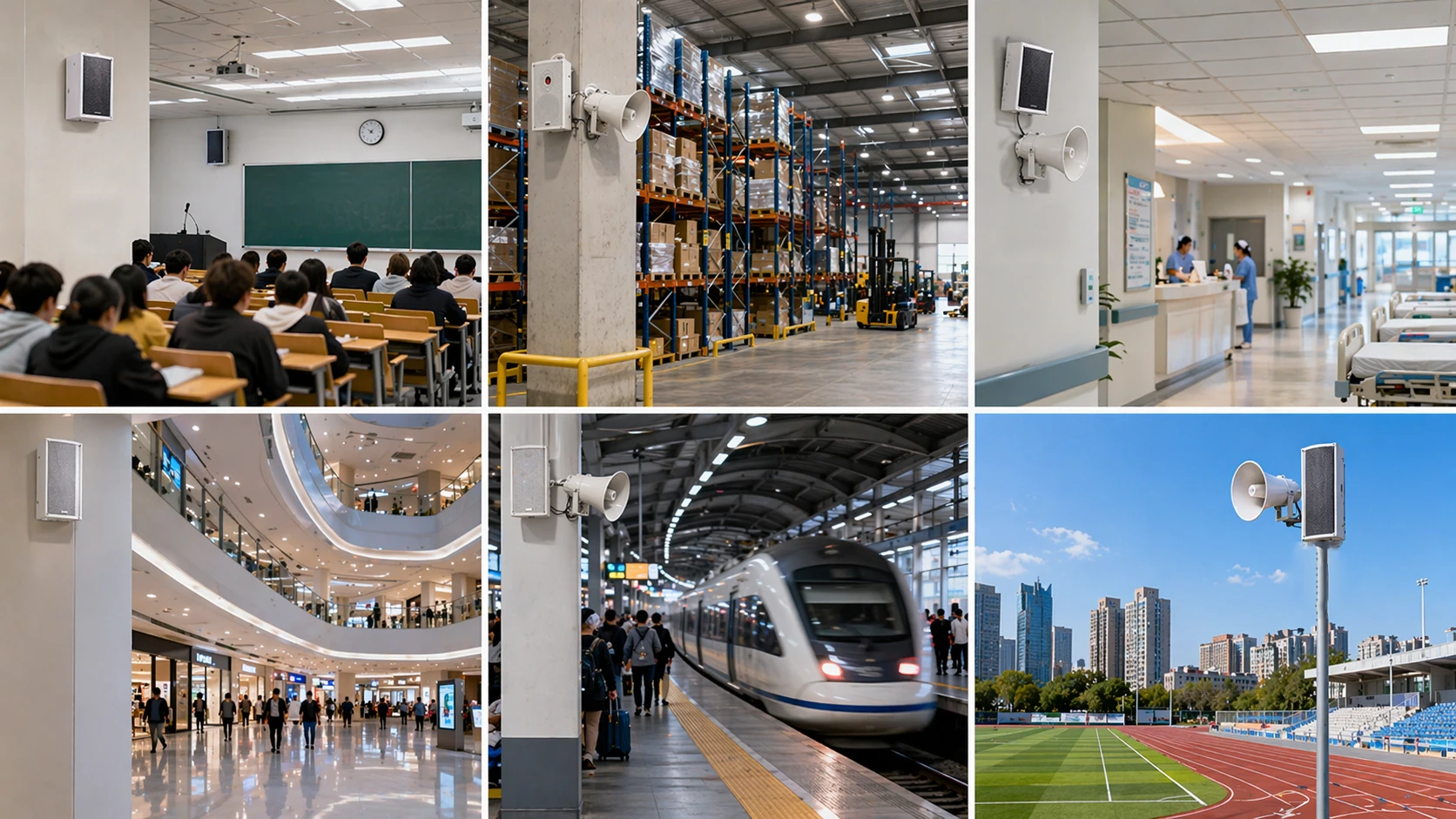
PA 系統廣泛用於教育、工業、医疗、交通和公共安全環境。
为什麼公共廣播系統仍然重要
清晰即時通信的核心工具
儘管數位訊息、應用程序和個人通信設備不断发展,公共廣播系統仍然不可取代,因为它可以即時、直接地觸達一组人員。并不是每个人都能在正確时刻查看螢幕,但一個設計良好的 PA 系統发出的清晰語音通知,可以快速減少延迟和不確定性。这使其成为实时現場通信最有效的工具之一。
系統还支援共享空間中的通信公平性。無需每个人都拥有手机、登录帳號或訊息訂閱,通知就能直接传达到實體環境中。在運作場所、學校、交通空間和緊急情況下,这种即時群体通信能力仍然非常重要。
因此,即使在高度網路化和數位化的設施中,PA 系統仍然占据重要位置。
在 SIP 和 IP 化環境中的價值持續提升
PA 系統的價值不是下降,而是在上升,因为它们现在可以更有效地与現代基礎設施整合。SIP 尋呼、IP 揚聲器、網頁管理功放、集中軟體和網路调度工具,使 PA 系統更智慧、更易管理。它们不再与其他通信環境割裂,而是可以与電話、對講、應急系統和控制平台協同運作。
这让部署更灵活,也更容易擴展。現代組織可以把通知擴展到多個建築、站點和營運區域,同时保持集中管理。它还可以使公共广播与真實營運流程保持一致,而不是作为单独的舊式子系統存在。
因此,現代 PA 系統应被理解为音訊平台与通信基礎設施组件的結合。
在当今設施中,公共廣播系統仍然是觸達人員并發布不能等待的信息最快、最有效的方式之一。
FAQ
公共廣播系統的主要用途是什麼?
主要用途是将現場或預錄音訊通知快速、清晰地分發给一個或多個區域内的大量人員。
PA 系統与對講系統有什麼区别?
PA 系統主要用於一对多通信,而對講系統通常用於个人之間或小组之間的双向通信。
現代 PA 系統可以与 SIP 和 IP 網路配合使用吗?
可以。许多現代 PA 系統支援 SIP 尋呼、IP 揚聲器、網路功放、遠端管理,并可与電話和應急系統整合。
PA 系統最常用於哪些場所?
它们常用於學校、工廠、医院、辦公樓、購物中心、交通樞紐、公共空間和應急通信環境。