
IndustryInsights
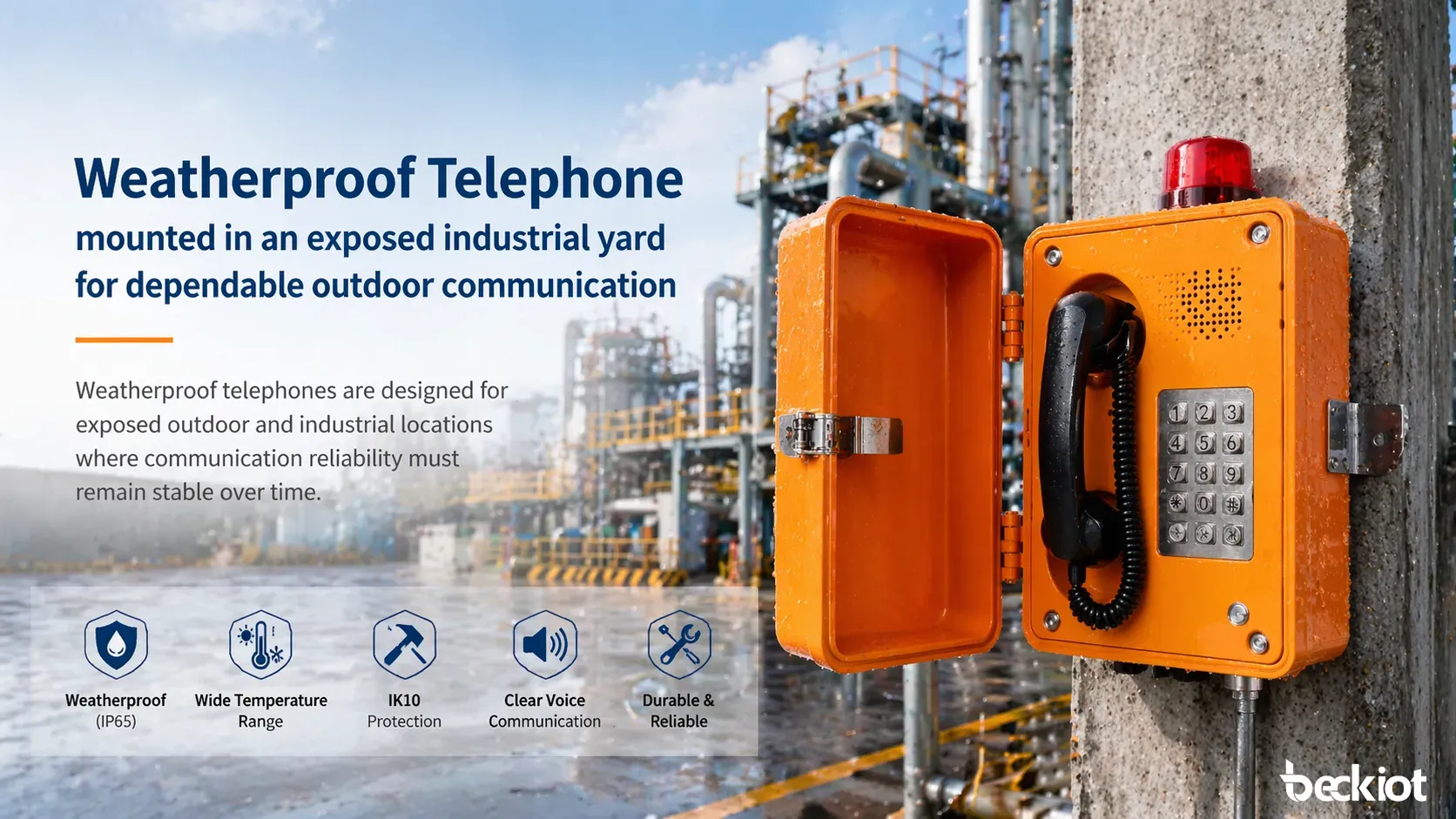
A weatherproof telephone is a rugged communication device built for places where ordinary office phones cannot be trusted. It is designed to keep working in rain, dust, humidity, temperature swings, and other demanding outdoor conditions while still delivering dependable voice communication. In real projects, that matters because communication at exposed sites is rarely just a convenience. It is often tied directly to safety, coordination, maintenance response, and emergency handling.
At Becke Telcom, we view a weatherproof telephone as more than a basic calling endpoint. It is a field communication tool for harsh and mission-critical environments. Whether installed along a roadway, inside a tunnel, at a plant perimeter, near a loading area, or across a utility site, it provides a fixed and reliable voice point where communication must remain available even when the environment is working against the equipment.
Many modern facilities use mobile phones, radios, video systems, and software platforms, yet fixed field telephones still play an essential role. In an emergency or operational issue, a dedicated weatherproof telephone provides an immediate, known, and always-available path to a control room, security station, maintenance team, or dispatch center. There is no need to search for a contact, depend on personal battery life, or hope for stable mobile coverage in the right place at the right moment.
That reliability becomes especially important in outdoor and industrial locations. If communication equipment fails because of weather exposure, moisture, corrosion, or heavy noise conditions, the result can be delayed reporting, slower incident response, reduced worker safety, and avoidable operational disruption. A weatherproof telephone helps close that gap by giving organizations a stronger communication foundation where ordinary equipment would be a weak point.
In exposed environments, communication reliability is not a small detail. It is part of the site’s safety and operational readiness.
The most obvious feature of a weatherproof telephone is its physical durability. These devices are typically housed in sealed and impact-resistant enclosures designed to handle rain, dust, humidity, and continuous outdoor exposure. This makes them suitable for long-term installation in transport infrastructure, industrial plants, utility sites, marine areas, and other tough field conditions.
That rugged construction does more than protect the electronics. It improves operational confidence. Site owners and integrators need to know that the telephone will still be available after long exposure to the environment, not just during the first weeks after installation. A weatherproof design reduces the risk of premature failure and helps support a lower-maintenance deployment model over time.
Many harsh-environment sites are also high-noise sites. Tunnels, highways, factories, ports, wind farms, utility yards, and process facilities all create conditions where weak audio performance quickly becomes a serious problem. For that reason, weatherproof telephones are often expected to deliver loud, intelligible audio rather than simply establish a connection.
At Becke Telcom, we know that speech clarity is one of the most important performance factors in industrial and emergency communication. If a caller cannot be understood during a fault report, safety alert, or assistance request, the communication chain has already lost value. Strong audio design, practical loudness, and stable call performance are therefore central to the usefulness of a weatherproof telephone.
A weatherproof telephone is often deployed because speed matters. In many field locations, the device is used for one-touch help calls, direct connection to a control room, hands-free reporting, or immediate escalation to a supervisor or emergency response team. This makes it especially valuable in places where staff may be working alone, the public may need assistance, or incidents must be reported without delay.
The advantage is practical and immediate. A fixed emergency-capable telephone shortens the path between an incident and a response. Instead of depending on improvised communication, the site provides a purpose-built contact point designed to remain ready for use.
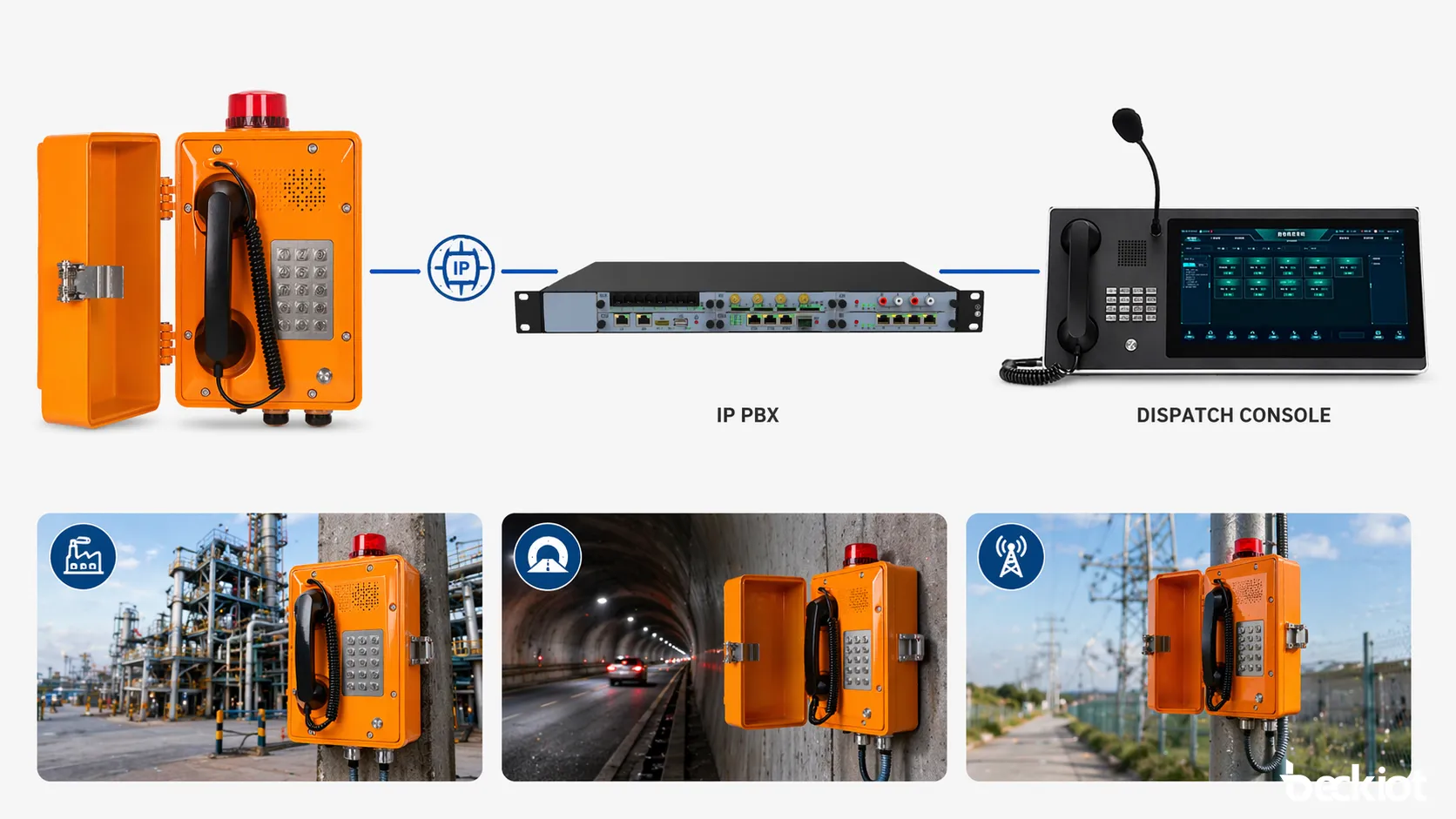
Modern weatherproof telephones are increasingly deployed as part of broader IP communication architecture. In many projects, standard SIP-based integration allows the field telephone to connect with an IP PBX, intercom platform, paging system, control room console, or dispatch application. This creates a more complete communication workflow across indoor users, outdoor field points, mobile staff, and supervisory teams. That same direction toward SIP-based integration, HD voice, open architecture, and multi-system coordination is consistent with the communication approach reflected in your uploaded solution materials.
For users, the benefit is simple. The telephone no longer works as an isolated hardware point. It becomes part of a connected operational system that can support call transfer, broadcast linkage, alert handling, field coordination, and faster response procedures.
Weatherproof telephones are chosen because site conditions are rarely gentle or predictable. Some projects face moisture and corrosion. Others deal with dust, wide temperature variation, vibration, or heavy daily usage. A field communication device has to perform consistently across these changing conditions, not only under ideal circumstances.
This is why weatherproof telephones remain relevant across so many industries. They are not designed around a narrow office-style use case. They are designed around the reality of field operations, where equipment must work reliably in locations that are exposed, remote, noisy, or difficult to maintain.
One of the biggest benefits is improved safety. A visible and dependable communication point allows workers, drivers, contractors, and visitors to request assistance quickly when they need it. That matters in isolated work areas, open public zones, transport corridors, plant perimeters, and maintenance points where immediate contact with a responsible team can make a real difference.
It also supports earlier reporting. Minor faults, suspicious conditions, access issues, and developing hazards can be communicated quickly before they become larger incidents. In that sense, a weatherproof telephone supports both emergency response and preventive action.
A reliable field telephone improves response time because it creates a direct communication path between the site and the people responsible for action. Control rooms can answer faster, supervisors can coordinate faster, and field teams can be informed faster. For many organizations, this leads to better incident handling and smoother day-to-day operations.
That value is not limited to emergencies. Routine maintenance coordination, inspection support, access requests, and status reporting also become more efficient when staff know there is a fixed, dependable endpoint available in the field.
A weatherproof telephone is also a lifecycle decision. Choosing equipment built for demanding exposure can reduce failure rates, replacement frequency, and maintenance pressure compared with using standard indoor equipment in unsuitable locations. This becomes even more important when the device is installed in remote, elevated, or otherwise inconvenient places where every service visit costs time and labor.
For site owners and system integrators, long-term reliability is often one of the strongest reasons to specify weatherproof models from the start rather than trying to adapt office-grade devices to outdoor applications.

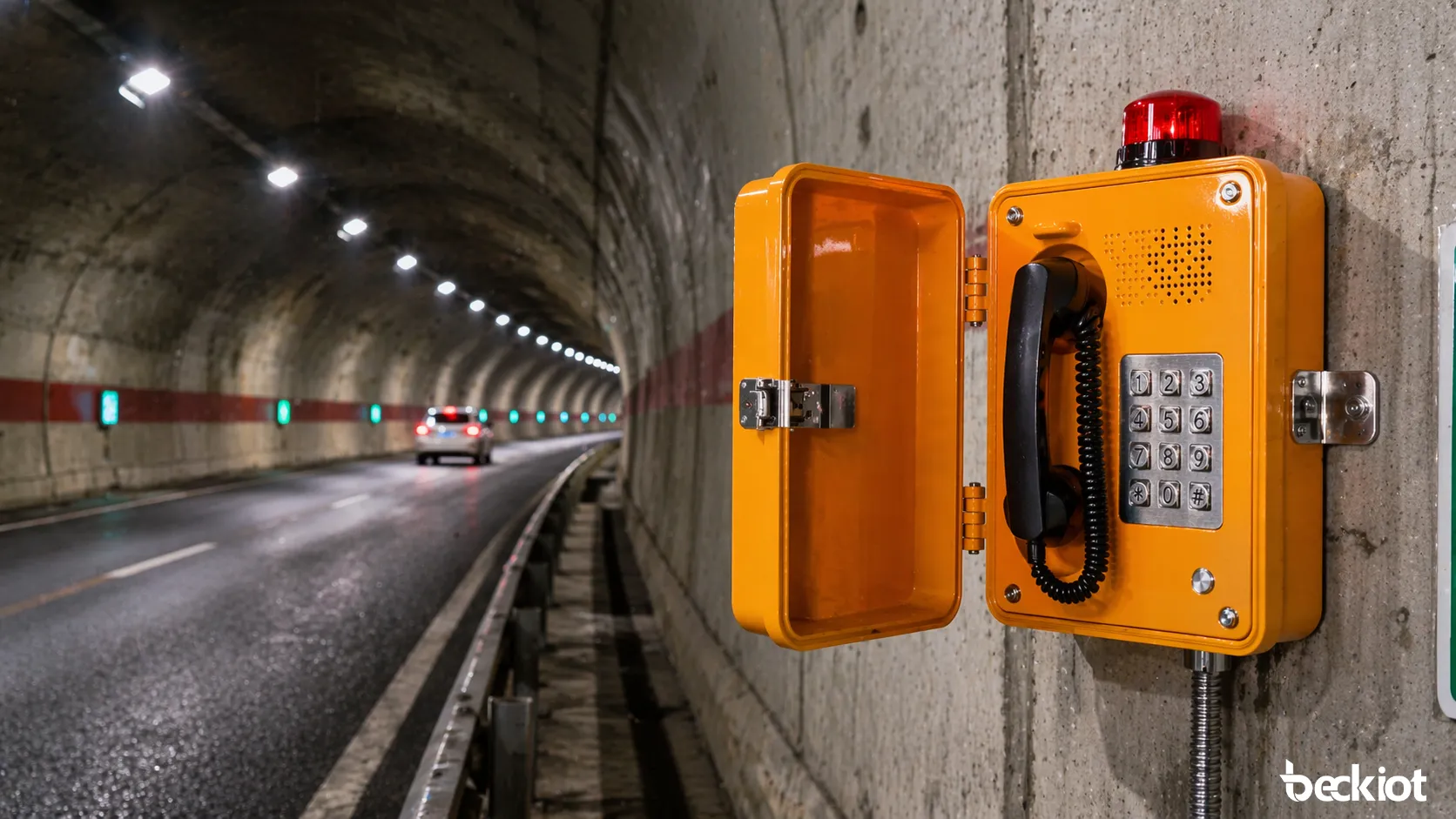
Transportation infrastructure remains one of the most common application areas. Weatherproof telephones are often installed at roadside help points, tunnel communication stations, service areas, toll environments, and maintenance access points. In these settings, they support assistance requests, incident reporting, operator coordination, and emergency communication when speed and clarity matter most.
These are also environments where background noise, weather exposure, and operational pressure are all present at the same time. A weatherproof design is therefore not optional. It is a practical requirement for dependable communication.
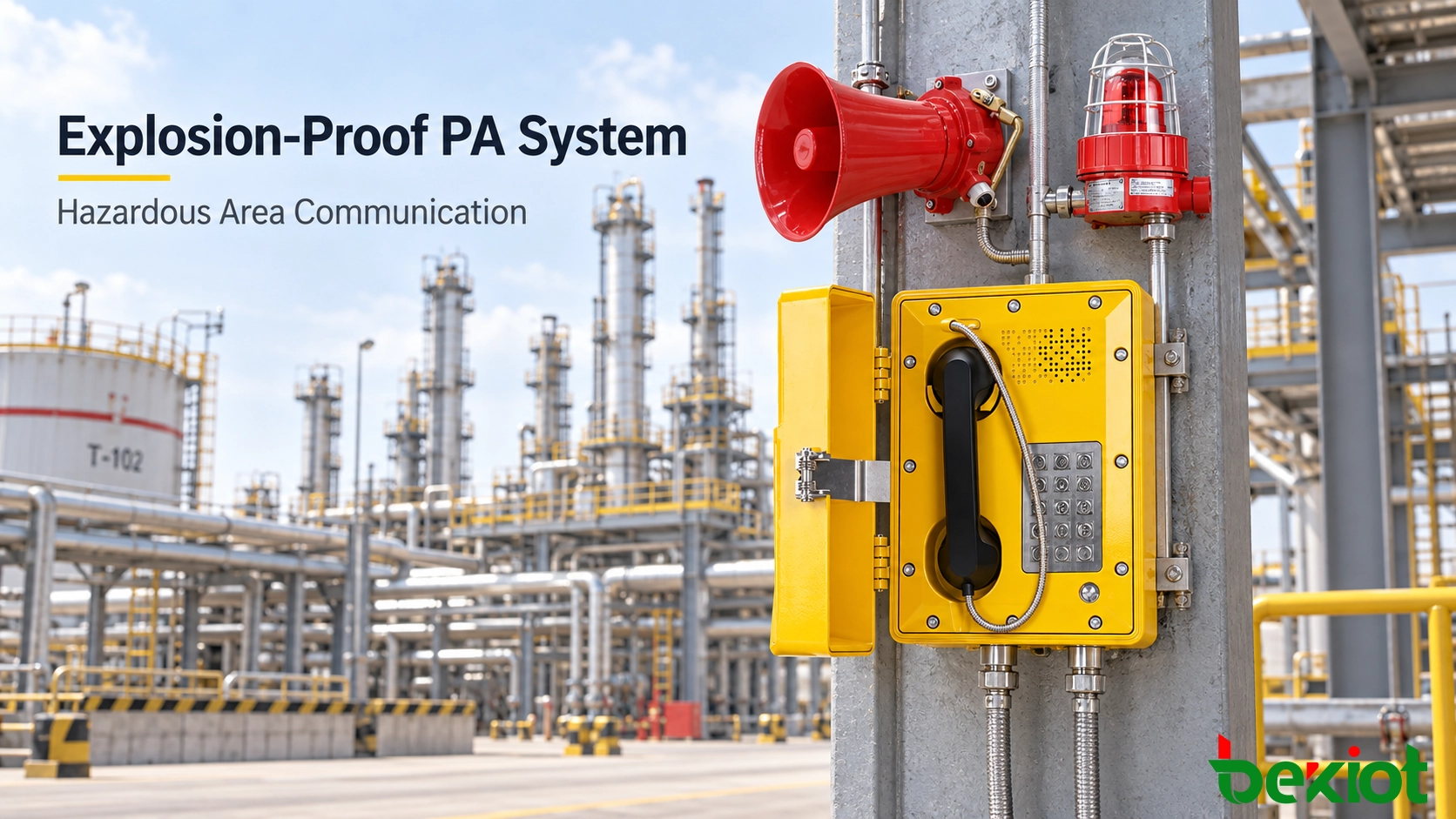
Industrial and utility projects also depend heavily on field communication. Plants, substations, pump stations, treatment facilities, material yards, and processing areas often include outdoor or semi-exposed zones where standard telephones are not suitable. A weatherproof telephone gives technicians, operators, and contractors a direct way to reach control or maintenance personnel without relying entirely on personal devices.
In these environments, the telephone supports routine operations as well as abnormal-event handling. It can be used for inspection coordination, maintenance reporting, alarm response, shift support, or incident escalation, depending on how the wider system is designed.
Ports, offshore support areas, renewable energy sites, railway assets, and remote public infrastructure also benefit from weatherproof telephones. These projects often combine exposure, distance, and operational isolation, which makes fixed communication points especially valuable. Where mobile coverage is inconsistent or where staff need an always-known contact point, a weatherproof telephone can provide that stability.
At Becke Telcom, we see strong demand for rugged communication solutions in exactly these kinds of demanding deployments. Organizations want devices that are not only weather-resistant on paper, but genuinely suitable for real operational use in harsh, outdoor, and mission-focused environments.

The right product depends first on where it will be installed. Buyers should consider exposure to rain, humidity, dust, corrosion, vibration, and noise, along with mounting position and maintenance access. A device for a sheltered outdoor wall is not the same as one intended for a tunnel portal, utility perimeter, coastal site, or industrial process zone.
Choosing with the actual environment in mind helps avoid under-specifying the solution. It also prevents the opposite mistake of selecting a device with features that increase cost without adding meaningful value for the site.
It is also important to ask how the telephone will actually be used. Will it serve as an emergency call point, a maintenance communication endpoint, a public help station, or part of a wider dispatch process? Will users need hands-free access, fast call buttons, integration with a control room, or compatibility with an IP PBX or paging system? These questions matter because the telephone should match the workflow, not just the mounting location.
In many projects, the best choice is the model that fits most naturally into the organization’s existing operational procedures. Communication hardware delivers the most value when it supports the real way the site runs.
A weatherproof telephone should also be selected with the wider system in mind. If the site already uses SIP telephony, paging, intercom, CCTV, alarms, or dispatch software, integration capability becomes an important factor. A better-integrated endpoint can help unify the user experience, simplify management, and improve coordination during both routine operations and incidents.
Long-term reliability matters just as much. A low-cost device that fails repeatedly in an exposed environment will usually cost more over time than a properly designed field unit. For serious outdoor projects, durability, audio performance, and integration value should be considered together rather than separately.
The best weatherproof telephone is the one that fits the environment, the communication workflow, and the long-term operational demands of the site.

A weatherproof telephone remains one of the most practical communication tools for outdoor and demanding environments. Its purpose is simple but critical: keep voice communication available where weather, noise, and field conditions make ordinary devices unreliable. With rugged construction, stronger audio performance, emergency-ready communication, and integration potential across SIP and IP-based systems, it supports both safer operations and better coordination.
For organizations building communication systems in highways, tunnels, plants, ports, utility sites, renewable energy projects, and other exposed locations, the right weatherproof telephone can deliver long-term value far beyond basic calling. Becke Telcom provides weatherproof telephones and integrated communication solutions designed for harsh environments, critical infrastructure, and industrial-grade operational demands.
A weatherproof telephone is used in outdoor or harsh environments where standard telephones are not reliable enough. Typical uses include emergency calling, maintenance communication, field coordination, roadside assistance, tunnel communication, plant operations, and public help points.
Its main role is to provide a fixed and dependable voice endpoint in locations where communication availability is tied to safety, operations, or response speed.
Yes, many modern weatherproof telephones can work with SIP-based systems and connect to an IP PBX, paging platform, intercom network, or dispatch environment. This allows them to operate as part of a larger communication system rather than as isolated field devices.
That integration is often useful for centralized management, call routing, escalation workflows, and better coordination between outdoor endpoints and indoor teams.
They are commonly installed in highways, tunnels, factories, substations, utility corridors, ports, renewable energy sites, campuses, and other outdoor or semi-exposed environments. These are places where weather, noise, and operational exposure require more durable communication equipment.
They are also used at visible public help points where fast access to assistance is important.
Becke Telcom focuses on industrial and emergency communication solutions for demanding environments. That includes communication requirements where ruggedness, audio clarity, reliability, and system integration all matter in real-world deployment.
For customers planning harsh-environment communication systems, Becke Telcom can support both device selection and broader integrated communication design based on site conditions and operational goals.